Follow Us on Google
From Juliana Taiwo-Obalonye, Abuja
The Federal Government has declared menstrual health a national development priority with the launch of Nigeria’s first National Policy and Implementation Strategy on Menstrual Health and Hygiene Management, pledging to roll out school “Pad Banks” nationwide to prevent girls from missing classes.
If effectively implemented, the policy and Pad Bank programme aim to cut period-related school absences, reduce infections linked to poor menstrual management and preserve the dignity and educational prospects of millions of girls.
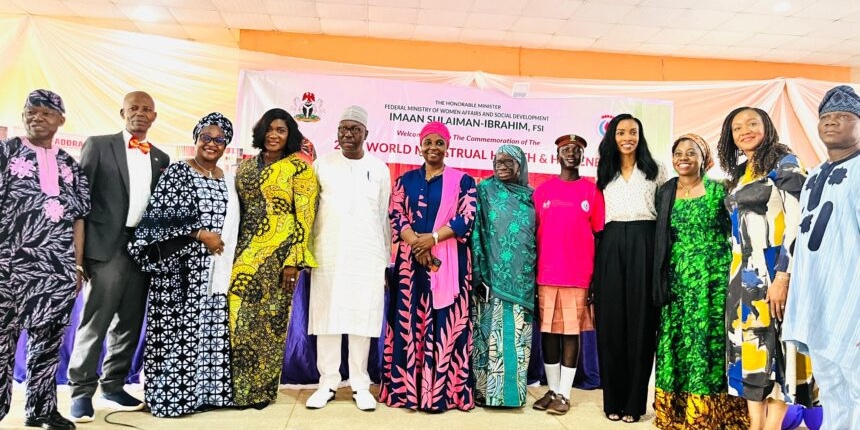
Announcing the policy in a keynote address read on her behalf at the 2026 World Menstrual Health and Hygiene Day commemoration at the Federal Government Girls’ College, Bwari, the Minister of Women Affairs and Social Development, Imaan Sulaiman-Ibrahim, described the new framework as a coordinated approach to education, access, WASH (water, sanitation and hygiene) infrastructure and stigma reduction.
“Every girl represents a future of promise, dignity and national possibility,” the minister stated in the address.
The minister, who was represented by the Director of Child Development, Ali Madugu, linked the policy to the Renewed Hope Agenda and the Renewed Hope Social Impact Intervention (RHSII-774), a nine-pillar platform delivering social protection across Nigeria’s 774 local government areas.
She noted that the Pad Banks will ensure no girl is excluded from learning or embarrassed by a lack of access to menstrual products.
Other News
“Pad Banks are not merely an intervention; they are dignity infrastructure,” the minister said, adding that the initiative will be complemented by strengthened menstrual health education, improved school WASH facilities and expanded access to affordable hygiene products.
She urged a whole-of-government and whole-of-society response, calling on schools, families, faith leaders, development partners and the private sector to work together to end stigma and protect girls’ right to education.
The minister also announced plans to build mentorship and leadership pipelines for girls, encouraging those approaching 18 to register for Permanent Voter Cards.
She explained that the implementation will involve coordination with state ministries, technical working groups and civil society partners active in menstrual health across the country.
The Permanent Secretary of the Federal Ministry of Education, Abel Enitan, endorsed the policy, describing menstrual hygiene management as an educational and social development issue that affects attendance, participation and retention.
Development partners at the event, including Population Services International (PSI) Nigeria, highlighted ongoing programmes across states that combine product access, community engagement and creative awareness campaigns.
Speakers stressed that menstruation should not be a source of shame or exclusion, urging the media, schools and communities to amplify messages that normalise menstrual health.