Follow Us on Google
By Steve Agbota
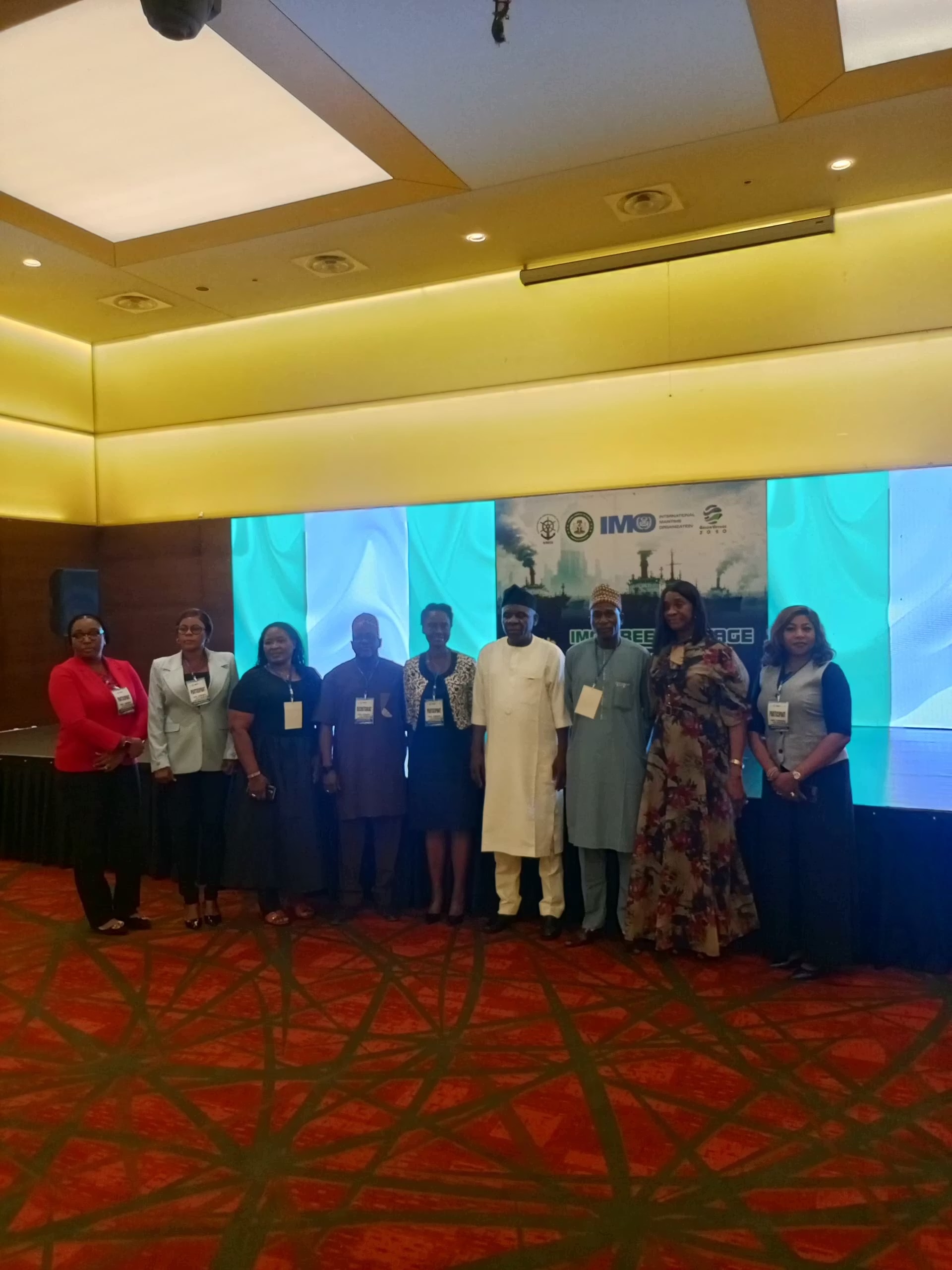
Nigeria has entered into partnership with the International Maritime Organisation (IMO) GreenVoyage2050 Project to develop a comprehensive National Action Plan (NAP) for maritime decarbonization.
Speaking at the national stakeholders’ workshop on Tuesday in Lagos, the Minister of Marine and Blue Economy, Dr Adegboyega Oyetola, who was represented by Deputy Director of Maritime Safety and Security, Federal Ministry of Marine and Blue Economy, John Ogwuche, said that the overall goal of IMO GreenVoyage2050 is to support implementation of the IMO GHG Strategy, and in particular, provide support to developing countries in their efforts to reduce GHG emissions from ships.
“In partnership and support by the IMO GreenVoyage2050 Project, we are embarking on a journey to define our National Action Plan (NAP), a roadmap that will ensure our maritime sector remains resilient, competitive, and sustainable in the decades to come,” he said.
“As we are all aware, the maritime industry is the backbone of global trade, yet it is faced with unprecedented challenges. Thus, it is undergoing a transformative shift towards sustainability, driven by the urgent need to mitigate climate change.
“Consequently, the IMO, through its revised 2023 GHG Strategy, has set ambitious targets, aiming for net-zero GHG emissions from international shipping by or around 2050. These targets necessitate a concerted effort from all stakeholders, particularly in developing nations like Nigeria.
“The development of a National Action Plan is the cornerstone of our strategy. It serves as the bridge between international instruments and domestic implementation. Thus, our objective for this workshop is to identify areas of priority that will form the bedrock of our plan.
He noted that decarbonization cannot be achieved by the government in isolation, saying that it requires the active participation of every stakeholder, from Shipowners, the oil and Gas industry, Port authorities, technical experts, MDA’s, Academia.
Other News
“Each of you holds a piece of the puzzle. Hence, our collaboration with the IMO will provide us with the technical expertise and global network necessary to navigate this complex landscape,” he said.
Meanwhile, the Director General of Nigerian Maritime Administration and Safety Agency (NIMASA), Dr Dayo Moberola, who was represented by the Executive Director Operations, Engr. Fatayi Adeyemi said that the development of NAP brings Nigeria’s pivotal partnership with the IMO GreenVoyage2050 Project.
According to him, it is a technical cooperation initiative specifically designed by the IMO to empower developing countries in their transition towards a low-carbon maritime future.
Through this collaboration, he said that Nigeria is actively engaged in developing a comprehensive National Action Plan (NAP) for maritime decarbonization, adding that the NAP is not going to be a generic blueprint, it is a plan that must be firmly rooted in the nation’s unique national context, leveraging Nigeria’s strengths, addressing challenges, and aligning with the nation’s broader national development goals.
“The success of this National Action Plan hinges on the diverse expertise, practical insights, and collaborative spirit that each of you brings to this room. We need your perspectives on technological advancements, policy frameworks, economic implications, capacity building needs, and innovative solutions that are viable and effective for Nigeria.
“At the heart of this global effort lies the IMO 2023 Strategy on Reduction of Greenhouse Gas (GHG) Emissions from Ships. This revised strategy sets forth ambitious, yet essential targets, a commitment to achieve net-zero GHG emissions from international shipping by or around 2050 with critical interim reduction checkpoints which are not mere aspirations but a clear roadmap for a sustainable maritime future,” he explained.
For a nation like Nigeria, he said, with its extensive coastline and vital maritime economy, these global targets carry significant implications and opportunities.
“Our participation is not just about compliance; it is about safeguarding our environment, protecting public health, and fostering sustainable economic growth. It is about ensuring that Nigeria remains a competitive and responsible player on the global maritime stage,” he said.