Follow Us on Google

From Juliana Taiwo-Obalonye, Abuja
The Federal Government has expressed concern over the inadequacy of facilities for addressing sexual and gender-based violence in Nigeria, disclosing that only 52 sexual assault referral centres currently serve a population of more than 200 million people.
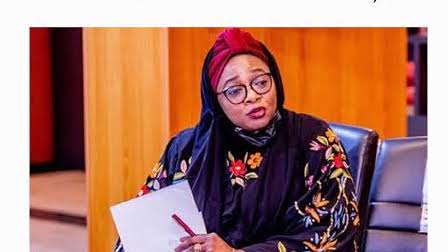
Minister of Women Affairs and Social Development, Imaan Sulaiman-Ibrahim, who disclosed this at an event in Abuja marking the 26th anniversary of United Nations Security Council Resolution 1325 on Women, Peace and Security, said the government was working to expand the facilities and strengthen protection for vulnerable women and children.
The minister also warned that insecurity, child abuse, gender-based violence and the disproportionate burden of unpaid care on women were reinforcing one another, undermining peace, family stability and economic opportunities across the country.
“Let me be honest about the gaps. Nigeria has 52 sexual assault referral centres serving over 200 million people. That is not enough, and we are working to add more,” she declared.
Sulaiman-Ibrahim said insecurity was not limited to insurgency, banditry and violent conflicts but also manifested in abuses within homes, girls’ inability to access education and economic pressures that prevented women from earning a living or participating meaningfully in decision-making.
“Insecurity does not begin on the battlefield. It begins in the home where a child is abused, in the classroom a girl misses for want of a sanitary pad, and in the household where a woman’s every hour is consumed by unpaid care,” she said.
The minister explained that women and girls remained among those most affected by Nigeria’s security challenges, particularly in conflict-hit communities where displacement, sexual violence, loss of breadwinners and disruption of education had compounded their vulnerabilities.
To address these challenges, she disclosed that President Bola Tinubu had approved the establishment of the National Council for Social Work, with a chairman, registrar and administrative structure, to strengthen professional support for vulnerable individuals and families.
She said a World Bank-assisted project would support the training, certification and deployment of licensed social workers nationwide, ensuring that women fleeing violence, children facing abuse and families in crisis received professional assistance.
Sulaiman-Ibrahim also announced that the Federal Executive Council had approved three national policy instruments presented by her ministry to address vulnerabilities affecting women and children.
They are the National Action Plan on Ending Violence Against Children; the National Policy on Menstrual Health and Hygiene Management, 2026–2030; and the National Care Policy and Implementation Plan, 2026–2030.
According to her, the child-protection plan would extend interventions to all 36 states and the Federal Capital Territory through a Pathfinder State Model, while the menstrual health policy would promote local production of sanitary products by women-owned businesses and establish pad banks in public spaces.
She said the National Care Policy would recognise unpaid care work, establish minimum standards for childcare and elderly-care facilities, strengthen safeguards in child adoption and create employment opportunities in the care sector.
She added that the government was working to strengthen the Child Rights Act 2003 and the Violence Against Persons (Prohibition) Act 2015 to improve protection against abuse and emerging threats, including technology-facilitated violence.
Other News
Sulaiman-Ibrahim said Nigeria’s Third National Action Plan on Women, Peace and Security, launched by First Lady Oluremi Tinubu on December 15, 2025, was designed to promote women’s participation in peace processes, protect them from violence and strengthen their involvement in relief and recovery efforts.
She explained that the plan rested on five pillars: prevention, protection, participation, relief and recovery, and crisis response and emerging threats.
The minister said the security challenges confronting Nigeria, including insurgency in the North-East, banditry and kidnapping in the North-West, and conflicts over land and livelihoods in the Middle Belt, continued to expose women and girls to disproportionate suffering.
She stressed that women should no longer be viewed merely as victims of conflict but as peacebuilders and decision-makers whose experiences and contributions were essential to sustainable security.
Sulaiman-Ibrahim disclosed that the Renewed Hope Social Impact Interventions–774 was designed to reach 50 million women, children and vulnerable citizens across the country’s local government areas through economic empowerment, child protection, social care and assistance for displaced persons and other vulnerable groups.
She urged the media to monitor the implementation of government commitments across states and local governments, stressing that progress must be measured by tangible improvements in the safety, dignity and economic security of women and children.
A representative of UN Women, Peter Mancha, said women must be included in conflict prevention, mediation and peacebuilding rather than excluded from decision-making processes.
He commended Nigeria for developing its Third National Action Plan and securing commitments from the President, National Assembly leadership and security chiefs to support its implementation.
Mancha cited examples of women appointed to traditional councils in Gombe, Plateau and Adamawa states, saying their participation demonstrated that discriminatory cultural practices could change.
“Peace can only be sustainable when women are fully involved, meaningfully at all levels,” he said.
Similarly, a representative of the Institute for Peace and Conflict Resolution, Zadison Rukirei, called for a shift from policy commitments to measurable improvements in the lives of women and girls.
The UK-funded Strengthening Peace and Resilience in Nigeria programme also disclosed that it had strengthened the capacity of more than 5,000 women to contribute to peacebuilding and supported women-led mediation platforms in Plateau, Kaduna, Nasarawa and Benue states.
The programme supports community-level responses to sexual and gender-based violence, climate-related security risks and conflict.
The event was held under the theme, “From Commitment to Impact: Advancing Women, Peace and Security through Inclusive Leadership, Local Action and National Accountability in Nigeria.”