Follow Us on Google

From Uche Usim, Washington DC
Nigeria has intensified its bid to host the African Union’s (AU) African Monetary Institute (AMI) and has positioned Abuja as a central hub in Africa’s long-term push toward monetary integration and the eventual creation of a single continental currency.
The renewed commitment came to the fore on the sidelines of the IMF/World Bank Spring Meetings in Washington DC, where top Nigerian officials reiterated that the country has moved beyond diplomatic interest to full-scale implementation readiness ahead of the AMI’s planned operational take-off in September 2026.
The African Monetary Institute, approved by AU Heads of State and Government in February 2026, is designed to drive macroeconomic convergence, strengthen monetary policy coordination, and lay the technical foundation for a more unified and resilient African financial system.
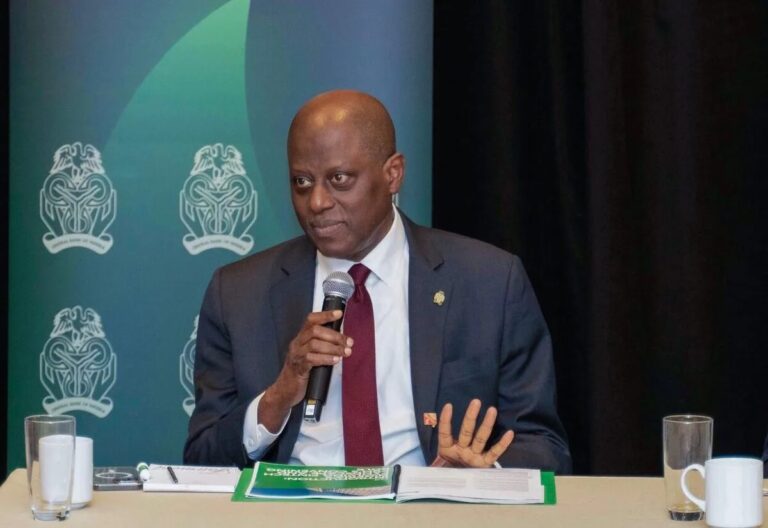
Speaking at a high-level engagement on the operationalisation of the AMI, Governor of the Central Bank of Nigeria (CBN), Olayemi Cardoso, represented by Deputy Governor for Economic Policy, Muhammad Sani Abdullahi, said Nigeria is fully committed to ensuring the institute becomes operational on schedule.
“The African Monetary Institute is an important moment for our continent’s financial architecture, and it is also a moment that calls for clarity on where we are, what has been achieved, and what remains to be done to ensure that the AMI takes off on schedule,” he said.
He stressed that Nigeria’s support has moved from declarations to delivery, noting that key “last-mile” requirements are already being implemented.
“Nigeria remains fully committed institutionally, politically, and operationally, to supporting the timely establishment of the AMI,” Abdullahi said. “Following the adoption of the AMI at the level of our Heads of State and Government in February 2026, Nigeria has intensified the ‘last-mile’ actions required to translate that milestone into a functioning institution, not merely a signed statute.”
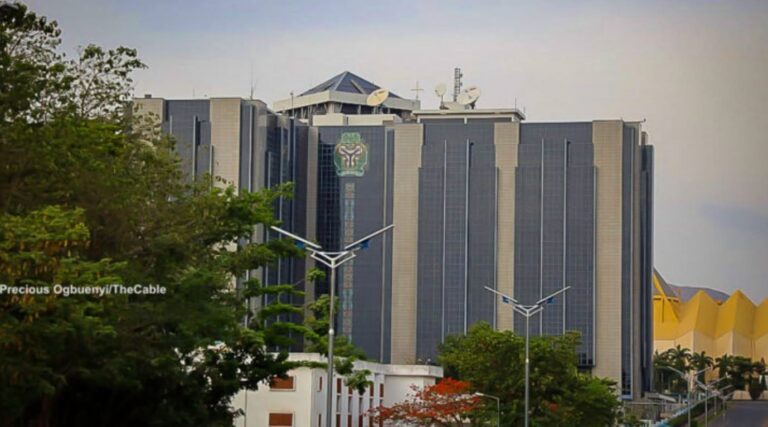
According to him, Nigeria has already provided a dedicated facility in Abuja for the institute, which has been made available for inspection by the African Union Commission as part of host readiness verification.
“Beyond the facility itself, our engagement has remained active and structured. Nigeria stands ready to sustain the momentum through to September 2026.
“We are committed and eager to sign the Host Country Agreement and other obligations as part of meeting the operational timeline”, he added.
He further described the AMI as more than an institutional milestone, but a foundational tool for Africa’s economic transformation.
“From Nigeria’s perspective, the AMI is not an end in itself, it is a practical instrument to strengthen macroeconomic convergence, enhance monetary cooperation and build the foundations of a more resilient and integrated African financial architecture,” he said.
Nigeria’s Minister of Finance and Coordinating Minister of the Economy, also speaking through the Permanent Secretary, Raymond Omachi, reinforced the federal government’s readiness to provide full political and logistical backing.
“Nigeria is ready to give you all the political, institutional, and logistical support to ensure that we start the operation at the time we should, which is September this year, in the next five months,” he said. “We are ready, and we have all the infrastructure and the facilities in place.”
He added that the institute represents a critical first step toward Africa’s broader financial integration agenda.
“We know the importance of this institute as the first step in the financial integration of the African continent,” Omachi noted.
At the continental level, the African Union Commission (AUC) has framed the AMI as a cornerstone of Africa’s monetary future. Commissioner for Economic Development, Trade, Tourism, Industry and Minerals, Francisca Tatchouop Belobe, said the initiative is central to unlocking deeper integration and strengthening Africa’s economic independence.
“A single currency would not only build on the African Continental Free Trade Area (AfCFTA) to create one of the largest markets in the world, but it would also consolidate monetary strength and significantly enhance countries’ ability to self-determine their policies and development paths,” she said.
She acknowledged the scale of the challenge but stressed that progress is already being made.
“We often overlook the fact that monetary policy is one of the most important development tools available. A structured, unified monetary policy has proven to be a powerful force, as seen in the United States and Europe,” she added.
The African Development Bank (AfDB) also threw its weight behind the initiative. Vice President and Chief Economist, Professor Kevin Chika Urama, described the AMI as a long overdue but essential pillar of Africa’s financial architecture.
“From the perspective of the African Development Bank Group, the African Monetary Institute is a must-have and a must-have that is already belated,” he said.
He noted that the AMI aligns with the bank’s new strategic framework under its president’s vision for a New African Financing Architecture for Development (NAFAD).
Drawing comparisons with Europe, Urama said Africa can learn from the Eurozone experience, particularly around convergence criteria such as inflation control, fiscal discipline, and debt sustainability.
“The European Union, the Euro area, has shown how monetary coordination can strengthen stability.
“The convergence criteria, on inflation, fiscal deficits, debt management, are critical, and these are the same issues we identify as risks across the continent.”
He warned that Africa’s fragmented currency landscape remains a structural barrier to trade and integration.
“We cannot have a functional AfCFTA with more than 40 currencies on the continent,” he said, adding that a unified monetary framework would help reduce exchange rate volatility, curb speculation, improve debt management, and deepen regional cooperation.
As preparations continue toward the AMI’s September 2026 launch, Nigeria’s bid signals more than host ambition; it reflects a wider push to anchor itself at the centre of Africa’s next financial transformation phase.
If successful, Abuja could become the nerve centre of efforts shaping one of the most ambitious economic integration projects in the world.