Follow Us on Google
• Fubara’s suspension, opposition coalition, Trump’s CPC, airstrikes on Sokoto, others
By Omoniyi Salaudeen
Every year often comes with its unique events and challenges. The outgoing year 2025 in Nigeria was no less eventful. It is largely shaped by a confluence of ongoing economic reforms, major political repositioning ahead of the next election cycle, and continuous security challenges.Below is a brief analysis of some of the major events that shaped the year.
Rivers’ emergency rule
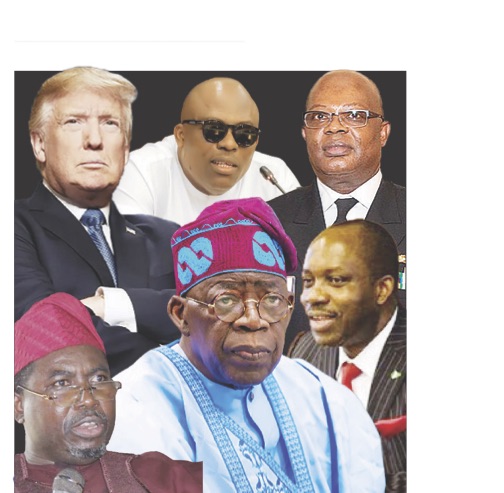
The emergency rule in Rivers State was a significant event in 2025. President Bola Tinubu declared a state of emergency on March 18, 2025, suspending Governor Siminalayi Fubara, his deputy Ngozi Odu, and the State House of Assembly members for six months due to a constitutional impasse, violent clashes and what he termed a total paralysis of governance.
Vice Admiral Ibok-Ete Ibas (retd.) was appointed as the Sole Administrator during the emergency rule.
The move, government said, was aimed at restoring peace and order in the state. But it was condemned by many Nigerians, including opposition parties and political figures.
The emergency rule ended on September 17, 2025, with President Tinubu announcing the reinstatement of Governor Fubara and other suspended officials. The decision was seen as a welcome development, with expectations that it would bring relief to the people of Rivers State.
A local government election was conducted during the emergency rule, with the All Progressives Congress (APC) emerging victorious in 20 out of 23 local government areas.
Economic and policy reforms
The government continued its aggressive push on structural and fiscal reforms. The most significant of these was the signing into law of repackaged tax reform legislation in June 2025, which aimed to unify and simplify the tax system, lower the corporate tax rate, and introduce a more progressive personal income tax structure. Though controverted by critics, the economy showed signs of moderate recovery and resilience, with GDP growth projected to accelerate, supported by stronger performance in services and non-oil industries, and improved oil production. According to official reports, Nigeria’s GDP growth hit 3.98 percent in the third quarter of 2025, driven by economic reforms and data-driven policies.
Additionally, the Central Bank of Nigeria (CBN) focused on managing inflation, maintaining a tight Monetary Policy Rate (MPR) through most of the year to curb inflation. Due to the combined effect of monetary policy and foreign exchange stability, inflation is said to be gradually easing with a forecast to be around 21.5 percent to 22.2 percent by year-end. On global positioning, Nigeria’s admittance to BRICS as a partner country highlighted its diplomatic and economic repositioning on the global stage.
2027 political coalition
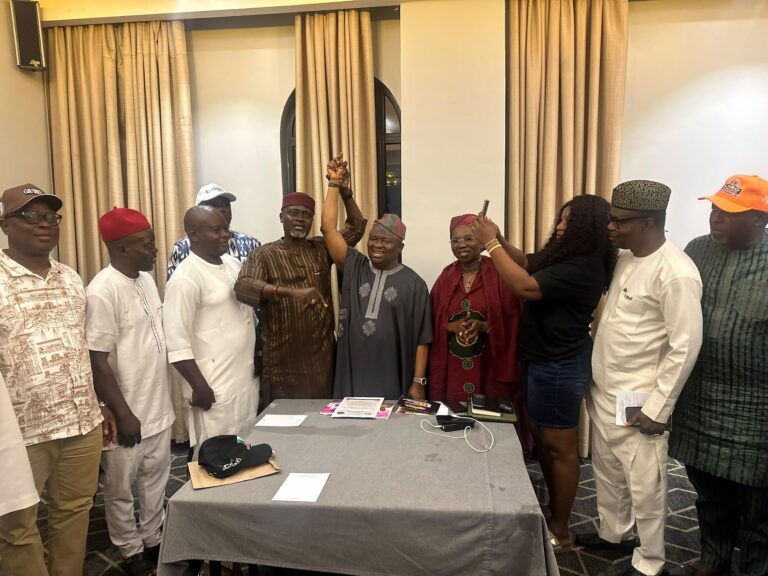
The formation of a new political alliance, the African Democratic Congress (ADC), by major opposition marked a major step in the political landscape ahead of the 2027 general elections. Former Vice President Atiku Abubakar, PDP candidate in 2023, and former Anambra Governor Peter Obi, Labour Party candidate in 2023, were at the forefront of the coalition discussions. The new alliance also included other notable figures like former Senate President David Mark, Rauf Aregbesola, Rotimi Chibuike Amaechi, and Malam Nasir El-rufai.
The aim was to unite opposition forces to effectively challenge President Bola Tinubu and the APC in the run-up to the 2027 elections, signalling a major re-alignment in the political space. While coalition talks were confirmed by both camps, both Peter Obi and Atiku Abubakar publicly denied that any formal agreement had been reached on a specific joint presidential ticket for 2027.
INEC: Mahmood Yakubu out, Joash Amupitan in
The year also saw the tenure of the INEC Chairman, Professor Mahmood Yakubu, expire in November and subsequent appointment of Professor Joash Amupitan, from Kogi State, as a replacement. Amupitan was sworn-in by President Bola Ahmed Tinubu on October 23, 2025. Upon resumption, he promised to confront logistical challenges confronting the electoral umpire. With a solid background in law and governance, there is cautious optimism that his tenure would bring credibility to the electoral process in Nigeria.
Anambra election
On November 8, Amupitan faced the first litmus test with the conduct of the Anambra State governorship election. Given its high-stake nature and the political heavyweights involved, the off-cycle election was a major focus due to its significance in the South East. Not only that the conduct went peacefully without any major incident, the incumbent Governor, Professor Charles Chukwuma Soludo of the All Progressives Grand Alliance (APGA), successfully sought re-election for a second term.
Governor Soludo’s victory was notable as he won by a majority of over 300,000 votes, securing victory in all 21 local government areas of the state. This consolidated APGA’s hold on the state and validated Soludo’s policy approach during his first term. While the All Progressives Congress (APC) contested strongly, aiming to gain a foothold in the South East, the Labour Party (LP), the party of former Presidential candidate Peter Obi, could not make any appreciable showing due partly to its internal crises regarding its official candidate. Overall, the election served as a major test of the sustained influence of Obi in his home region following the 2023 elections.
Festering insecurity
The country continued to grapple with security challenges, particularly in the North. The kidnapping of schoolchildren became a severe and recurring crisis in Nigeria, particularly in the northern and north-central regions, escalating into a major threat to education and human security. Recent events highlighted the worsening scale and frequency of these mass abductions, which were often carried out by armed criminal primarily for ransom.
The most threatening event was the abduction of over 300 students and 12 staff members of St Mary’s Private Catholic Secondary School in Parpiri, Agwara Local Government Area, Niger State, on November 21, 2025. This number is one of the largest mass school kidnappings recorded since the 2014 Chibok incident.
Gunmen stormed the school and forced the students and staff into the forest. Following negotiations and rescue efforts, 100 of the children were released and handed over to state officials on December 8. An additional 50 students had reportedly escaped in the initial hours. However, a significant number of students and teachers remain in captivity.
Just days before the Niger State incident, 25 schoolgirls were kidnapped from a secondary school in Maga, Kebbi State, underscoring the coordinated nature of these attacks across the North West.
The persistent targeting of schools has devastating, long-term consequences that go beyond the immediate trauma of the victims. In response to the high threat level, state governments, including Niger, have been forced to close numerous schools indefinitely, particularly in rural and vulnerable areas, disrupting the academic calendar for thousands of students.The school attacks are part of a broader deterioration of the security environment, laying bare the government’s struggle to protect vulnerable communities and basic infrastructure like schools.
Fear of attack is a major factor driving down school attendance. Reports indicate that around 19 million children, about 27 percent in Nigeria do not attend school due to the threat of kidnappings, poverty, and other factors. The threat instils deep fear among parents, teachers, and children, making it difficult for students to concentrate on their studies. Studies show that a high percentage of students in affected areas exhibit concentration problems and increased anxiety.
Nigeria’s designation by Trump as CPC
The recent shift in U.S. policy under President Donald Trump has introduced a major new variable into Nigerian-American relations. The tension has moved beyond mere rhetoric into formal diplomatic and potential military pressure. On October 31, 2025, President Trump officially designated Nigeria as a Country of Particular Concern (CPC). This is a significant diplomatic downgrade, labelling Nigeria as a nation that either engages in or tolerates severe violations of religious freedom. Trump has repeatedly posted on Truth Social that Christianity is facing an existential threat in Nigeria, specifically citing the killing of thousands of Christians by radical Islamists.
In a particularly blunt statement, Trump warned that if the Nigerian government failed to stop the violence, the U.S. might enter the country guns-a-blazing to wipe out the Islamic terrorists. He described a potential intervention as being fast, vicious and sweet.
Already, the U.S. has begun imposing stricter visa requirements and travel curbs on Nigerians. Consular officers have been instructed to reduce the validity of non-immigrant visas, a move analysts say is more political than security-based. Reports indicate that the White House is currently crafting a comprehensive sanctions plan intended to pressure the Tinubu administration.
Representative Chris Smith recently confirmed that these measures were being developed under the International Religious Freedom Act. Trump has reportedly charged Representative Riley Moore with leading a fact-finding mission to investigate the persecution of Christians and evaluate the feasibility of military intervention.
In response, the Nigerian government, through Foreign Minister Yusuf Tuggar, has strongly rejected the Christian genocide label, arguing that the violence in the North and Middle Belt is a complex mix of banditry, land disputes, and resource competition that affects both Muslims and Christians. There is growing concern in Nigeria that this rhetoric could lead to a breach of sovereignty. Some analysts warn that if the U.S. pushes too hard, Nigeria might pivot more decisively toward Russia or China for security cooperation, as seen in neighbouring Sahelian countries.
While some Christian groups in Nigeria have welcomed the U.S. attention as a long-overdue wake-up call, many others fear that a guns-a-blazing approach would only escalate the internal conflict into a broader religious war.
On Christmas Day. the United States military, in collaboration with e Nigerian authorities, launched airstrikes on terrorists enclaves in Sokoto State.
Tax reform bills
President Tinubu’s tax reform bills sparked controversy, with concerns about their impact on the economy and citizens. Some significant changes introduced into Nigeria’s tax system included tax exemption for low-income earners. Under the new tax regime, individuals earning ₦800,000 or less per year are now exempt from income tax, providing relief for low-income earners.
Corporate tax has also been reduced from 30 per cent to 25 percent, and small businesses are fully exempt from paying income tax.
Similarly, essential goods and services like food, medication, education, and shared transportation are exempt from Value-Added Tax (VAT).
For simplified collection, the Nigeria Revenue Service (NRS) will now collect revenues, eliminating duplication and reducing bureaucracy.
According to the new VAT sharing formula, 50 per cent of VAT is shared equally among states, 20 per cent is based on population, and 30 percent is based on where goods andservices are consumed.
These reforms aim to boost economic growth, simplify tax compliance, and provide relief for low-income earners and small businesses.
Local government autonomy
The Supreme Court granted financial autonomy to the 774 local government councils, ruling that state governors can no longer hold onto funds meant for local governments. This landmark decision, delivered on July 11, 2024, aims to end the diversion or misappropriation of local funds by state governments. The court ordered that allocations should be paid directly to local councils, not through joint state-local government accounts. However, some state governors are contesting the decision, with Anambra State passing a law that retains state control over local government allocations. The federal government has threatened contempt charges against errant governors.
The Nigeria Governors’ Forum had initially resisted the autonomy but later supported reforms promoting administrative and financial independence. The National Assembly may need to amend laws to strengthen local government autonomy.
State police creation
For the first time, 36 states of the federation agreed to create state police to address insecurity concerns. As the National Assembly intensifies effort to amend the 1999 Constitution, the enactment of relevant laws that permit states to have their police is expected to be given expeditious consideration.
Presidential pardons
President Tinubu granted a posthumous pardon to activist Ken Saro-Wiwa and the other members of the Ogoni Nine, a move seen as a symbolic step towards reconciliation.
Buhari’s passing
The passing of former President Muhammadu Buhari on July 13, 2025, was a profound moment for Nigeria, marking the end of a long and complex era in the nation’s history. His death in London at the age of 82 sparked a period of national mourning and reflection, culminating in a state burial in his hometown of Daura.
For many, his passing was not just the loss of a leader, but the closing of a chapter that spanned decades—from his time as a young military officer to his two terms as a democratically elected president. Just last week, his official biography, From Soldier to Statesman: The Legacy of Muhammadu Buhari, was launched in Abuja, bringing new details to light: The book launch featured surprising insights from former First Lady Aisha Buhari, who spoke openly about how Aso Rock gossip and mismanagement of the former President’s nutrition contributed to his health crises during his presidency.
Alleged coup plot
There was an alleged coup plot targeting President Bola Tinubu. On October 1, 2025, the country’s 65th Independence Day parade was cancelled, and shortly after, 16 senior military officers were arrested on suspicion of plotting a coup. The alleged plot involved plans to assassinate top government officials, including Tinubu, Vice President Kashim Shettima, and Senate President Godswill Akpabio.
The arrested officers, including Lieutenant Colonel Al-Makura, were attached to the Office of the National Security Adviser (ONSA). The Defence Headquarters (DHQ) initially denied any coup attempt, attributing the arrests to disciplinary actions for career stagnation and promotion exam failures. However, investigations revealed encrypted communications referencing Operation Liberty and plans to remove the civilian leadership. The incident led to a military reshuffle, with President Tinubu replacing top security officials. Over 30 suspects, including senior military officers, are set to face trial for treason and other charges. The alleged coup plot has raised concerns about Nigeria’s stability and security.
Change of Service Chiefs/ Defence Minister
President Bola Tinubu appointed new Service Chiefs to strengthen national security. The new appointees are Chief of Defence Staff, Lt. General Olufemi Oluyede, replacing General Christopher Musa, Chief of Army Staff, Major-General W. Shaibu, Chief of Air Staff, Air Vice Marshal S.K. Aneke, Chief of Naval Staff, Rear Admiral I. Abbas, Chief of Defence Intelligence, Major-General E.A.P. Undiendeye (retains position).
The new service chiefs have pledged to rejig Nigeria’s security architecture, focusing on counterterrorism, counterinsurgency, and maritime security. They bring a mix of operational experience, academic excellence, and strategic vision to their roles.
Tinubu also appointed the immediate past Chief of Defence Staff, Gen Christopher Musa as the new Minister of Defence, replacing Mohammed Badaru Abubakar.