Follow Us on Google
By Ibekwe Chimdi
Guest Columist
Democracy is not a finished building. It is a perpetual construction site. It is constantly being built, repaired, expanded and sometimes reconstructed in response to the changing needs and aspirations of the people.
This is why disagreement is not necessarily a sign that democracy is failing. Rather, the health of a democracy can often be measured by the quality of its disagreements and, more importantly, by its ability to transform those disagreements into constructive outcomes.
As the Igbo expression goes, “ochichi onye kwuo uche ya” —governance belongs to the people. Where people are free to express their views, disagreement is inevitable. “Ikota onu na ese okwu”—people coming together and disagreeing—is therefore part of the democratic experience.
The critical question is not whether citizens will disagree. They certainly will. The question is whether our disagreements will produce better ideas, stronger institutions and improved living conditions or whether they will degenerate into hatred, misinformation, violence and political paralysis.
This brings us to two important ideas that increasingly shape democratic discourse: agonistic pluralism and factual criticism.
Agonistic pluralism, associated particularly with political theorist Chantal Mouffe, recognises conflict as an inherent feature of democratic politics. It argues that societies consist of people with different identities, interests, ideologies and aspirations. These differences cannot simply be wished away.
The democratic objective, therefore, should not necessarily be to eliminate disagreement but to create institutions through which disagreement can be expressed peacefully and productively.
In a healthy democracy, political opponents should be treated as adversaries, not enemies.
This distinction is fundamental. An adversary is someone whose political position one strongly disagrees with but whose right to participate in the democratic process one recognises. An enemy, on the other hand, is regarded as someone who must be defeated, silenced or eliminated.
When political competition crosses that line, democracy becomes dangerous. Elections become existential battles, opposition is treated as treason and political disagreement becomes a justification for intimidation or violence.
Nigeria must guard against this tendency. Our constitutional framework provides considerable space for democratic contestation. Chapter IV of the 1999 Constitution of the Federal Republic of Nigeria, as amended, guarantees fundamental rights that create the environment for citizens to participate in public discourse.
Section 38 protects freedom of thought, conscience and religion. Section 39 guarantees freedom of expression and the Press, while Section 40 protects the right to peaceful assembly and association. Section 41 guarantees freedom of movement.
These freedoms are not merely legal provisions. They are the oxygen of democratic participation.
Citizens must be free to think differently, speak differently, organise differently and associate with people who share their aspirations. Political parties, civil society organisations, professional associations, the media and community groups all provide platforms through which competing ideas can enter the public arena.
However, freedom without responsibility can become destructive. This is where factual criticism becomes indispensable.
Democracy cannot survive on passion and political narratives alone. Public claims must be subjected to evidence. Policies must be evaluated against measurable outcomes. Government expenditure should be scrutinised. Public institutions should be held accountable. Assertions should be tested against facts.
A free press, therefore, has responsibilities beyond merely amplifying competing voices. It must also help citizens distinguish between fact, opinion, propaganda, speculation and misinformation.
This is particularly important in the age of social media, where information can travel faster than verification. A claim repeated thousands of times does not automatically become true.
Neither does a popular opinion become factual simply because it attracts a large following. This is why factual criticism is essential to democratic development. It provides the intellectual discipline required to ensure that public debate remains connected to reality.
Infrastructure cannot be built through political rhetoric. Schools cannot be improved by slogans. Hospitals cannot be strengthened by propaganda. Employment figures, inflation rates, budget implementation, electoral statistics and public expenditure must be subjected to evidence-based scrutiny.
In other words, agonistic pluralism tells us who should have a voice, while factual criticism helps us determine whether what is being said stands up to evidence.
Other News
Nigeria needs both. Agonistic pluralism without factual discipline can produce emotional politics, ethnic mobilisation, misinformation and perpetual confrontation. When every disagreement becomes a battle of identities, facts are often sacrificed for loyalty.
On the other hand, factual criticism without democratic inclusion can become elitist. Citizens may be presented with technical statistics while their lived experiences are dismissed as irrelevant. Democracy cannot become a boardroom where only experts speak and ordinary citizens are expected merely to obey. The challenge, therefore, is to institutionalise a productive tension between the two.
Nigeria’s debates over subsidy reforms, taxation, federalism, electoral reform, education, healthcare, security and public expenditure demonstrate why this balance matters.
Citizens must be allowed to challenge government policies. Opposition parties must be able to question those in power. Civil society must be able to protest peacefully. The media must be free to investigate and criticise.
But criticism must also be responsible. Where figures are available, they should be examined. Where allegations are made, evidence should be sought. Where mistakes are identified, they should be acknowledged. And where facts contradict our preferred narratives, patriotism should compel us to reconsider our positions.
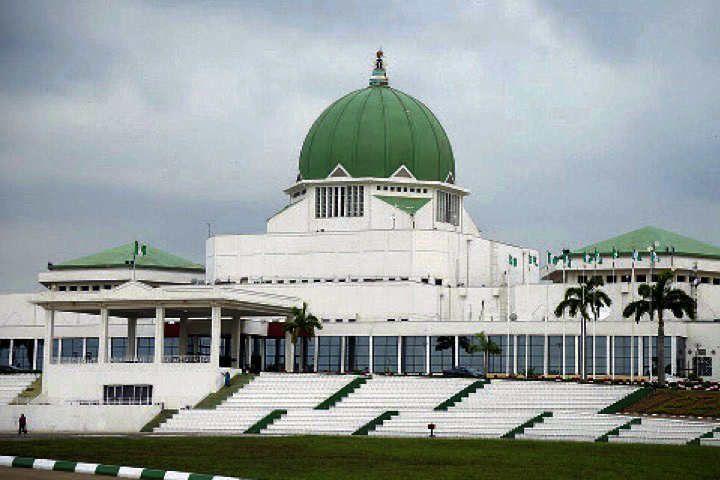
This requires strong democratic institutions. The National Assembly, state legislatures, courts, political parties, town-hall meetings, the media, civil society organisations and other civic platforms must remain spaces where disagreement can occur without fear.
Silencing opposition in the name of unity is dangerous. Indeed, unity without legitimate contestation can easily become conformity, while conformity without accountability can become authoritarianism.
But institutionalising disagreement is only one part of the solution. Nigeria must equally strengthen what may be described as its factual infrastructure.
We need reliable statistics, transparent public records, open government data, independent journalism, credible research institutions, effective auditing systems and strong civic education. Citizens cannot exercise meaningful sovereignty if they lack access to reliable information.
The Freedom of Information Act should therefore be treated not merely as a piece of legislation but as an instrument of democratic accountability.
A citizen who cannot obtain relevant information about public affairs is severely limited in his ability to hold government accountable.
The third imperative is the development of democratic character. Democracy requires more than democratic institutions. It requires democratic citizens.
Citizens must learn that it is possible to disagree passionately without becoming enemies. We should be able to defend our positions vigorously while remaining willing to listen. We should be able to challenge authority without rejecting legitimate institutions. Most importantly, we must develop the humility to change our minds when credible evidence proves us wrong.
Perhaps one of the greatest patriotic acts in a democracy is to lose an argument gracefully when the facts demand it. This is particularly important for young Nigerians. They must be taught that political participation is not simply about defending one’s political party, ethnic group, religion or preferred candidate. It is about contributing to the development of the larger society.
Our democracy must therefore produce citizens who can simultaneously be passionate adversaries and humble seekers of truth. There is nothing wrong with disagreement. The danger lies in allowing disagreement to destroy our shared humanity.
The right of one person to express an opinion does not eliminate another person’s right to disagree. Freedom must, therefore, be exercised with responsibility and with respect for the rights of others.
Ultimately, democratic development is not about choosing between agonistic pluralism and factual criticism. It is about bringing both into a productive relationship.
Agonistic pluralism keeps democracy open, inclusive and representative. It ensures that differences are accommodated rather than suppressed.
Factual criticism keeps democracy accountable, rational and responsive to reality. It prevents political passion from becoming a substitute for evidence.
One gives democracy its voice; the other gives it its discipline. Nigeria needs both.
Our objective should be to build a republic strong enough to accommodate disagreement and mature enough to correct itself when confronted with facts. The future of Nigerian democracy will not be secured by eliminating disagreement. Nor will it be secured by allowing every claim to pass as truth.
It will be secured when we learn to argue without destroying, criticise without fabricating, disagree without becoming enemies, and change our minds when evidence demands it.
That is the pathway from democratic contention to democratic construction. For ultimately, it is when passion is married to proof, freedom is tempered by responsibility, and disagreement is channelled through strong institutions that a nation can move beyond mere political survival towards sustainable democratic development.
•Hon. Chimdi is the lawmaker representing Bende North Constituency at the Abia State Assembly.