Follow Us on Google
From Godwin Tsa, Abuja
In the early hours of Wednesday, March 1, 2023, the Chairman of the Independent National Electoral Commission, INEC, Prof. Mahmood Yakubu, declared former Lagos State Governor and presidential candidate of the All Progressives Congress (APC), Senator Bola Ahmed Tinubu, as winner of the February 25, presidential election.
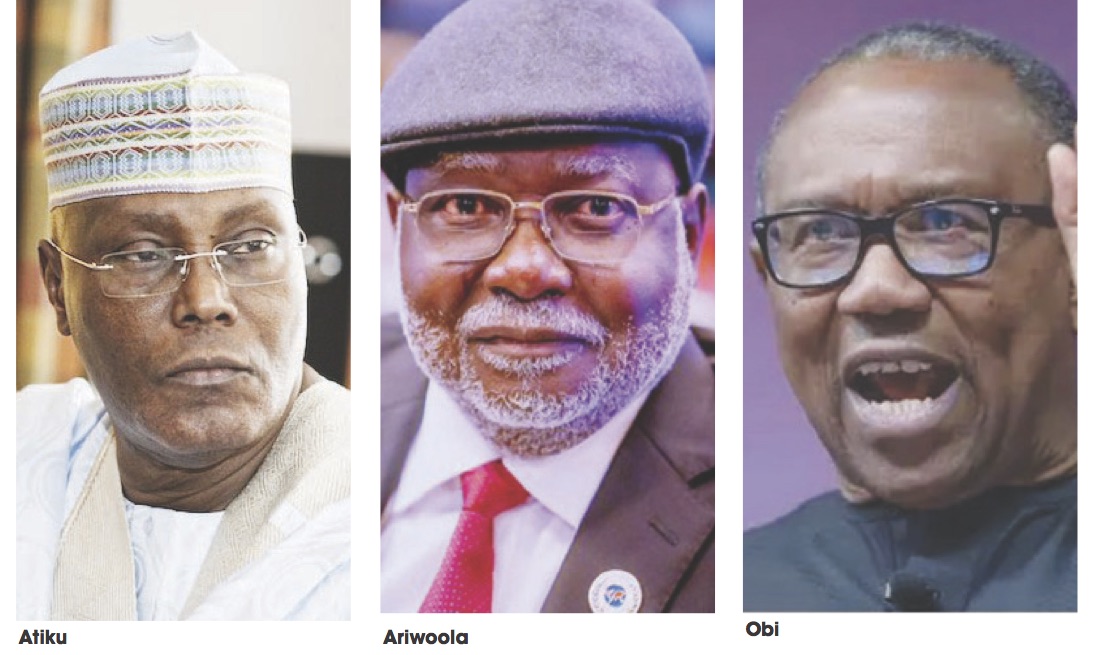
The INEC chairman announced that Tinubu won the election with the majority of votes cast in 36 states of Nigeria and the FCT, polling 8,794,726 votes to defeat fellow contenders – Atiku Abubakar of the Peoples Democratic Party (PDP) who polled 6,984,520 votes and Labour Party’s Peter Obi who had 6,101,533 votes to come third. The candidate of the New Nigeria People’s Party (NNPP), Rabiu Kwankwaso came a distant fourth with 1,496,687 votes.
Ever since that announcement of the presidential results at the National Collation Centre in Abuja, the political climate of the country has witnessed a vertiginous increase in temperature occasioned by a deluge of condemnations and criticisms that trailed the conduct of the polls.
First to raise the red flag was former President Olusegun Obasanjo who in his letter called for an outright cancellation of the polls even before it was announced on the grounds that it was riddled with malpractices and substantial non compliance to the provisions of the Electoral Act, 2022, the INEC guidelines and regulations for the conduct of the election.
Others who swiftly joined voices with former president Obasanjo for the cancellation of the polls included former Senate President and Chairman, Board of Trustees(BoT) of the PDP, Aldolphus Wabara, who described the election as a “sham”, a chieftain of the PDP, Bode George; Femi Falana, a Senior Advocate of Nigeria; Chief Mike Ahamba, SAN, and many other senior lawyers; Civil Society Organizations including the Transitional Monitoring Group (TMG).
Even the foreign observers that came around said that the exercise had several hiccups and that it was not conducted in substantial best standards for elections.
Now, after a careful evaluation of the conduct and results of the polls, the presidential candidates of the Peoples Democratic Party (PDP), Atiku Abubakar and the Labour Party (LP), Peter Obi who cried blue murder over the outcome of the election, has vowed to challenge it in court.
The aggrieved politicians, both laying claim to the mandate have all described the election as shambolic as it does not represent the true occurrences at the polling units as well as the wishes of the electorate.
Most of the fundamental issues raised in attacking the credibility and integrity of the polls bordered on report of substantial failure of presiding officers to transmit the presidential elections to the INEC Result Viewing Portal (IReV) from the polling unit, long after voting had closed, as required by law including non-use of Bi-Modal Voter Accreditation System (BVAS), for accreditation in some states.
The refusal of Polling Units officials to upload result sheets to the INEC portal raised suspicions of results manipulations to the end of achieving a co-ordinated substitution and replacement of results from the polling units, with manufactured outcomes that bore no relationship to what occurred during voting.
Some of the flaws complained about, further includes alleged shoddy election logistics, confusion over the location of the polling units or the allocation of voters units, misleading configuration of data into the BVAS, misconduct or suspected collusion by polling officials with party political interest.
Specifically, the fulcrum of the complaint is that the collation of results of the election was not carried out in a manner prescribed by the relevant laws including the provisions of the Electoral Act, 2022; the INEC regulations and guidelines for the conduct of election 2022 and the INEC manual for election officials.
The above actions are regulated by the provisions of section 153 (1) (f) and 232 (1) of the 1999 Constitution; section 25 (1) (2) and (3); sections 60 and 66 of the Electoral Act, 2022.
In addition to the alleged electoral flaws, is the legal argument about whether a presidential candidate who did not win the Federal Capital Territory (FCT), Abuja, can legally and constitutionally be declared winner of the just concluded presidential Election.
Section 299 (1) of the 1999 Constitution sees the FCT as any of the 36 States of the federation. It provides that the provisions of the Constitution shall apply to the Federal Capital Territory as if it were one of the states of the Federation. It means that the FCT is the 37th state.
Indeed, section 134 of the 1999 Constitution, has prescribed the requirements to be met by a presidential candidate to become the president of Nigeria.
The bone of contention here is that in case of an election with only two candidates, Section 134 (1) of the 1999 Constitution states that a presidential candidate shall be deemed to have been duly elected where he has “the majority” of votes cast at the election, and has not less than one-quarter of the votes cast at the election in each of at least two-thirds of all the states and the Federal Capital Territory, Abuja.
But in a case where there are more than two presidential candidates, Section 134 (2) states that a candidate shall be deemed to have been duly elected where he has the “highest number” of votes cast at the election and has not less than one-quarter of the votes cast at the election each of at least two-thirds of all the states in the Federation and the Federal Capital Territory, Abuja.
The Electoral Act, 2022 states that “…the result (in an election to the office of the President or Governor) shall be ascertained by counting the votes cast for each candidate and subjected to the provisions of sections 133, 134 and 179 of the Constitution, the candidate that receives the highest number of votes shall be declared elected by the appropriate returning officer.”
The confusion here is the fact that the constitution describes the winner in two different languages. “One, the winner must score the majority of votes [in section 134 (1)] and the other, the winner must score the highest number of votes [ in section 134 (2).
The legal question for determination remains that can a candidate that scored not less than one-quarter of the votes cast at the election in 36 States of the Federation but fails to score one-quarter of the votes cast at the FCT be legally and constitutionally declared the winner of the presidential election?
However, confluence of opinions are divided as to whether those contesting the outcome of the election based on the above grounds actually have solid and valid legal grounds weighty enough to overturn the results of the presidential election at the tribunal.
While others believe that there exists glaring and germane grounds to invalidate the election at the tribunal, others disagreed that the alleged non-compliance to the instant laws governing the conduct and declaration of the election results are not substantial enough to overturn the decision of the INEC.
Elections in Nigeria are governed principally by the 1999 Constitution, the Electoral Act, 2022 (as amended) and INEC guidelines and regulations and where there are complaints or allegations that an election is not conducted in strict compliance with the above instant laws, then, there is a room for contesting the outcome at the tribunals via an election petition.
An election petition is the only means provided by section 133 (1) of the Electoral Act, by which an election can be questioned or challenged at a tribunal or court of law.
In A.N.P.P Vs INEC (2004) 7 NWLR (Pt.871) pg 16 at 55-57, the Court of Appeal held that “What constitute an election petition therefore, is a complaint by the petitioner against an undue election or return of a successful candidate at the election. It is only an election or return of a candidate that can be questioned by an election petition, in which the person elected or returned is joined as a party.”
Now that both Atiku and Obi have commenced the legal process of challenging the declaration of Tinubu as winner of the election, at the Presidential Election Petition Tribunal, the tribunal will be urged to provide answers to the above constitutional issues and resolve same in their favour.
Some of the likely issues for determination may revolve around whether the collation of the national election results from the 36 States of the Federation, and that of the FCT, have been carried out in compliance with the mandatory provisions of relevant sections of the Electoral Act, 2022; the INEC Regulations and Guidelines for the Conduct of Elections, 2022, made pursuant to the provisions of the Electoral Act, 2022; and the INEC Manual for Election Officials, 2023.”
The tribunal may equally inquire into whether the exercise was carried out in flagrant violation of the provisions of Sections 25; 47(2); 60 (1), (2), (4) & (5); 62; 64(4)(a) & (b); 70; and 148 of the Electoral Act, 2022, governing the 2023, particularly paragraphs 38 of the INEC Regulations and Guidelines for the Conduct of Elections, 2022; and paragraphs 2.8.4; 2.9.0; and 2.9.1 of the INEC Manual for Election Officials, 2023, for the conduct of the Presidential Election.
That the non-uploading of the results of each of the 176,974 Polling Units nationwide, was not in accordance with the provisions of Sections 25; 47(2); 60 (1), (2), (4) & (5); 62; 64(4)(a) & (b); 70; and 148; of the Electoral Act, 2022, governing the 2023 nationwide general elections, particularly paragraphs 38 of the INEC Regulations and Guidelines for the Conduct of Elections, 2022; and paragraphs 2.8.4; 2.9.0; and 2.9.1 of the INEC Manual for Election Officials, 2023, for the conduct of the presidential election.
Another fundamental issue that may call for the interrogation by the tribunal will be the failure of the electoral body to electronically transmit or transfer Polling Unit Results in Form EC8A using BVAS by uploading Scanned Copy of the said Unit Result to the Independent National Electoral Commission Result Viewing Portal (IReV) after the counting and announcement of the Polling Units results in violation to the provision of Sections 25; 47(2); 60 (1), (2), (4) & (5); 62; 64(4)(a) & (b); 70; and 148 of the Electoral Act, 2022, governing the election, particularly paragraphs 38 of the INEC Regulations and Guidelines for the Conduct of Elections, 2022; and paragraphs 2.8.4; 2.9.0; and 2.9.1 of the INEC Manual for Election Officials, 2023, for the conduct of the presidential election.”