Follow Us on Google
- As country battles with 3.5m hectares of land for irrigated production.
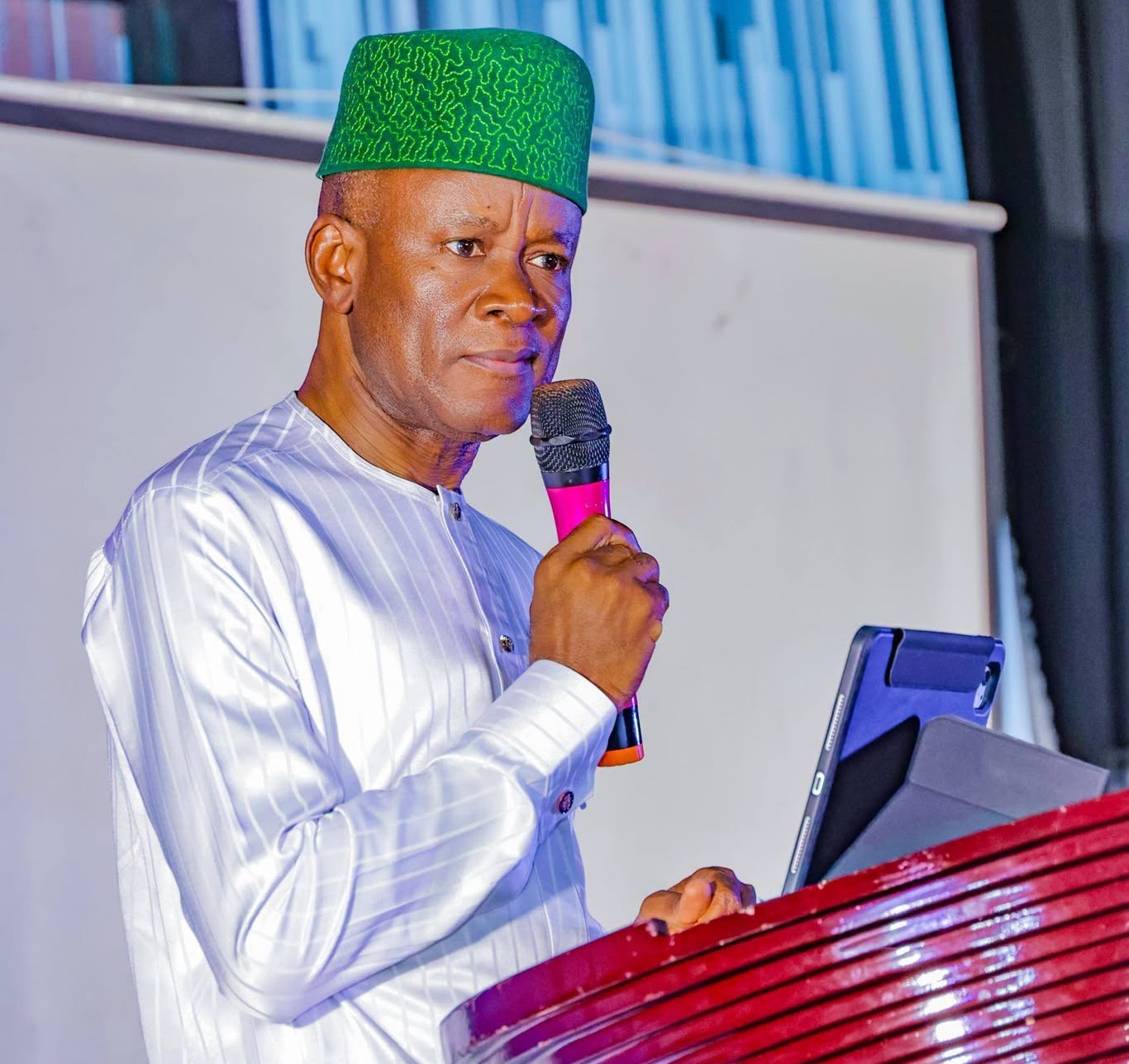
Minister of State for Industry, John Owan Enoh, has disclosed that Nigeria consumes about six million metric tonnes of wheat annually, but its flour mills operate at roughly half of their production capacity.
He said Nigeria had between two million and 3.5 million hectares of land with potential for irrigated wheat production.
Enoh, who spoke yesterday in Abuja, at the unveiling of Project Wheat-ness, attributed the snags facing the country’s wheat-based food industry to rising energy costs, transportation expenses, global grain market pressures and inadequate domestic wheat supply.
The Minister explained that the programme is designed to strengthen Nigeria’s wheat-based foods value chain, improve industrial competitiveness and make food products more affordable to consumers.
He said the scheme would bring together farmers, millers, food manufacturers, bakers, financial institutions and government agencies to address constraints across the sector.
According to him, Nigeria’s wheat consumption is among the highest in sub-Saharan Africa, with the commodity serving as a major ingredient in bread, noodles, pasta, semolina and biscuits.
He noted that nearly three out of every four loaves of bread consumed in the country are produced by artisanal and regional bakeries, underscoring the importance of small and medium-scale enterprises to the industry.
Enoh said the initiative was approved by President Bola Tinubu to improve the performance of the sector and ease the pressure of rising food costs on Nigerian households.
He explained that the programme would focus on five interconnected areas: upstream supply, industrial processing, downstream enterprises, the consumer market, and the financial and policy environment.
The minister said the initiative was not a subsidy scheme but a comprehensive effort to address the challenges affecting the entire wheat value chain.
“Competitiveness and affordability are not rivals. They are one outcome, seen from two ends of the same chain,” he said.
Minister of Finance, Taiwo Oyedele, further explained that Project WHEAT- NESS would provide an opportunity for Nigeria to strengthen the linkages between agriculture, manufacturing, finance and distribution, with the objectives of improving domestic production, reducing avoidable import dependence, creating jobs and making essential food products more affordable.
Represented by the Director of Economic Research, Policy Management, Abubakar Usman Othman, the minister said that Nigeria has begun implementing far-reaching economic reforms, including petrol subsidy removal and foreign exchange market reforms, to restore macroeconomic stability and improve resource allocation.
“However, stabilisation must translate into productive investment, stronger businesses, job creation and improved living standards.
“According to the National Bureau of Statistics, Nigeria’s real GDP grew by 4.43 per cent year-on-year in Q2 2026, compared with 4.23 per cent in Q2 2025.
“The manufacturing sector recorded real growth of 3.24 per cent during the same period. These developments reinforce the need to deepen domestic production and strengthen industrial competitiveness.
“Wheat-based foods-including bread, noodles, pasta, biscuits and pastries are important to Nigerian households and businesses. Their prices affect household expenditure, production costs, employment and foreign exchange demand.”
On his part, Special Adviser to President Bola Tinubu on Industry, Trade and Investment, John Nwajumogu, assured investors that Nigeria will work with development finance institutions so that the money reaches farmers and small businesses on terms that work for them.
“We will keep pressing on energy, storage and logistics, because every naira taken out of the chain is a naira saved on the family table.
“We will track wheat output, the price of a standard loaf and the jobs created, and we will report back to you.
“Bread has always told us whether a society is working. Our task is to make sure that, in Nigeria, the bread on every family’s table is affordable, and grown, milled and baked by Nigerians,” he added.