Follow Us on Google
From Juliana Taiwo-Obalonye, New York
Nigeria has urged the global community to prioritise women and girls in the energy transition, linking clean energy access to empowerment through sport and community development.
Speaking at the side event of the 70th Session of the United Nations Commission on the Status of Women (CSW70) in New York, tagged: “Catalysing energy justice: Energising communities through girls/women and sport,” Nigeria’s Chargé d’Affaires to the United Nations, Syndoph Endonni, stressed that equitable energy access was essential not only for powering communities but also for unlocking human potential.
“Energy is far more than a commodity,” Ambassador Endonni stated. “It is an enabler of dignity, opportunity and human progress.”
He highlighted how millions of women and girls worldwide suffer from energy poverty, which limits education, economic participation, health and wellbeing. He called for an inclusive global energy transformation that centres their leadership, needs and aspirations.
“Energy access and justice are deeply gender issues,” he added. “We must ensure that energy transitions are inclusive, equitable and responsive.”
He also emphasised sport’s transformative power for empowerment and social cohesion, noting that clean energy-powered sports infrastructure could become multifunctional hubs for learning, innovation and community development.
“When women and girls actively participate in sport, they build confidence, leadership and resilience,” he said. “When powered by clean energy, sports facilities become catalysts for inclusive development.”
Reaffirming Nigeria’s commitment to closing the gender-energy gap, he framed the energy transition as “an opportunity to build resilient industries driven by innovation, clean technologies and the potential of our youth.”
Other News
He called for stronger collaboration among governments, civil society and the private sector. “Let this dialogue inspire partnerships that ensure energy justice truly energises communities,” he urged.
Keynote from Her Excellency, Lady Tee Thompson, emphasised energy’s role as a key driver of national progress.
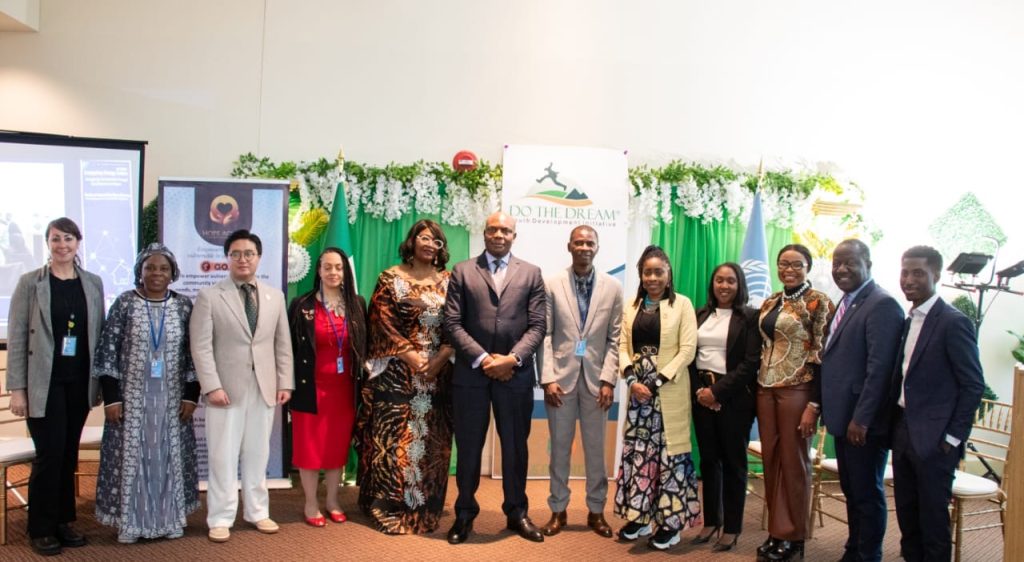
The event, organized by DoTheDream Youth Development Initiative (DoTheDream YDI), co-hosted by the Conference of NGOs in Consultative Relationship with the United Nations, and supported by other partners, highlighted the urgent need to address energy access disparities in the Global South.
DoTheDream YDI’s Co-chair of the CSW70 Planning Committee, Omopeju Afanu and Founder/Lead Strategist of the Girls in Energy (GiE) Project, Adebusuyi Olutayo Olumadewa, explained that energy access gaps in developing regions go beyond infrastructure. “They represent structural barriers to education, healthcare, women’s economic participation, safety and digital inclusion,” they stated. They showcased the GiE Project as a scalable, investment-ready model integrating clean energy with economic empowerment, education, healthcare resilience and sport-driven community mobilisation.
The convening doubled as a high-level platform to mobilise US$20 million from governments, development finance institutions, private sector leaders, foundations and philanthropists. It leveraged sport’s global appeal to boost visibility, build trust and secure commitments.
“This platform positions women and girls not as beneficiaries, but as catalysts of energy justice, leaders, innovators, entrepreneurs and drivers of sustainable adoption and accountability,” the organisers stated. “When girls light pathways to energy justice, communities ignite with possibility.”
The event featured two high-level panels. The first, moderated by Dr. Afanu, addressed “Energising Communities: Energy Justice as a Development Accelerator,” with contributions from Cynthia Obiorah, Shameka Littles, Guy Djoken and Rui Dai.
The second, moderated by Rebecca Irby, explored “Sport as a Catalyst for Accelerating the Girls in Energy Project,” featuring US Rugby Foundation Hall of Fame Phandira Knight, Sarah Noet, Aaron Ableman, Peter Young and Emilie McGlone.