Follow Us on Google

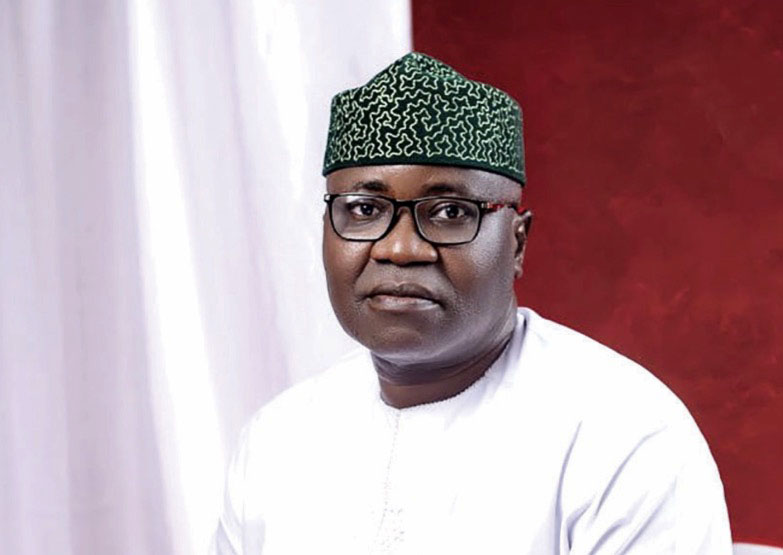
By Laide Raheem, Abeokuta
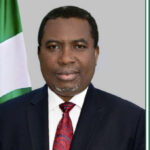
Hon. Morakinyo Ogooluwa Akinleye, a Federal Commissioner at the Public Complaints Commission representing Ogun State, has said Nigeria is still battling problems created by military incursions as it clocks 66, but insisted that the reforms of the Tinubu administration will soon begin to yield results.
In this interview with Daily Sun, the former Senior Legislative Aide to the late Senator Iyabo Anisulowo speaks on the pain, challenges and gains confronting the nation more than six decades after independence from Britain. He also addresses the role of governors and local governments, opposition fears over the 2027 elections, insecurity, and why Nigerians must support the government.
Nigeria is 66 years old as an independent nation. In your opinion, how have we fared as a country?
To the glory of God Almighty, if we equate Nigeria to a human being, you learn from history, and the best option is to learn from history. Since independence in 1960, it is very rare that we have sustained democratic governance the way we have since 1999. This year makes it 27 years. It shows that we are a bit different and have learnt some lessons, though we are not yet at uhuru, not yet fully at that level.
In the First Republic, we spent six years before the military struck. After that, the endemic problems created by those military administrations are still being battled today.
But thank God for the ongoing administration, which is solving some of the problems whose foundations were laid several years back. It is changing the narrative of various institutions of government that had been seen as money-spinning ventures for some individuals or cabals. In the spirit of transparency, and by blocking all the loopholes as this administration is doing, we shall definitely get there. It is not going to be easy because of the various reforms the administration has embarked upon. Look at the issue of subsidy. We cannot continue to over-pamper the populace and a clique who were eating deep from the earnings of government in the name of subsidy, and continue to deplete the future of generations to come. The problems are there and we are solving them gradually. In the last three or four years we have been moving faster, and I know for sure that the impact of those reforms will start yielding results any moment from now.
How do we resolve it? We must cut the cost of governance as a critical step to consolidate the gains and secure the nation’s future. So what I will implore Nigerians, particularly those working for government, who are more or less the elites, is to abide by the rules of the game. I also urge the entire populace to be resilient, to be strong at heart and to bear the brunt of those reforms, which I know will surely lead us to the Eldorado, where Nigeria will be at the appropriate place among the comity of nations. It is not going to be far.
Do you think Nigeria is heading in the right direction under the administration of President Bola Ahmed Tinubu?
We continue to shout “Nigeria, Nigeria”, and say the government should do this and the government should do that. But this administration knows fully that most Nigerians are at the grassroots. This is why it is empowering the state governments financially. Even at the Federation Account Allocation Committee (FAAC), the revenue allocation going to the states is more than triple what was being collected before. So it is expected that governors should live up to their responsibility and behave in the spirit the President is asking of them, because we are operating a federal system. The federal government cannot carry all the money and execute projects in a state on behalf of the state, just as state governors are not expected to execute projects in the name of local governments. The three tiers of government should be left alone to operate freely so that the populace will feel the impact. The governors still have a lot to do, and they still need to leave the local governments to operate freely. That is the major problem, and most of it is created by holding the jugular of the lowest administrative tier, which is the local government.
Most of the time, the populace is not looking to their governors. They are calling on the President, which is not possible. That is a major factor. I believe Nigeria will feel better if governors allow local governments to work. Lagos State is doing fine, and there are some other governors like that. But most local government administrators are crying behind the mask that they are not being allowed to take charge of their councils. By virtue of my position as the Ombudsman, we receive many complaints, which we handle in partnership with state ministries, but the majority of them are the responsibility of local governments.
We are going into an election year, and some sections of Nigeria, particularly the opposition parties, are pessimistic about the possibility of a credible poll. What is your take on this?
The sections of Nigerians who are unhappy about the elections are very few. They are a microscopic minority who had been eating and enjoying the rot of the previous administrations and no longer have that opportunity, hence they are crying foul here and there. I am not saying we should have a one-party state, but when you operate from the opposition, what policy are you putting forward as an alternative? The type of politics I grew up to know, from my father and from the Awolowo school of politics, is that the opposition provides alternative and better policies to the ruling government. But what do we have at the federal, state and even local government levels? The majority of those shouting foul have no alternative policy. They simply attack personalities within the system.
Interestingly, most of these people have operated independently in Nigeria, yet the country should have gone higher and been more respected in the comity of nations.
Let us go into that election with an open mind. Go and vote for your candidate. Campaign with policies and ideas on what you can do better as a candidate of any party, rather than attacking someone for being too high, too tall or too short.
The Nigerian constitution is very clear, and the Electoral Act is there. We should operate within the ambit of the law.
Opposition parties and candidates should present their best policies. And those who are better placed to win should not be carried away by acceptability but should ask what they can do better than the present administration. All policies are meant to impact the lives of the people. For me, the election will definitely be free and fair, by the grace of God. I implore Nigerians to go into that election and not sell their votes, not fight and not cause any problem.
Insecurity is one of the problems facing the country, and since the advent of this administration the situation does not appear to have abated. What can be done to return Nigeria to the years when we could travel without fear of being kidnapped or attacked by bandits?
I always thank God because, while in service, I traversed the length and breadth of this country. Many of the areas I travelled to then now have bandits and other problems. When I ask what we can do, there is nothing other than for Nigerians to come together and support the government in its efforts to tackle this menace. Let me speak from the perspective of an indigene of Ogun State. We have our own business, but most of the youths are not ready to work again. Nigerians celebrate people with money, just as the elites celebrate those with certificates rather than skills. Go to construction sites today and you will hardly see artisans. Everybody wants money. Even in government offices, I can tell you for free that the majority want higher salaries without commensurate input. I have seen that trajectory and I stand against it. Even in my Commission, many look for higher pay but do not want to work, and they cite the rules of the public service as an excuse.
The only way to stem insecurity is for our judicial system to work perfectly, so that those who have been apprehended, prosecuted and found guilty are seen to face the full wrath of the law. Others must see that it will not be business as usual.
When bandits, some of them known and some who have even confessed, are seen not to have been brought to book, and the judicial system keeps dragging the matter up and down, many people will still go into that business. Kidnapping has become a business because the judicial system has not put its foot down to ensure that culprits of similar crimes receive the punishment expected. If Nigeria is able to do that, I bet you it will reduce. The other area is for the government to commend and promote credible administration. On the part of society, families now place money above morals and social norms. We over-pamper the younger ones. We do not want them to work, and we work for them, unlike in the olden days when the younger ones worked for the family. Now parents pamper their wards until they grow up, then look for jobs and many other things for them. At the end of the day, if there is any challenge like this, there will be a problem. The younger ones need to be put on their toes.
The elderly ones, those with the opportunity to make money or to be in positions of power, should be responsible, accountable and responsive. Society should also know whom it confers chieftaincy titles on. Chieftaincy titles should not go to the richest but to the credible. There is a saying that you must be worthy in character and in learning. Those given chieftaincy titles and awards should not be people of questionable character. Those are some of the ways we can stem the growth of insecurity. If a popular bandit or criminal is given an award by an NGO or a title by the community, how will that not promote insecurity? As a people, we should stop honouring celebrated criminals. The community as a body, the traditional institution, the government and other institutions should have standards, and government workers should be ready to work for their money.
What is your advice or message to Nigerians as the country clocks 66?
As we clock 66, my message is that we should be law-abiding and support the current administration to take Nigeria into its 67th year, when I believe the positive effects of most of its policies will start yielding results. We should not truncate that hope at the very point when the policies begin to take effect, by changing the administration. Nigeria will be better. I know Nigeria will be better with those policies. Look at the hue and cry with which many opposition parties thought they could malign Nigeria because of those in charge now. It has made no impact on the incumbent administration. There is a saying in Yoruba that if you peel the bark of a baobab tree, instead of shrinking, it grows fatter and fatter. Nigeria will continue to grow from strength to strength. The outcome of the recent United Nations General Assembly is clear: the image of Nigeria, far and near, continues to grow rather than diminish. Nigeria will be better. We should be positive, and to the glory of God we will be stable.