Follow Us on Google
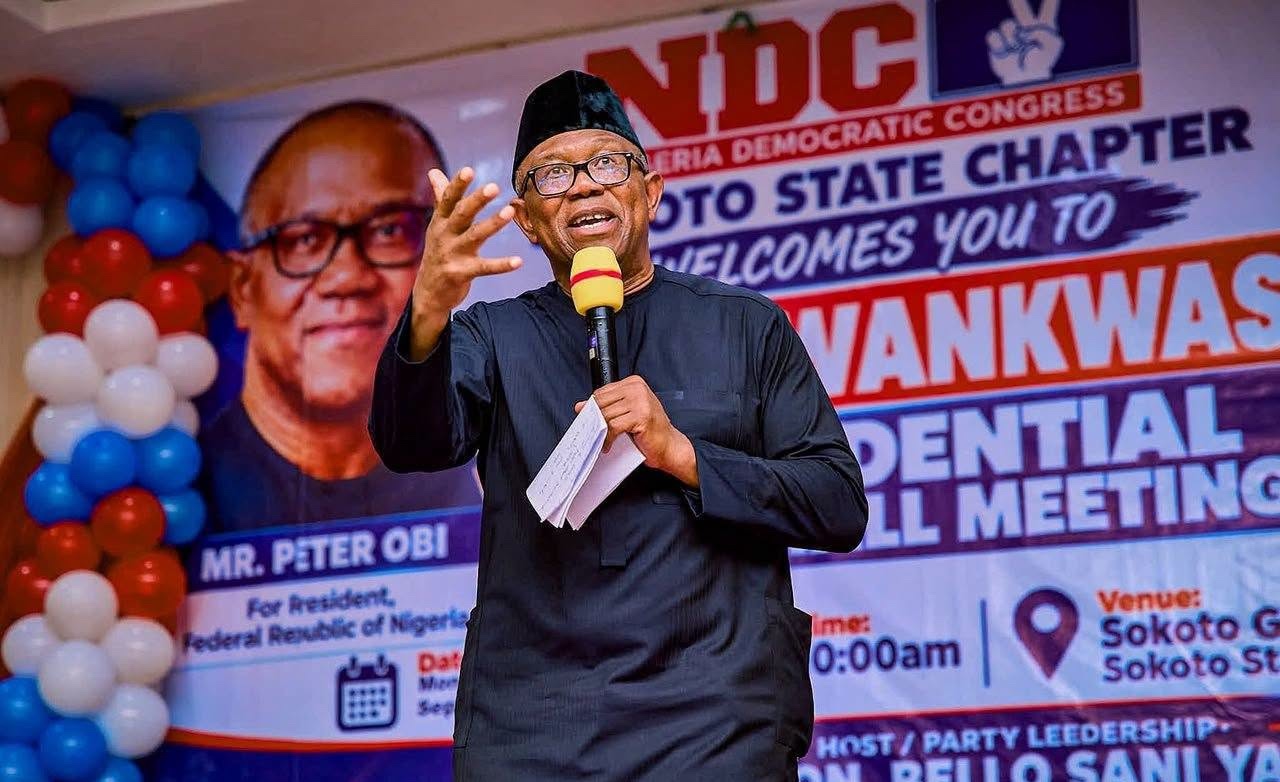
The presidential candidate of the Nigeria Democratic Congress (NDC), Peter Obi, has rejected the notion that Nigeria is cursed, saying the country’s worsening poverty, insecurity, and underdevelopment are consequences of choices made and failures tolerated by its leaders.
Obi, in his Independence Day address to Nigerians, said the country remained enormously endowed with human and natural resources but had failed to translate its wealth into human development, productivity, security and shared prosperity.
He posed a fundamental question to Nigerians: “Are we cursed, or have we become the curse through the choices we have made and the failures we have tolerated?”
Answering the question, Obi said, “The answer cannot be that Nigeria is cursed. We are a nation immensely endowed and blessed. Our greatest problem is not a lack of resources; it is the failure to convert our enormous resources into human development, productivity, security and shared prosperity.”
He said the 66th anniversary of independence should therefore be more than a celebration, urging Nigerians to use the occasion for an honest assessment of the country’s direction and its failure to meet the expectations of its founding fathers.
The former Anambra State governor said the country was currently facing deepening challenges across virtually every critical sector, including poverty, education, security, food security, employment, healthcare and life expectancy.
According to him, more than 140 million Nigerians are living in poverty and severe hardship, while over 18 million children remain out of school and more than 35 million youths are affected by unemployment and underemployment.
He also warned that over 40 million Nigerians could face extreme hunger by the end of 2026, while insecurity, terrorism, banditry and kidnapping continued to threaten lives and livelihoods.
Obi said the reality of the crisis was brought home to him during his recent two-day visit to Sokoto State with his running mate, Rabiu Kwankwaso, where they consulted different groups on insecurity, poverty, out-of-school children, youth unemployment and drug abuse.
He said their visit to the Internally Displaced Persons camp at Ramin Kura was particularly troubling, with thousands of women and children living in difficult conditions after being forced from their communities.
“What we saw was deeply troubling. Thousands of women and children live in deplorable conditions, displaced from their homes and deprived of the basic necessities of life,” Obi said.
Other News
He added that many of the children had no access to education, while mothers and children had limited access to basic healthcare.
“These are Nigerians who should be living in their communities, going to school, farming their land, conducting their businesses and contributing to the economy. Instead, they live as displaced persons in their own country,” he said.
Obi said the situation at Ramin Kura was a reflection of the suffering experienced in different parts of Nigeria, arguing that the country could not continue to treat such conditions as normal.
He further said the challenge before Nigeria was to determine where the country stood, where it wanted to be and how to move from its present condition to its desired destination.
Obi, however, said his message was not one of despair, insisting that “a new Nigeria is possible”.
He promised that, if elected president, his administration would make governance measurable and accountable, with greater emphasis on the welfare and productivity of citizens.
He said his government would tackle insecurity to enable farmers to return to their farms, children to return to school and businesses to operate freely, while Nigerians displaced by insecurity would be supported to return safely and with dignity to their communities.
The former governor also promised to move Nigeria from what he described as a consumption-driven economy to a productive one that creates jobs, expands opportunities, supports agriculture and manufacturing and invests in human capital.
He said education, healthcare, security and productive enterprise would be prioritised because they were the foundations of a functioning nation.
The NDC candidate said Nigeria’s future would ultimately depend on leadership that treated public office as a responsibility rather than an entitlement, as well as citizens willing to demand accountability.
“The Nigeria we desire will not be built by prayers alone, nor by promises alone. It will be built by leadership that understands that public office is a sacred trust, by citizens who demand accountability, and by all of us who refuse to accept failure as our destiny,” he said.