Follow Us on Google
Says economy growing, infrastructure investments rising, over 120,000 vehicles converted to CNG
___________________________________________________________________
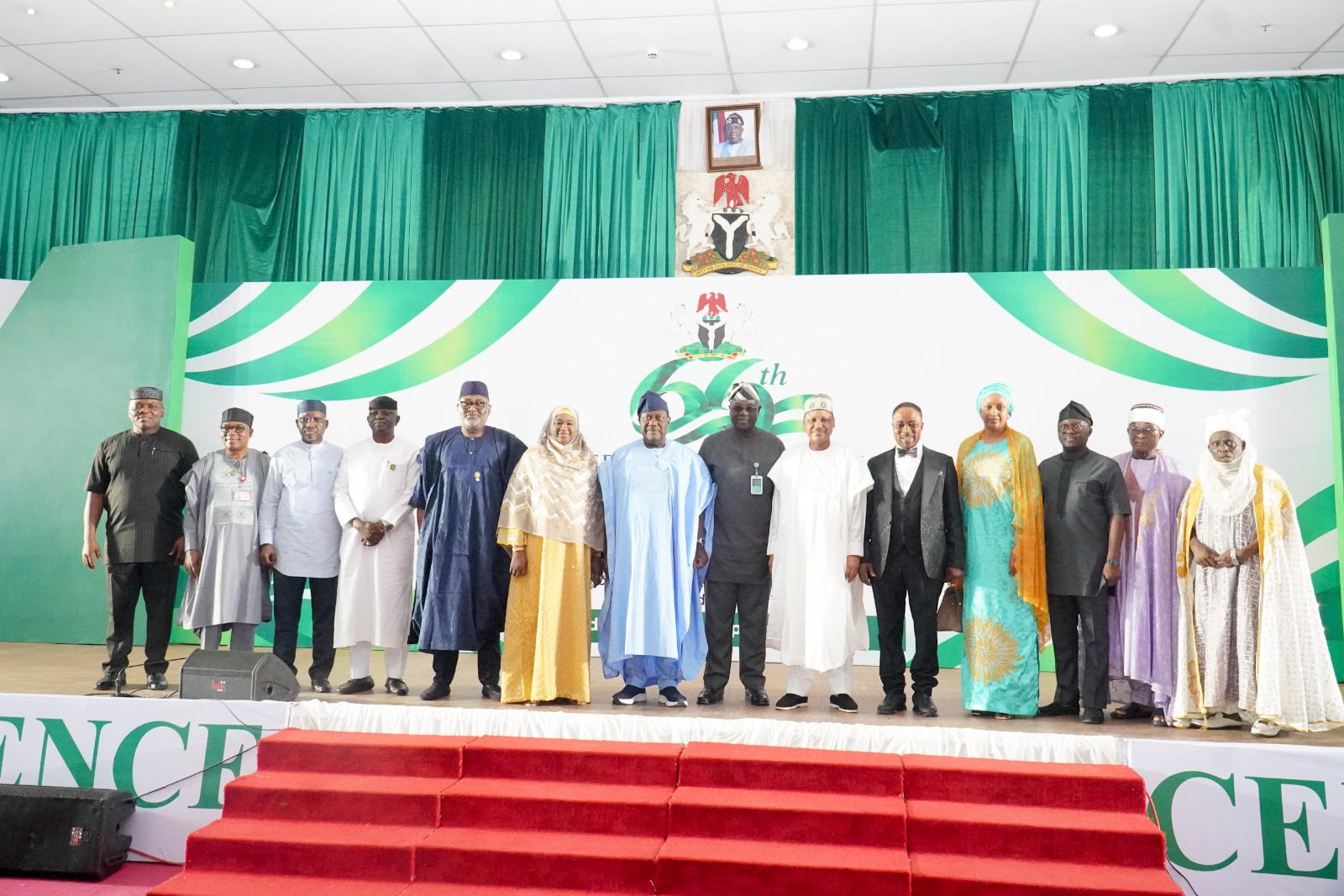
Secretary to the Government of the Federation (SGF), George Akume, has said the economic reforms introduced by President Bola Tinubu’s administration in 2023 were necessary to save Nigeria from imminent collapse, insisting that the measures have begun to yield positive results.
Akume, who spoke on Wednesday at the 66th Independence Anniversary Public Lecture in Abuja, said the removal of petrol subsidy, unification of the foreign exchange market and fiscal reforms were difficult but unavoidable decisions needed to restore economic stability.
He maintained that the reforms had started producing measurable gains in economic growth, infrastructure development, agriculture and energy, while acknowledging the need to translate the improvements into jobs and higher incomes for Nigerians.
“This administration took office in 2023 and immediately took bold decisions needed to save the nation from imminent collapse. Such decisions include the removal of the petrol subsidy, unification of the foreign exchange market, tax and other fiscal reforms.
“These were difficult decisions, but necessary to rebuild stability, and we have started enjoying the results,” he said.
The SGF, who spoke at the lecture organised as part of activities marking Nigeria’s 66th Independence anniversary, cited World Bank figures showing that the country’s real Gross Domestic Product (GDP) grew by 4.2 per cent in the first half of 2026, compared with 3.9 per cent in the corresponding period of the previous year.
“According to the World Bank, Nigeria’s real GDP grew by 4.2 per cent in the first half of 2026, up from 3.9 per cent a year earlier, as business activity expanded.
“The task before us now is to ensure that growth translates into jobs and higher incomes for all Nigerians,” he said.
Akume identified investments in roads, railways, ports and other critical infrastructure as part of the administration’s efforts to stimulate economic activities, improve connectivity and reduce the cost of doing business.
He listed the Lagos-Calabar Coastal Highway, Abuja-Kano Highway, East-West Road, railway modernisation and port reforms among the major projects expected to improve trade and economic activities across the country.
According to him, the government is also expanding mortgage financing to stimulate housing development and employment, while addressing challenges in the power and transportation sectors.
On the power sector, Akume said the administration had cleared legacy debts, increased investments and taken steps to improve electricity transmission and billing, while exploring the country’s natural gas resources.
He disclosed that more than 120,000 vehicles had been converted to Compressed Natural Gas (CNG), supported by over 400 conversion centres and 90 fuelling stations nationwide.
“This shift is cutting fuel costs for motorists and commuters. CNG buses now carry millions of passengers at fares far below those of petrol buses. We will not return to the ruinous petroleum subsidy regime of the past,” he declared.
On food security, the SGF said the administration was prioritising agricultural mechanisation, irrigation, improved seeds, fertiliser distribution, storage facilities and local processing to increase domestic food production.
He disclosed that the World Bank had approved a $500 million credit facility for the Nigeria Sustainable Agricultural Value-Chains for Growth (AGROW) project, aimed at improving smallholder farmers’ productivity, strengthening agricultural value chains and enhancing food and nutrition security.
“I am pleased that the World Bank has approved a $500 million credit for the Nigeria Sustainable Agricultural Value-Chains for Growth (AGROW) project. This initiative will raise smallholder productivity, strengthen value chains, and improve food and nutrition security,” he said.
Akume also identified youth empowerment as a critical component of the administration’s development agenda, noting that more than 60 per cent of Nigerians were below the age of 25.
He said the government had expanded the student loan scheme to enable more young Nigerians to access university and vocational education, while strengthening technical and vocational institutions to equip graduates with industry-relevant skills.
“Our young people are not just leaders of tomorrow, they are partners in building Nigeria today,” he said.
The SGF urged Nigerians in the diaspora to invest in the country, describing their contributions as extending beyond remittances to include investments, ideas and national development.
On healthcare and social protection, he said the government was equipping thousands of primary healthcare centres under the IMPACT initiative and expanding social intervention programmes, including NG-CARES Additional Financing, SOLID and HOPE, to support vulnerable households.
Other News
He said the programmes, backed by federal government and World Bank funding, were designed to provide cash transfers and essential services to vulnerable families.
On security, Akume commended the armed forces and other security agencies for their efforts, saying the government was improving military equipment, intelligence gathering and inter-agency coordination.
He also disclosed that a new National Threat Assessment and a five-year Strategic Defence Plan were being introduced to strengthen the country’s security architecture.
“Security and welfare of the people is the responsibility of government. Nothing matters more than the safety of our people,” he said.
He added that development and security were interconnected, arguing that access to economic opportunities and confidence in the justice system could help reduce crime and violence.
“When communities have opportunities and trust in justice, crime and violence decline. In that sense, development and security go hand in hand,” he stated.
Akume said the Independence anniversary lecture should serve as a renewed call to duty for leaders and citizens, stressing the need to translate economic reforms into tangible improvements in the lives of Nigerians.
“We, as leaders, envision a Nigeria where a young graduate becomes an employer of labour; where a farmer can feed his family and sell surplus at market; where an entrepreneur can turn a small shop into a thriving enterprise; and where every child goes to a good school and sees a doctor when sick,” he said.
He acknowledged that achieving the country’s development aspirations would require sustained efforts but expressed confidence in the administration’s objective of delivering shared prosperity.
“We know the path will not be easy, but our goal is clear: shared prosperity for all Nigerians,” he added.
Also speaking at the lecture, the Minister of Information and National Orientation, Mohammed Idris, said the reforms introduced by the Tinubu administration over the past three years had begun addressing longstanding structural weaknesses in the economy, despite the sacrifices they had imposed on Nigerians.
Idris, who described the anniversary theme as significant to the country’s development trajectory, said the administration’s objective was to transform reforms into economic stability, growth and shared prosperity.
He cited the country’s 4.43 per cent GDP growth in the second quarter of 2026, expanding domestic refining capacity, renewed investments in critical sectors and ongoing infrastructure projects as encouraging signs.
“The reforms of the past three years have not been easy. They have demanded sacrifice and patience from Nigerians. But they have also begun the difficult process of correcting longstanding structural weaknesses and laying stronger foundations for the future,” he said.
The minister said the ultimate objective of the reforms was to ensure that their benefits reached ordinary Nigerians, adding that the government could not achieve its development goals without the cooperation of other stakeholders.
He called on the private sector, media, civil society organisations, traditional and religious institutions, academia and citizens to contribute to national development.
Idris particularly urged the media to uphold professionalism and promote fact-based public discourse as the country approaches another electoral cycle.
“The media, particularly as we approach another electoral cycle, carries a special responsibility to promote informed public discourse anchored on facts, verification and national cohesion,” he said.
He stressed that political differences were legitimate in a democracy but should not undermine national unity.
“Political differences are legitimate in a democracy; they must never diminish our common identity as Nigerians,” he added.
The minister said Nigeria’s 66th Independence anniversary provided an opportunity for citizens to reflect on the country’s progress and renew their commitment to national unity, security and prosperity.
He urged Nigerians to sustain their faith in the country, describing nation-building as a continuing responsibility that must be passed from one generation to another.