Follow Us on Google
From Ndubuisi Orji, Abuja
On June 12, inside the hallowed chamber of the House of Representatives, President Bola Tinubu threw a jab at the opposition. President Tinubu, who was addressing a joint session of the National Assembly, said nobody should be blamed for “seeking to bail out of a sinking ship even without a life jacket,” adding that “for me, I would say try your best to put your house in order. I will not help you do so. It is, indeed, a pleasure to witness you in such disarray.”
President Tinubu’s mockery was understandable. The opposition has been wobbling since the inception of his administration, with all the major opposition parties bogged down by internal crisis. Thus, the opposition, distracted by internal challenges, is gasping for breadth and unable to offer effective opposition to the present administration.
Overall, the story of Nigeria opposition has been a pathetic one since the inception of the current democratic dispensation. At the dawn of the Fourth Republic in 1999, the Peoples Democratic Party (PDP) emerged the ruling party, after winning the presidency, 21 governorship seats and majority of seats in the two chambers of the National Assembly. Consequently, the All Peoples Party (APP) and the Alliance for Democracy (AD) were consigned to the opposition.
In the run-up to the 2003 general election, three more parties-All Progressives Grand Alliance (APGA), United Nigeria Peoples Party(UNPP) and the National Democratic Party(NDP) were registered. Late fiery Lagos lawyer, Gani Fawehinmi, incensed by the non registration of his party, National Conscience Party (NCP), sued the Independent National Electoral Commission (INEC) and secured a victory. That victory opened a floodgate for the mass registration of political parties, so much so that at a point there were 89 political parties operating in the country.
While the development widened the political space, it weakened the opposition greatly. In no time, the APP and AD and APGA descended into chaos, while almost all the other political parties fizzled out. Unable to withstand the heat, key opposition figures, especially the APP drifted to the PDP. Eventually AD withered, with some members of the party, including President Tinubu forming the Action Congress (AC) and a breakaway group of the APP, which had transmuted to the All Nigeria Peoples Party (ANPP), led by late President Muhammadu Buhari formed the Congress for Progressive Change (CPC).
The PDP, which at a point controlled 29 out of the 36 states in the country, in addition to the Presidency and National Assembly, reigned unchallenged, until 2013, when ANPP, ACN and CPC, fused with splinter groups from the PDP and APGA, to form the All Progrossives Congress (APC).
Analysts say the opposition was at its best between period between 2013 to 2015, as key opposition figures under the umbrella f the then newly formed APC confronted the PDP head-on- amplifying every failing and perceived failings of the then ruling party, as well as rallying the citizens against the PDP administration. Eventually, opposition sacked the ruling party in 2015.
After the 2015 victory of the APC, the PDP was relegated to the role of major opposition party. Whether or not the PDP has discharged this role effectively is a subject of debate. While critics say the PDP has not proved its mettle as an opposition, the major opposition party thinks otherwise.
PDP Deputy National Publicity Secretary, Ibrahim Abdullahi told Daily Sun that that the party has been discharging its role as the leading opposition party effectively, but it has been doing so more decently that the ruling party did when it was in opposition. He recalled that the APC deployed blackmail and lies against the PDP, in its quest to gain power.
Abdullahi said: “We criticise government. We refuse to identify with some of the lies and the falsehood of the government in managing the social economic lives of Nigerians. We have been critical of the government. But we are doing so with a lot of decency and decorum. We refuse to allow sentiment to becloud our reasoning. We have advantage in our ability to perform. We have more advantage in performance than in criticism.
“Often time, criticism in the manner that PDP received from the opposition party in 2013, 2014, particularly as we journeyed towards 2015 is not the wise way to go in a democracy. Every Nigerian will remember how the PDP was harangued by these people in the 2014 opposition struggle. We have now listened to the number of persons, who are coming from the APC and whatever platform they operate from today to say they blackmailed the PDP.
“They told lies, monumental lies, exaggerated the problems confronting us at that time just to get power. But we are not looking at that, as the best approach to democracy. While you want to take power, you should also be able to tell Nigerians the truth about the situation of thing. But they exaggerated that time using insecurity, as a measure to get power. They got the power but Nigeria ended up worse security wise.”
Other News
The outcome of the 2023 elections had raised hopes of vibrant opposition. Apart from the PDP, the Labour Party (LP) and New Nigerian Peoples Party (NNPP) had made strong showing in the last general election. For instance, in the 10th Assembly, especially in the Green Chamber, the opposition parties combined, had more members than the APC. However, that hope has since evaporated, as all the three major opposition parties had been bugged down by internal conflicts for the last two years.
Nonetheless, pundits say the opposition lacked a sense of direction from the beginning. For starters, despite, having the requisite number to determine the leadership of the two chambers of the Federal Legislature, opposition lawmakers supported the choice of APC for the leadership of the two chambers.
In the last two years, no fewer than 40 members of the National Assembly elected on the platform of opposition parties, as well as Delta State governor, Sheriff Oborevbori and his Akwa Ibom counterpart, Umo Eno, both of whom were elected on the PDP platform, have defected to the APC.
The opposition, especially the PDP has repeatedly accused President Tinubu and the APC of allegedly sowing seeds of discord in its fold and intimidating its members to defect, so as to allegedly foist a one party state on the country. However, both the President and the APC have dismissed the allegation as untrue.
However, while the opposition parties are making frantic efforts to put their house together, ahead of the 2027 contest, they accuse the APC of sowing discord amongst them so as to foist a one-party state on the country.
Pundits say the bane of opposition parties in the Fourth Republic is largely absence of ideologies, lack of party loyalty, weak leadership and absence of party supremacy.
This is in contrast to the situation in the first and second Republic, where there was clear cut ideologies and party supremacy. Besides, there is also the challenge of fragmentation of the opposition. Recall that in the First Republic, the Northern Peoples Congress, the National Council for Nigerian Citizens and Action Group had distinct ideologies, which stood them out.
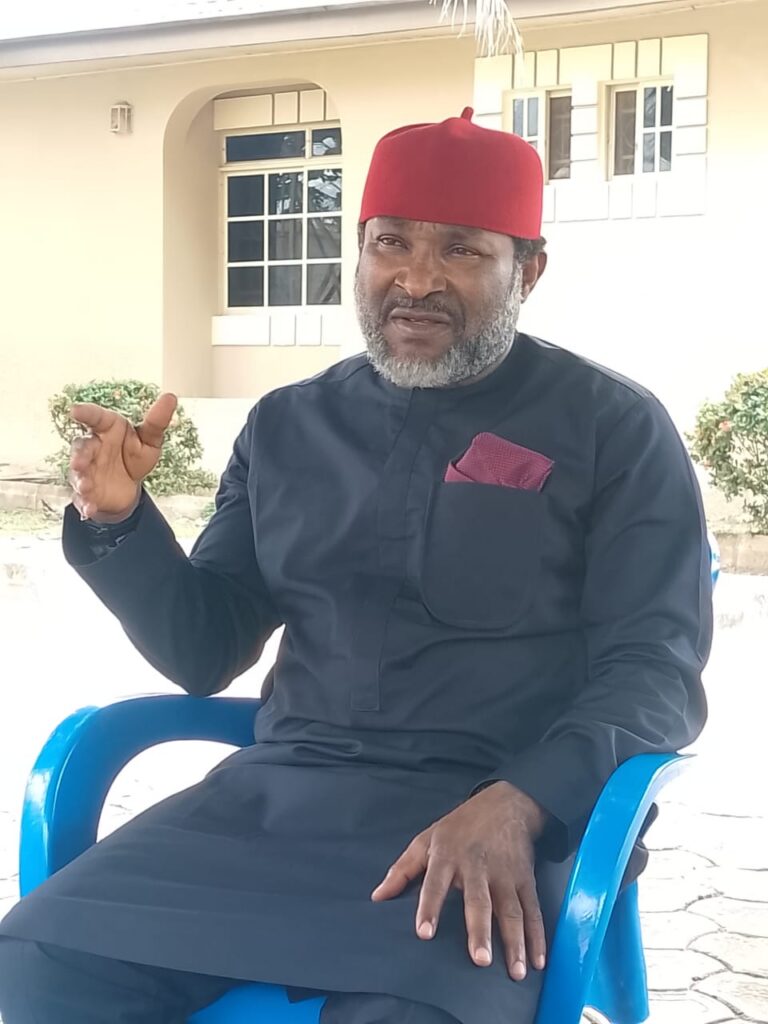
Former National Chairman of the African Democratic Congress(ADC), Chief Okey Nwosu told Daily Sun that unlike what obtained in the First and second Republic, most politicians now see political parties as Special Purpose Vehicles(SPVs). Nwosu noted that it is the reason, politicians easily jump from one platform to the other.
According to him, “in the First and Second Republic, the parties represented something. You can see the conservative- parties like NPN and NPC. Then, you see progressives; people who think differently, coming together. The same thing when NPP, PRP and so on came together. They came together around some ideas. But today, there is no party loyalty because the party means nothing. That is why people will say the party is like a special purpose vehicle. When you see party like a special purpose vehicle, then, the opposition cannot be built.”
Nonetheless, Nwosu say there is a reawakening in the opposition, following the adoption of the ADC as the coalition party for the 2027 polls by some prominent opposition figures. “Now you can see that people are coming into ADC, not because they see wealth. Not because they see serving governors. But out of believe, we don’t like what is going on anymore. We have to form a new league. I think this is the time that a real strong party is been built,” he stated.
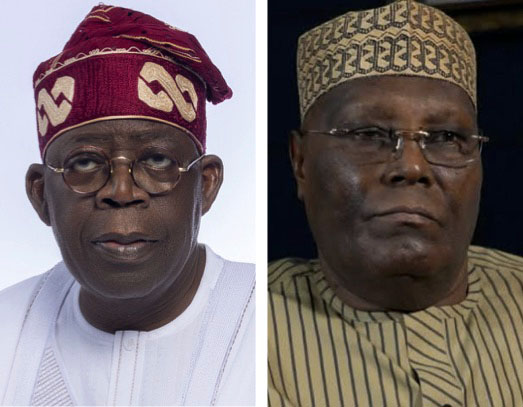
In the run-up to the 2027 general election, some prominent opposition figure, including former Vice President Atiku Abubakar adopted the ADC as “the coalition party” for the next general election. On its part, the PDP is making frantic efforts to rebuild itself for the 2027 poll. Ironically, some members of the major opposition party have openly declared support for the re-election of President Tinubu, while the party is seemly helpless.
Overall, analysts say lack of unity of purpose among opposition parties, as well as the endless internal wrangling are major impediments to the effectiveness of the opposition.