Follow Us on Google
This article is presented as a six-session series examining Nigeria and Southern Africa’s relationship, from the era of the liberation struggle to the realities of the post-apartheid period and the challenges that continue to shape the relationship today.
The six sessions are organised into three principal parts. Part 1 examines the period before Nelson Mandela walked free and explores Nigeria’s role in the struggle against apartheid and colonial rule.
Each of the three principal parts is further divided into two sessions: Part 1A and Part 1B, Part 2A and Part 2B, and Part 3A and Part 3B. Together, these six sessions tell one continuous story, moving from the history of liberation to the realities of the relationship that emerged after freedom.
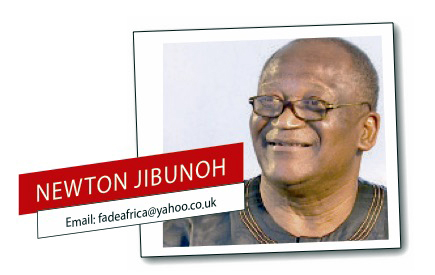
The article was written by Onyia Chidera Melissa, following the inspiration and encouragement of her mentor and co-writer, Dr. Newton Jibunoh, whose experiences, recollections and perspectives on Southern Africa helped shape the story and provide an important personal dimension to the historical narrative.
The intention is not simply to revisit history, but to understand how the experiences of yesterday have shaped the relationship between Nigeria and Southern Africa today, and what lessons that history may hold for the future.
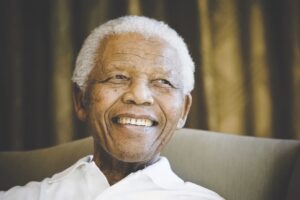
On 11 February 1990, the gates of Victor Verster Prison opened and Nelson Mandela walked into freedom after more than 27 years behind bars. He was 71 years old.
Dressed in a dark suit and walking beside Winnie Madikizela-Mandela, he emerged before a waiting crowd, raised his clenched fist and took his first steps into a South Africa that had changed dramatically during the years of his imprisonment, although it had not yet escaped the system that had placed him there. Millions of people around the world watched the images as they unfolded, while the familiar demand that had echoed for years through streets, universities, churches, trade unions and political movements finally appeared to have reached its destination: Nelson Mandela was free.
For those who had followed the struggle from outside South Africa, however, Mandela’s release was not simply the story of one political prisoner walking out of jail. It was the visible consequence of a much longer African and international struggle against a system that had denied the majority of South Africans their political rights, their freedom of movement, their access to equal education and, in many cases, their basic human dignity. Among the countries that took that struggle personally was Nigeria, and among the Nigerians who became deeply connected to it was my mentor and co-writer, Dr. Newton Jibunoh.
Jibunoh’s involvement is important to this story because it allows us to see the struggle from beyond the official statements of governments and international organisations. He has recalled his role in the Free Mandela Movement in London, where he rose to become vice-president, his encounters with members of Mandela’s family and his travels through Southern Africa during the years when apartheid was still entrenched. In 2023, speaking at a memorial marking the tenth anniversary of Mandela’s death, Jibunoh again described his involvement with the movement and his relationship with the Mandela family. His recollections add a personal dimension to a history that is often told through dates, resolutions and political speeches.
Other News
To understand why a Nigerian environmentalist, engineer and traveler became so closely associated with the campaign for the freedom of a South African political prisoner, we must go back to the system that imprisoned Mandela in the first place.
In 1948, the National Party came to power in South Africa and began systematically strengthening what became known as apartheid. It was not simply a collection of discriminatory practices but a comprehensive political and legal architecture designed to preserve white minority rule. The Population Registration Act of 1950 classified South Africans by race, the Group Areas Act imposed racial separation in residential and commercial areas, and the Bantu Education Act of 1953 placed Black education under government control and deliberately created an inferior educational
system for Black South Africans. In practical terms, the state could determine where a person lived, where that person could work, which schools their children could attend and what political rights they could exercise. Apartheid therefore reached into the most ordinary aspects of life and turned race into an instrument of government.
The brutality of that system became undeniable on 21 March 1960, when police opened fire on demonstrators protesting the pass laws at Sharpeville. Sixty-nine people were killed, and the massacre sent shock waves across Africa and the wider international community. The South African government declared a state of emergency and subsequently banned the African National Congress and the Pan Africanist Congress. The United Nations had already been paying increasing attention to racial discrimination in South Africa, and on 6 November 1962 the General Assembly adopted Resolution 1761, condemning apartheid and establishing the Special Committee against Apartheid. From that point, the South African question was no longer simply an internal matter; it had become an international political and moral issue.
For Mandela, Sharpeville marked the beginning of an even more dangerous phase of the struggle. With the ANC prohibited from operating openly, he went underground, and Umkhonto weSizwe was established in 1961. On 11 January 1962, he secretly left South Africa to seek support and military training for the struggle before returning later that year. He was arrested on 5 August 1962 and sentenced to five years in prison for leaving the country without permission and inciting workers to strike. That sentence soon became overshadowed by the Rivonia Trial, in which Mandela and seven other defendants were sentenced to life imprisonment on 12 June 1964. He was sent to Robben Island, and what had originally been a prison sentence became a 27-and-a-half-year political ordeal.
The apartheid government could imprison Mandela, but it could not contain the meaning of his imprisonment. As the years passed, his name became a symbol of a struggle that was increasingly impossible for the rest of the world to ignore. The campaign was also growing beyond the question of Mandela himself because what was at stake was much larger than the fate of one man. Across Southern Africa, people were fighting colonialism, minority rule and racial domination, while liberation movements in Angola, Mozambique, Rhodesia (Later became Zimbabwe), Namibia and South Africa confronted systems backed by military, economic and political power.
Nigeria, which had gained independence in 1960, quickly understood that its own independence had not completed the process of African liberation. The country’s emerging foreign policy increasingly reflected the belief that African freedom could not be secure while colonialism and white minority rule remained entrenched elsewhere on the continent. Nigeria therefore became one of the most important African supporters of the liberation struggles in Southern Africa, using diplomacy, financial assistance, education and international pressure as instruments of its policy.
That role reached an important milestone in Lagos in August 1977, when Nigeria hosted the World Conference for Action Against Apartheid from 22 to 26 August.
The conference was organised by the United Nations in cooperation with the Organisation of African Unity and the Federal Government of Nigeria, and it brought together governments, liberation movements, international organisations, trade unions, anti-apartheid groups and other representatives. Its central outcome was the Lagos Declaration for Action Against Apartheid. Hosting such a conference was not merely a symbolic gesture. Lagos became, for several days, an international centre of the campaign against apartheid and a demonstration of the seriousness with which Nigeria regarded the liberation of Southern Africa.
Nigeria’s involvement also moved beyond diplomacy. The Southern Africa Relief Fund was created to mobilize Nigerian resources for liberation movements, humanitarian assistance and the support of those affected by the conflicts of Southern Africa. Academic research on Nigeria’s anti-apartheid role records that the country established the fund as part of a wider effort that also included support for South African youth and educational programmes.
This was important because the struggle required more than resolutions in international forums. Liberation movements needed money, students needed places to study, refugees needed support and young people who had fled apartheid required opportunities to rebuild their lives. Nigeria therefore used one of its most valuable assets, its educational system, as part of the liberation effort.