Follow Us on Google


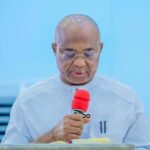
Meet Dr. Kadri Obafemi Hamzat, popularly known as Femi Hamzat, the man whose political journey has brought him to the threshold of what could be the biggest assignment of his life: becoming the next governor of Lagos State.
As I look at the emerging political landscape ahead of the 2027 Lagos governorship election, one thing strikes me about Hamzat. Here is a man who has served Lagos from different vantage points. He has been commissioner in two important ministries, worked at the federal level and occupied the office of deputy governor for two consecutive terms. He has seen government from the inside, not from the comfort of political commentary or the campaign podium.
In a country where political ambition sometimes runs far ahead of administrative experience, Hamzat is not coming to Lagos government as a stranger. He has been part of that machinery for years.

But who exactly is this man?
Born on September 19, 1964, in Lagos, Hamzat comes from a family with a history of public service. His late father, Oba Mufutau Olatunji Hamzat, was a prominent political figure who served in the Lagos State House of Assembly and later as Commissioner for Transportation. It is perhaps not surprising that the younger Hamzat would eventually find himself drawn into public administration.
His educational journey tells the story of a man who took his intellectual development seriously. He attended Odu-Abore Memorial Primary School in Mushin and Olivet Baptist High School in Oyo State before proceeding to the University of Ibadan, where he obtained a degree in Agricultural Engineering in 1986 and a master’s degree in the same discipline in 1988. He did not stop there. He travelled to England and obtained a doctorate in Systems Process Engineering from Cranfield University in 1992.
He ventured into the professional world, gaining experience in academia, engineering, information technology and corporate management. His career took him through institutions and organisations in the United States, including Columbia University, Merrill Lynch and Morgan Stanley. He also worked with OandoPlc, where he served as Chief Information Officer and Group Head of IT Strategy. His international corporate exposure and grounding in modern technology would prove useful when he eventually entered Lagos politics.
In 2005, Governor Bola Ahmed Tinubu appointed him Commissioner for Science and Technology. It was his first major assignment in the Lagos State Executive Council. At a time when the world was increasingly embracing information technology as a tool of governance, he brought his systems engineering and IT background to bear on government administration. One important achievement associated with his tenure was the introduction of technology-driven reforms in government record-keeping and personnel management. The automation of staff records helped the state identify irregularities in its payroll and tackle the problem of ghost workers It was a lesson in governance: sometimes, the most significant revolution is a system that saves public money, eliminates waste and makes government work better.
When Babatunde Raji Fashola succeeded Tinubu in 2007, Hamzat was retained as Commissioner for Science and Technology. That continuity was itself a vote of confidence in his competence. In 2011, he received another major assignment, this time as Commissioner for Works and Infrastructure. As a ministry at the heart of the state’s transformation, its responsibilities included roads, bridges, drainage and the physical development of the city. One landmark project associated with this period was the Lekki-Ikoyi Link Bridge, the elegant cable-stayed structure that has become one of the recognisable landmarks of modern Lagos. Inaugurated in June 2013, it represented an important chapter in the development of Lagos infrastructure and demonstrated what engineering, planning and sustained investment could accomplish.
Hamzat was also associated with major road and infrastructure programmes, including improvements along the Lekki-Epe corridor. The experience gave him an understanding of the complicated business of building a city. Lagos’s population, geography, commercial activities and constant pressure on infrastructure make governance an enormous undertaking.
After serving as commissioner, Hamzat moved to the federal level, where he served as Special Adviser on Works to Babatunde Fashola, then Minister of Works, Power and Housing. That assignment exposed him to infrastructure development at the national level.
Other News
Then came another chapter in his political journey. In 2018, Hamzat sought the APC governorship ticket in Lagos. But politics, as we know, is not always a straight road between ambition and achievement. Following consultations and political negotiations, he stepped aside and became the running mate to Babajide Sanwo-Olu. The ticket won the 2019 governorship election, bringing Hamzat into the office of Deputy Governor. He was re-elected in 2023.
By the time the current administration completes its tenure, Hamzat would have served eight years as deputy governor, in addition to six years as commissioner for Science and Technology, four years as commissioner for Works and Infrastructure and his experience at the federal level.
Of course, the office of deputy governor is not the same as that of governor. The governor carries ultimate responsibility for the direction, performance and success or failure of an administration. But serving as deputy governor provides a ringside understanding of executive government: policy discussions, cabinet meetings, budgetary pressures, political calculations and the everyday demands of governing a complicated state. It is this experience that makes Hamzat an interesting candidate for the job. He understands the history of the Lagos development project and has witnessed different approaches to governance. He knows that Lagos is the product of successive governments, each building on the foundations laid by its predecessors.
This is where the question of continuity becomes important.
Lagos is too important to be treated as an experimental playground. Nigeria’s commercial nerve centre carries enormous economic responsibilities. Its problems are enormous, but so are its possibilities.
The next governor will inherit a city that must confront traffic congestion, housing shortages, flooding, waste management, unemployment, insecurity and the pressure of a rapidly expanding population. He will need more than political popularity. He will need administrative competence, the ability to assemble a capable team, a clear vision and the political maturity to make difficult decisions.
Hamzat’s supporters will argue that his experience across technology, infrastructure and executive government gives him an advantage. His emergence as the APC candidate for the 2027 governorship election has brought his long political journey to a new crossroads. He now has the opportunity to present his own vision of Lagos and explain how he intends to translate his experience into better living conditions for its people.
His professional disposition is also appealing. He comes across as more comfortable discussing systems, structures and solutions than indulging in political theatrics. That technocratic background could be an asset in a city that needs practical answers. But no candidate should be judged on credentials alone. The real test is what he intends to do with the opportunity. Lagosians will want to know how he plans to improve their daily lives, make transportation easier, create jobs, tackle flooding, provide affordable housing and make government more responsive to ordinary citizens. They will want to see not just a continuation of the Lagos development story but a new chapter that speaks directly to their needs.
And this brings me to the title of this piece: BEHOLD, THE NEW LAGOS GOVERNOR-TO-BE.
I use the expression with the understanding that the final verdict belongs to the people of Lagos at the ballot box. But as a political observer looking at the field of contenders, I find Hamzat’s accumulated experience difficult to ignore. He has been in the engine room of Lagos governance, working with technology, supervising infrastructure development, serving at the federal level and spending two terms as deputy governor.
Perhaps the greatest advantage he brings to the table is that he does not need to be introduced to the Lagos project. He has been part of its story.
The question now is whether he can take that experience and turn it into a compelling new vision for the future. For Hamzat, the journey to Alausa is no longer just an ambition. It is an opportunity to convince Lagosians that the years spent preparing for leadership have equipped him for the ultimate responsibility.
Behold the man. The experience is there. The opportunity is here. The verdict will be Lagos.