Follow Us on Google

• World Bank, Customs, global experts demand transparency, accountability
From Juliana Taiwo-Obalonye, Abuja
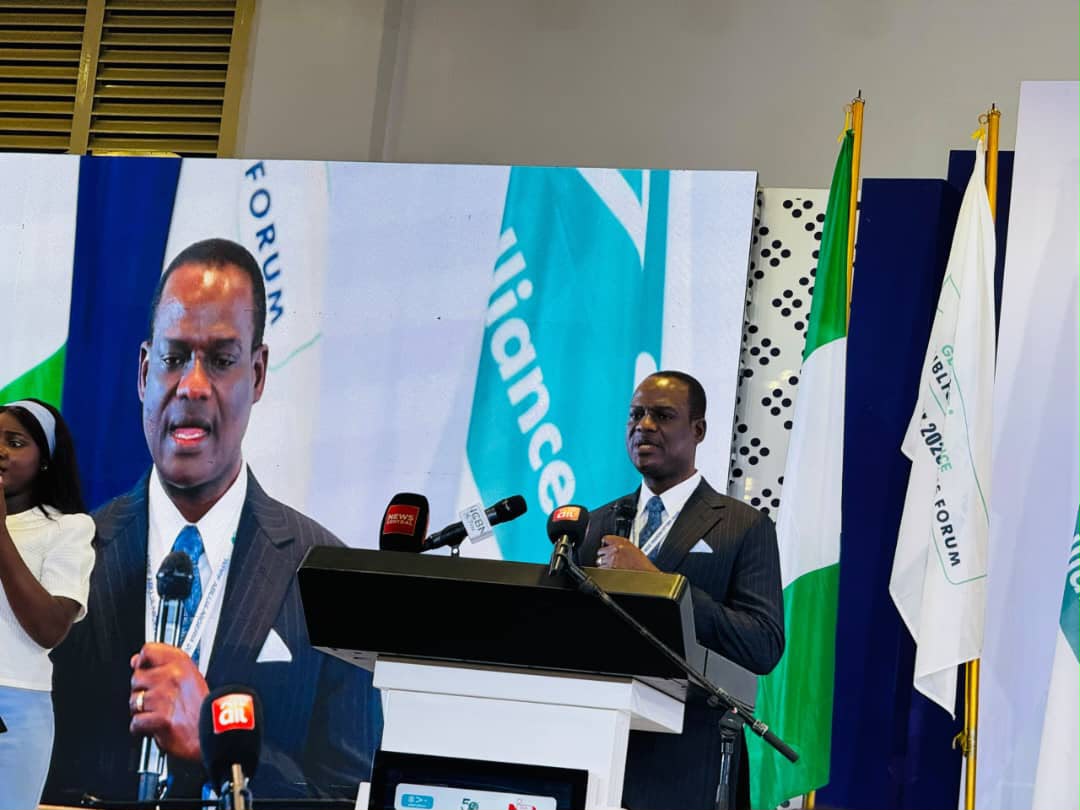
Nigeria and other developing economies are losing an estimated $500 billion annually to damaging narratives, misinformation and negative perceptions that discourage investment and increase the cost of borrowing, Minister of Finance and Coordinating Minister of the Economy, Taiwo Oyedele, has warned.
The minister said the growing crisis of public trust was imposing a heavy economic burden on African countries, with investors demanding higher returns to compensate for perceived risks, businesses delaying expansion and skilled professionals seeking opportunities elsewhere.
He warned that propaganda, misleading information and the concealment of government failures were worsening the problem, insisting that neither public relations campaigns nor carefully crafted official statements could substitute for transparency, accountability and measurable performance.
Oyedele spoke at the 2026 World Public Relations Forum (WPRF) in Abuja, where senior government officials, World Bank representatives, business leaders and international communication experts examined the consequences of misinformation, weak institutional credibility and declining public confidence.
The forum, organised by the Global Alliance for Public Relations and Communication Management and the Nigerian Institute of Public Relations (NIPR), had as its theme, “Responsible Communication: The Voice of the World.”
Speaking during a high-level dialogue on “Responsible Business Communication: Building Trust and Financing Investments for Sustainable Human Development,” Oyedele said developing economies were paying what he described as a prejudice premium, narrative cost and stereotype tax.
“As we speak today, Nigeria, Africa, and the rest of the developing world pay a prejudice premium, a narrative cost, a stereotype tax combined. On time, estimated that it’s about 500 billion dollars a year, including billions of dollars we pay in Nigeria for this narrative cost.”
The minister maintained that the consequences of negative narratives extended beyond reputational damage to higher financing costs, lost investment opportunities and diminished confidence in economic reforms. “Trust is the one currency that sits beneath all the other currencies,” he declared.
“When trust is strong, citizens cooperate, capital flows, businesses invest, and reforms get a fair hearing. When trust is weak, even sound policies meet suspicion, and every explanation sounds like an excuse.”
Oyedele, however, cautioned against presenting Nigeria as a perfect investment destination, stressing that responsible communication required acknowledging existing challenges rather than manufacturing favourable impressions.
“We’re not saying you should tell everybody Nigeria is paradise. It is not. We’ll say it as it is.”
He explained that withholding relevant information could be as misleading as making false statements, particularly where selective disclosure distorted public understanding of government policies and economic developments. “When you communicate and you intentionally add information, you may not have lied, but you have manipulated the truth. When you hold back a useful and substantive part of the information, it has the same consequences as misinformation,” he said.
The minister cited the controversy surrounding the Federal Government’s tax reforms as an example of how misinformation could undermine public confidence and generate unnecessary economic anxiety.
According to him, false claims that bank accounts belonging to small businesses and low-income earners would automatically be debited when the new tax laws took effect caused widespread panic, despite provisions exempting the affected categories.
“Some people were running to the bank to close their accounts. We were actually scared,” he disclosed.
Oyedele said that although no such deductions had occurred 10 months after the controversy, the misinformation had already frightened business owners and distorted public understanding of the reforms.
“When we asked those small businesses, every single one of them heard about their account to be debited. Many of them did not hear that they have been exempted.”
He lamented that those responsible for circulating the claims had not been held accountable, urging communication professionals and public institutions to apply the same standards of transparency and responsibility to themselves as they demanded from government.
“My message is this. We must hold public servants to account. We must hold ourselves to the same level of accountability, because it matters,” he said.
The minister also recalled how the Federal Government’s fuel price stabilisation measures were overshadowed by public controversy over one of the 17 interventions, which he said had been mischaracterised as a subsidy.
He warned that the spread of misleading narratives through social media and artificial intelligence was making responsible communication increasingly important, particularly as fabricated images, voices and documents could be circulated rapidly to large audiences.
“Facts do not defend themselves. In a contest between a careful explanation and a frightening headline, the headline wins,” he said.
“Outrage pays, correction does not.”
Oyedele urged journalists, influencers and public relations practitioners to verify information before dissemination and challenge falsehoods whenever they encountered them.
“Verify before you amplify. Correct as loudly as you reported when you make mistakes. Hold good news and bad news to the same standard of proof.
“Not enough for you to say the truth and say it well. When you see misinformation, you also have an obligation to call it out. When you are silent, evil will prevail because good people keep quiet,” he said.
He also acknowledged the disconnect between official economic statistics and the realities experienced by ordinary Nigerians, citing the October 2026 inflation rate of 14.06 per cent, which he described as the lowest in six years.
According to him, although inflation had slowed, many Nigerians remained unconvinced because the prices of essential commodities, including bread and milk, were still high.
He explained that declining inflation did not necessarily mean prices were falling but that the rate of price increases was slowing, a distinction government needed to communicate more clearly.
“A budget allocation is not a functioning hospital,” he declared, warning against equating government announcements with improvements in citizens’ lives.
“We cannot communicate our way out of conflicts,” he added.
The minister stressed that communication professionals should participate in policy formulation rather than being brought in only after government decisions had generated public outrage.
Also speaking, Director of External Affairs at the World Bank Group, Edith Jibunoh, said responsible communication required governments and development institutions to demonstrate how public feedback influenced their decisions rather than merely claiming to have consulted stakeholders.
She explained that the World Bank’s Country Partnership Framework, which guides investment priorities in countries such as Nigeria, was developed in consultation with governments, communities and other stakeholders.
“We heard a lot about listening today, but I would say that the test is not just listening. The test is making transparent what you heard, and then the further test is actually showing people what you’ve done with what you heard.”
Jibunoh urged development institutions to disclose the concerns raised by communities, explain which recommendations could be implemented and acknowledge those that could not be accommodated.
She said transparency was particularly important when development projects encountered challenges, including violations of established policies by contractors and subcontractors.
“We are now going to tell you what exactly we’re going to do about it, and we seek your help. Come and be a part of the solution to help us resolve that,” she said.
On investment, the World Bank official stressed the need to distinguish between perceived and actual risks, arguing that credible information could help investors make better-informed decisions.
“We have to separate perceived risk from real risk. I think there’s always a challenge there. There’s what people think is happening and what is actually happening. And usually, the gap is information.”
She explained that investors incorporated risk assessments into their financing decisions, making accurate data and transparent communication essential to reducing unnecessary increases in the cost of capital.
Chairman and Chief Executive Officer of United Nigeria Airlines, Obiora Okonkwo, reinforced the argument that publicity could not compensate for poor service delivery, recounting how inaccurate communication worsened the airline’s reputational crisis after one of its aircraft landed in Asaba instead of Abuja.
Okonkwo explained that the aircraft, scheduled to fly from Lagos to Abuja, landed in Asaba because a dispatcher mistakenly entered Asaba as the destination in the flight documentation.
According to him, the pilots followed the destination indicated in the documents, while the cabin crew, believing the aircraft had arrived in Abuja, welcomed passengers to the Federal Capital Territory.
He said the airline’s communication team subsequently issued a statement attributing the diversion to bad weather in Abuja, an explanation he acknowledged was false.
“Our own communication team, in a little bit to protect us or probably not verify, just quickly came out with a statement that the aircraft went to Asaba because there was bad weather in Abuja.”
Okonkwo disclosed that the explanation attracted widespread criticism and ridicule, worsening the company’s reputational difficulties.
“I really think that if a little bit of verification was done and if the truth was told, it probably would have put us in a better position and saved us some trouble.
“The best way of public relations is to tell the truth, but tell it responsibly.”
He also recounted how a passenger complained after the airline departed 10 minutes earlier than its advertised 11.30 a.m. departure time, illustrating the importance of managing expectations and communicating accurately.
Reacting, Oyedele said trust required organisations to honour communicated schedules and explain deviations, whether services were delivered earlier or later than promised.
“Sometimes building trust requires that you be on time, not earlier and not later. And if you go earlier than you communicated previously, you must explain,” he said.
The minister drew a parallel with government revenue performance, explaining that agencies exceeding their targets should account for the differences and establish whether additional revenue was sustainable.
Comptroller-General of the Nigeria Customs Service, Adewale Adeniyi, also warned that no amount of carefully crafted communication could conceal poor institutional performance indefinitely.
“No statement, however well crafted, can hide poor performance for long,” he declared.
Adeniyi, who also chairs the World Customs Organisation Council, said public confidence depended on everyday encounters with government institutions, the conduct of officials and the quality of services delivered.
“Today, reputation is not built on press office alone. It is built at every counter, at every gate.”
He explained that a single unpleasant encounter with a government official could undermine years of reputation-building, particularly where complaints were ignored or citizens were treated disrespectfully.
“Everything we do succeeds or fails depending on how well we communicate it. A good policy that people do not understand becomes a bad policy in practice. A good system that traders do not trust will not be used. And a good seizure that nobody hears about does very little to build public confidence,” he said.
The Customs chief cited the introduction of the Service’s indigenous technology platform, B’Odogwu, as an example of how reforms required sustained stakeholder engagement to succeed.
According to him, Customs engaged importers, licensed agents, terminal operators and officers through consultations, training and phased implementation to minimise disruptions.
“If the officer at the terminal cannot explain a new process with confidence, no press release will save you. Your staff are your loudest messages, whether you prepare them or not,” he warned.
Adeniyi said the platform had become fully operational and was recognised by the African Continental Free Trade Area Secretariat in August 2026 as a model for other African countries.
“Reform is not complete when the system goes live. It is complete when the people using it understand it and trust it,” he said.
He also disclosed that a time release study conducted by Customs showed that cargo clearance at Nigerian ports took approximately five days, with more than 90 per cent of the period spent in idle time.
Rather than conceal the findings, he said the Service published them to identify bottlenecks and encourage corrective action.
“Some would have advised us to keep the report in a drawer. We chose to publish it because you cannot fix a problem you are afraid to name,” he said.
The Customs chief further highlighted the Authorised Economic Operator programme, which rewards compliant businesses with faster clearance and other trade facilitation benefits.
He said clearance time for participating companies had dropped from approximately 168 hours to 41 hours, with 51 companies holding AEO status and more than 200 others benefiting from the programme.
“A clear rule, a kept promise and a visible result: that is the communication that changes behaviour,” he said.
On security-related communication, Adeniyi recalled the interception of 844 rifles in June 2024 and the discovery of another 399 rifles during a search of the vessel MV Velika, warning that premature accusations and inaccurate disclosures could compromise investigations.
“Our rule is clear. We confirm the facts, we coordinate with security agencies and then we speak with one voice,” he said.
The Customs chief urged public relations professionals to seek greater involvement in institutional decision-making rather than limiting themselves to issuing statements after policies had been introduced.
“You belong at the table where decisions are made because you can tell leadership how a decision will be received even before it is announced,” he declared.
The dangers of misinformation to international relations were also highlighted by Minister of Foreign Affairs, Bianca Odumegwu-Ojukwu, who warned that fabricated information could trigger diplomatic disputes, disrupt cross-border activities and undermine relations between countries.
Delivering a keynote address on diplomacy in an age of global distrust, she said false information could spread rapidly through digital platforms before governments had an opportunity to correct it.
She illustrated the danger with a hypothetical recording falsely announcing the closure of a country’s border, explaining that such information could cause families to cancel journeys, businesses to suspend transactions and communities to experience unnecessary anxiety.
Odumegwu-Ojukwu urged governments to communicate transparently, explain policy decisions and acknowledge implementation delays rather than allow information gaps to fuel suspicion.
“While there is progress, if work is delayed, people deserve to know why.”
She explained that Nigeria’s foreign policy under President Bola Tinubu was guided by democracy, development and demography, with emphasis on dialogue, peaceful engagement and stronger regional cooperation.
The minister called for deeper engagement within the Economic Community of West African States, particularly with countries in the Sahel, while urging African nations to play more influential roles in international decision-making.
“When decisions affect African countries, their voices should be heard,” she declared.
She also advocated improved access to government officials by journalists, timely responses to enquiries and greater transparency in explaining international agreements and public policies.
“Trust is built into action,” she said, stressing that diplomatic commitments must be supported by consistent implementation.
The warnings were reinforced by international public relations leaders during a panel discussion on “Ethical Leadership and Trust in a Divided World,” where participants argued that propaganda and reputation-management campaigns could not compensate for unethical leadership and institutional failures.
Vice President of the Global Alliance and Chair of its European Regional Council, Silvia Arto, said ethical leadership required integrity and a willingness to do what was right even when nobody was watching.
“To me, ethical leadership is lead by example. It’s walk the talk. It’s integrity,” she said.
Arto warned that trust could take years to build but could be destroyed within seconds, particularly in the digital age when misconduct could be exposed and circulated globally.
“Trust and ethical leadership, personal leadership, is built through actions, not declarations.”
She urged communication professionals to promote transparency, dialogue and media literacy while combating misinformation, propaganda and the misuse of artificial intelligence.
Chair of the Asia-Pacific Regional Council, Jaffri Osman, said leaders needed emotional and social intelligence in addition to intellectual ability to build relationships across diverse communities.
“Trust is built by leaders who understand beyond IQ. They have to understand EQ and SQ,” he said.
Africa’s representative and Chair of the Regional Council, Irene Lungu Chipili, identified political messaging, democratic competition and misinformation as major threats to public confidence.
She urged communication professionals to resist pressure to disseminate information without verification, warning that speed should never override accuracy.
Chair of the Middle East and South Asia Regional Council, Serra Gorpe, identified accountability, transparency and stakeholder engagement as essential to institutional legitimacy.
“Legitimacy is accountability, transparency, stakeholder communication, engagement,” she said.
Chair of the North American Regional Council, Bonnie Caver, warned that organisations risked serious reputational damage when their public commitments did not match their actual performance.
She urged executives to engage directly with stakeholders and understand their concerns rather than rely exclusively on surveys and formal reports.
“Everybody in the world is a communicator. My son, who’s an engineer, is a communicator. My son, who’s a scientist, is a communicator. In today’s world, everyone is a communicator. We are not communicators. We’re communication professionals,” she said.
Founder of Honor Public Relations in the United Kingdom, Sharon Ezzeldin, also urged governments to communicate their failures and explain how they intended to address them rather than concentrating exclusively on achievements.
Drawing on her experience supporting government institutions in the Middle East and Africa, particularly Egypt, she said rebuilding credibility among international stakeholders required sustained engagement and transparency.
“It’s critical that governments, for example, when they reach challenging points, when communicating certain mandates, that they communicate their failures because you need to be able to clearly articulate what’s going right and what’s going wrong and how you plan to fix that particular issue,” she said.
Ezzeldin disclosed that an initiative involving development finance institutions and Egyptian government ministries had supported 36 projects valued at approximately $9 billion, including interventions in food, energy and water.
Moderator of the ethical leadership session and Chair of the NIPR Young Professionals Hub, Chimdi Neliaku, urged young communication professionals to demonstrate the ethical standards and accountability they expected from political and corporate leaders.
“We must also start to build a record of conduct that our own generation will be trusted on and judged on,” she said.
In her closing remarks at the responsible business communication dialogue, Head of Corporate Communications at Zambia National Commercial Bank, Kyembe Kyalusanza, said communication professionals had responsibilities extending beyond reputation management to national development and the welfare of communities.
“As communicators, we hold power and with power comes responsibility. We’re not just simply storytellers. We’re custodians of reputation and also we are country builders.”
She urged practitioners to recognise the human consequences of their work and ensure that investments attracted through responsible communication translated into tangible improvements in people’s lives.
“What we actually do in our jobs affects real humans. So, let us communicate responsibly, build trust deliberately, and also ensure that investments we mobilise ultimately improve people’s lives,” she said.