Follow Us on Google
“Therefore, as 2027 gets closer, citizens should take the advantage and decide their future with their PVCs while remaining firm to defend their votes. Time for politicians to keep raping the future of ordinary citizens should end in 2027.”
By Mark Columbus Orgu
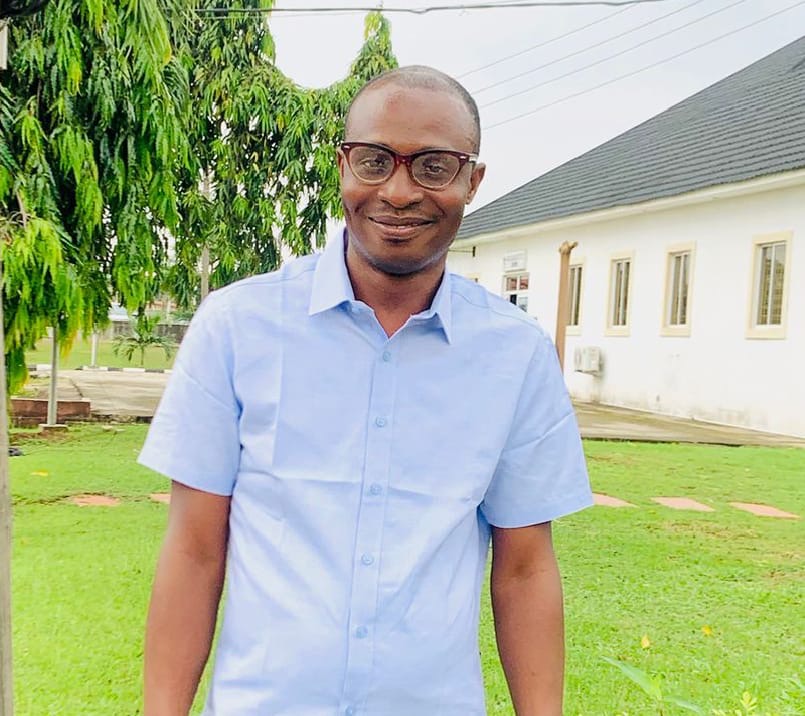
A 91- year old Patriot, and Elder Statesman, Alhaji Abdulfatai Mabinuori Dawodu, MFR, Famous Chartered Accountant, had shares some of his experiences and what he thought Nigeria would have become after 66 years of self-rule. While regretting that although it was the military that changed the plan of the young nation through coups upon counter coups, but affirms that, it wasn’t corruption that placed the Country’s founding fathers in leadership, but it was nationalism.
I pressed further to know what was in Baba’s mind and he said:
“I left Nigeria in July, 1960. I was in Britain in Blackburn College of technology, England. In fact, during the Independence Day, we Nigerians over there just gathered ourselves together in the Nigerian High Commission House (in British Nigeria house). We celebrated, drank and had fun. Although we didnt really feel the impact, we knew that Nigeria has become a self-governing nation.”
Alhaji. Dawodu reiterated that, he and other Nigerians were concentrating on ourselves to become something bigger in life.
“I spent six years in Britain-spending one year in my A-level at Blackburn College of Technology, England, and I got admission into the Kings College, Durham University, England to study economics. I spent another three years there and got my degree. And immediately, I was able to get into the Middlesbrough Council, England, to be trained as a Chartered Finance Accountant. That was in 1964 and I finished in 1966. I didnt even wait for my results because I knew I would pass. So, I came directly to Nigeria, because at the time, the Federal government was desiring to recruit, and for Nigerians to take over from the Colonial Masters. Fortunately, for me, I was able to secure a job as an Accountant in the Treasury, Federal Ministry of Finance. The first Accountant General of the federation was then F.B Cardoso, whose son is now the CBN governor.I worked under him as a third class clerk before I left for Britain.”
Not still satisfied, I asked the Nonagenarian again: So, you returned to Nigeria in 1966, the year military coup took place. But what were your perceptions, were you worried that you would have just stayed back. He responded:
“No, I was not worried. To me, the job I was given at the treasury was very important, I was in charge of the cash supply of the federal government, that is liquidity of the federal republic and I was working directly with the Accountant-General of the Federation, and Chief Awolowo was the Finance Minister at that time. It was from my desk, to the desk of the Accountant-General from there to the desk of Awolowo and we were able to monitor the cash flow of the whole federation including the civil war. We were part of those in-charge of the finances and everything and it went on very well. The coup to me, I mean, it was something Ill say, was desirable, maybe because of the news that we were hearing at the time. But when the details of the war came, I was not really happy. The coup started because of the desperation of the political class and corruption; funds were not spent rightly and we wanted it to be a national coup. Well, by the time it started it became more like a one sided coup, and my attitude about the coup changed. After the coup, we didnt really see any improvement because even the army that took over was not able to control anything, rather they were busy sorting themselves out. They were unable to concentrate on what actually brought about the coup or how they were going to make the nation better. They did not settle down to work out better leadership for the young nation. Six months later, another coup. So the country was in total mess because, what the military met on ground, they couldnt handle them, they were not able to face the government properly. Looking backward now, Ill say the coup was not necessary. If you compare the stage to what we have today, if you talk about corruption, you will discover that there was little or no corruption at that time compared to what we have now.”
The reason behind this narrative is to remind us that Nigeria has been on the verge of a pervasive leadership crisis since inception.
The genesis of failures of Nigerian leadership system remains with the political class and its appointees across board, whether at the time of Sir Abubakar Tafawa Belewa, to Aguyi Ironsi, to Yakubu Gowon, to Murtala Mohammed, Olusegun Obasanjo, Shehu Shagari, Muhammadu Buhari, Ibrahim Babangida, Ernest Shonekan, Sani Abacha, and Abdulsalmi Abubakar, Shehu Musa.Yaradua, Goodluck Jothanan or to this current administration. Apart from Obasanjo and Yaradua, the rest left Nigerian with the question; what is wrong in psych of the Nigerian system of leadership?
Unfortunately, from corruption of top government officials to institutional corruptions ranging from the Judiciary to Security agencies, to Education, health, maritime, to intimidation, to insecurity, to thugs, to bully, and above all, to impoverish citizens. In all of these, one begins to ask whether our independence was a curse or blessing, whether there was a consensus of the generality of Nigerians to actually demand for self-rule or it was just a jamboree to get freedom for the bourgeoisies alone and in turn to keep the poor in cage of lamentation over national cake.
And that was why I confronted my very boss, Mr. Sam, Omatseye when I interviewed him on the Country’s independence that, what was the essence of independence. His response were apt and convincing: “Who gave us independence? The people who gave us independence, did they ask our permission if we want to be put together as a nation? The British just wrapped us together, and said, this is Nigeria. Did the Igbo man say that he wants to live in a country with an Urhobo man or an Itsekiri or Hausa man?”
He concluded by noting that we do not have nationalist psych in the country because of tribe and faith. So, citizens think of ourselves and tribes more than they think of Nigeria.
Today, millions of Nigerians are living in regrettable poverty due to bad leadership and wrong economic policies of past and present government, whereas the political class and their agents are feeding fat like Guinea fowl.
Now, what can we really say that the country has achieved in landmark in the last 66 years. Well, maybe, we can say, the country has remained in self-rule of corruption, and that citizens have remained poor and are not independent of their right to better living, better education, better health care, better security, and better justice system because the political class and their dark agents keep recycling themselves in leadership. This is the acrimony citizens live with.
For 66 years, same complain of bad leaders, epileptic power shortage, poor health care delivery system, insecurity, political intimidation, political rascal and arrogance, tribalism and religion, nepotism, deficiency in political appointments-where touts and incompetency take over governance rather than morality in character, good conscience and patriotism to nationhood. How can one explain in a country of more than 220 million people, that a government that took oath of office to protect their lives and ensure their welfare jettison their promise and became nightmare? What is even more alarming is the figures of fatalities released by Beacon Security and Innovation Limited, 2026 since President Bola Tinubu got into office in May 29, 2023, is not only disturbing but very worrisome, detailing us how many have died through kidnappings and terrorism across the country. See table below.
Table 1: Non State Armed Group Related Fatalities and Abduction
PRIMARY ACTOR
FATALITIES
ABDUCTIONS
Bandits
6523
15536
Biafran Separatists (IPOB / MASSOB / other)
76
4
NSAG Islamic State West Africa Province (ISWAP) and affiliates
1730
1245
NSAG Jama’️atu Ahlis Sunna Lidda’️awati wal Jihad (JAS) and affiliates
1436
765
NSAG – Non State Armed Group
4514
4892
Total
14,279
22,442
When citizens lament, Institutions of the State are used against them. The question then arise; what is the job of the government if they cannot protect lives and property. If they cant be accountable to the people they led; it then leaves us with the conclusion that citizens democracy is defeated. And that was why most political scientists conclude that Nigeria is practicing dictatorial democracy, which only the rich and powerful decide the future of Nigeria only in their pocket and the pocket of their unborn generation. Therefore, as 2027 gets closer, citizens should take the advantage and decide their future with their PVCs while remaining firm to defend their votes. Time for politicians to keep raping the future of ordinary citizens should end in 2027. Nigeria needs men and who of character, capacity, empathy and leadership skills to put us out of the doldrums. Nigeria will be great again.
–Orgu, is the Editor, Afrikanwatch Network, ([email protected]). Wrote from Lagos