Follow Us on Google
By Sunday Ani
When Nigeria got her independence on October 1, 1960, there was jubilation across the country and the people looked forward to a country that would guarantee freedom and good life for her citizens. Expectations and hope were very high.
However, 63 years after that epochal event, it is becoming increasingly clear that the journey to total freedom is still far. There are still many rivers to cross to be able to get to the Promised Land of freedom, love and prosperity. Right now, there is so much anger, frustration, dejection and despair in the land and Nigerians are not happy with their leaders because their suffering seems to have no end.
The economic, political and social situation is so precarious that many people wish the British never granted independence to Nigeria.
For so many people, it has been a wasted 63-year journey as the country bleeds in all fronts; politically, economically, socially and religiously. To some other Nigerians, rather than celebrate the day, it should be one of sober reflections, and even lamentations because the country has failed to live up to the wishes and aspirations of the founding fathers. The founding fathers, including Nnamdi Azikiwe, Ozumba Mbadiwe, Tafawa Balewa, Ahmedu Bello, Herbert Macauly, Obafemi Awolowo, and Dennis Osadebey, among others, had in mind such lofty aims and aspirations as fostering unity among various ethnic nationalities through the promotion of religious tolerance; protecting lives and property of the citizenry, creating room for economic prosperity and placing the country on the world political map of a technologically and economically advanced or developing nationality.
Those on this divide, who ostensibly are in the majority, believe that the country has totally failed as a nation, so much that today, the question of the country’s continued existence as one indivisible corporate entity is under serious scrutiny. How to navigate out of the divisive web into which it has entangled itself is a question that constantly reverberates strongly on the lips of many Nigerians. Most Nigerians believe that the All Progressives Congress, APC-led Federal Government, under former President Muhammadu Buhari, for eight years, did not do anything to strengthen the unity of the country, instead it promoted nepotism to a state policy. Buhari’s eight years in office were believed to have destroyed everything that unites the country. All the fault lines of the nation’s unity were completely broken down, hence the renewed clamour by different ethnic nationalities for self determination or even total separation from the union.
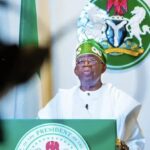
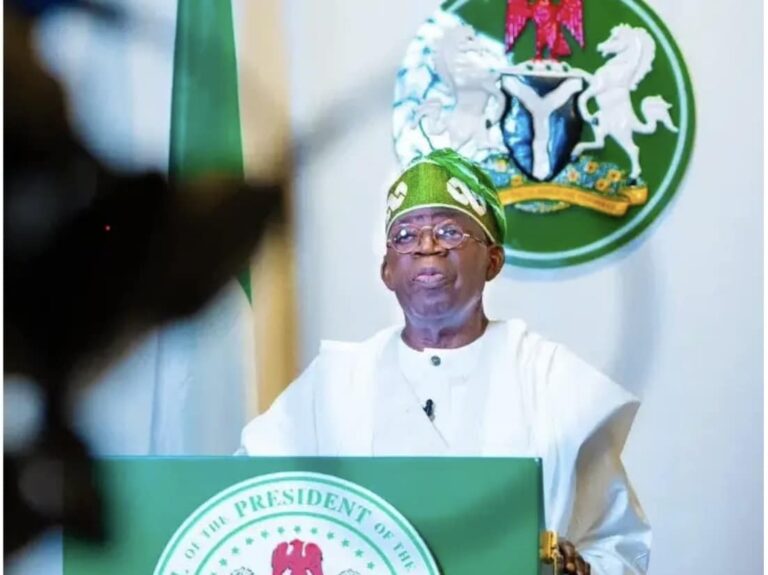
However, if Buhari’s government promoted nepotism to a state policy, his successor, President Bola Ahmed Tinubu is also seen to be doing everything possible to sustain Buhari’s infamous legacies. His less than five months administration has been accused of wanton clannishness.
On the political scene, parties are not helping matters. The decision of the ruling APC to field a Muslim-Muslim ticket in the last presidential poll at a time when Nigeria was grappling with religious division did not go down well with many Nigerians, especially the Christians. Also, the decision of the opposition Peoples Democratic Party (PDP) to present a northern Muslim to succeed the then president, who is also a northern Muslim, at a time when ethnicity and religion remained the country’s albatross, was equally criticised. They didn’t care whether the country went into flames, as long as their personal interests were satisfied. The way and manner politicians defect from one party to another leaves Nigerians with the conclusion that there is no party ideology; politicians are only after their narrow, selfish and self aggrandizing interest at all times.
During the last election, politicians did not play by the rules. They spent billions of Naira, trying to buy the conscience of the poor voters with peanuts to vote for them so that they would continue to loot the country’s treasury, while millions of Nigerians go to bed on an empty stomach on a daily basis. Their insensitivity to the suffering of the people, made many Nigerians to become politically conscious, a development that saw many of them participating actively in the last electoral process. Even the electoral system, which many thought has improved, with the introduction of the Bimodal Voter Accreditation System (BVAS) and electronic transmission of results, has been made mockery of, following the recent judgement by the presidential election petition tribunal, which ruled that the electoral umpire was at liberty to transmit results electronically or deploy manual means.
The tribunal’s decision, according to analysts, has set all the gains of the 2023 electoral act on the reverse gear.
Political leaders are doing everything possible to ensure that the right to choose who occupies what political position is not determined by Nigerian voters but by a few selfish moneybags, who arrogate to themselves the position of godfathers or kingmakers.
However, the emergence of the Labour Party (LP) and its presidential candidate, Peter Obi, would have been the game changer that Nigerians had long waited for but the forces of darkness did not allow the people’s will and aspiration to see the light of the day.
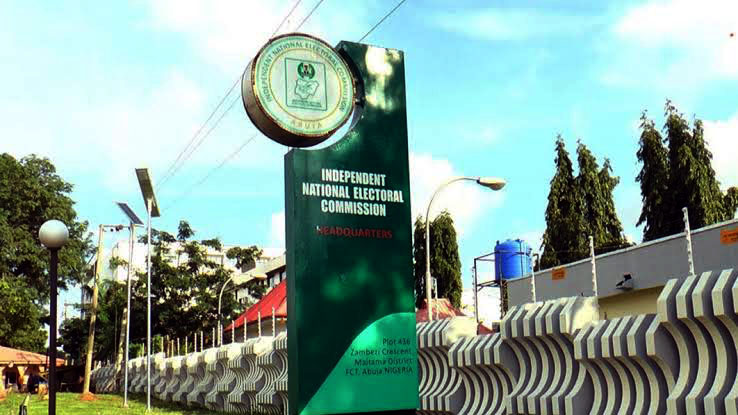
Nigerians had thought that with the new electoral law, which gave the Independent National Electoral Commission (INEC), the power to use the BVAS to conduct elections and transmit results electronically, there would be a ray of hope that there could be a semblance of fraud free, rigging-free, credible and fair elections in 2023 but that never happened. The system was still manipulated to thwart the popular will of the masses as can be seen from several post election litigations across the country.
On security of lives and property of Nigerians, which is a primary objective of the existence of any government, Nigeria today, can be likened to the utopian state of nature as adumbrated by the great English philosopher, Thomas Hobbes, where life is poor, nasty, short and brutish. Nigeria, in the last eight years, has become a country, where only the fittest survives; a development that sharply negates the rationale for the formation of a state.
From East to West, North to South, the blood of innocent Nigerians are being wasted on a daily basis, through the criminal activities of bandits, kidnappers, armed robbers, Boko Haram insurgents, Fulani militia, who attack various villages without let or hindrance, and lately, the unknown gunmen in the South East. In today’s Nigeria, nowhere is safe – home, school, workplaces, churches, market places, and shopping malls, among others, are all targets of attack any time. Movement from point A to B, either by air, road or rail, including water, has become as dangerous as living in a war ravaged environment, as kidnappers, bandits, insurgents and all manner of criminals lie in wait for the innocent travellers, whose fate lies only in God.
On the economic front, the country’s currency is no better than tissue papers, with Naira currently exchanging for over N1000 to a dollar. The Dollar to Naira exchange rate in 2015 when the APC took over power from the PDP was in the neighborhood of N180/190 and Nigerians were hopeful that in two or three years, Naira would gain more strength, and possibly, equal the Dollar as APC promised, but alas, the reverse has been the case. The Naira has continued on a free fall ever since 2015, making life meaningless and unbearable for many Nigerians, regrettably in the midst of plenty. Today, the cost of living has hit the roof top, reducing the standard of living to the lowest ebb and throwing many into abject poverty and squalor, while a handful of the population, especially the elite, swim in opulence.
Added to the continued fall in the value of Naira is the removal of subsidy on petrol by President Tinubu soon after he was sworn in as president on May 29. He promised Nigerians a renewed hope but what Nigerians are going through now is a complete opposite of his promise. Nigerians are hopeless, with over 70 percent of the population not being sure of where the next meal will come from.
On the social front, the injustice in Nigeria is crying to high heavens. Many Nigerians believe that Nigeria has only gained independence from the British overlords but got entangled in a web of domestic slave masters, who at every opportunity, have recreated George Orwell’s famous fable, ‘Animal Farm,’ where all animals appear to be equal but in reality, some are more equal than the others.
At 63, Nigeria remains a democracy only in theory. In practice, all the elements of a democratic government, including security of lives and property of citizens, credible elections, access to good health facilities, quality education, and basic components of life like food, shelter and clothing among others, are all conspicuously lacking in Nigeria.
The 2023 elections presented another ample opportunity for Nigerians to make the right choice that would have put Nigeria on the right path but politicians did not allow Nigerians to make that free choice. They deployed everything in their arsenal, ranging from intimidation to thuggery, physical attacks, monetary inducement, and even assassination, to ensure that Nigerians were deprived of their right to freely choose their leaders.
Despite the numerous challenges confronting the country, some people still believe that there is the need to celebrate. They express hope that things would still get better.
A former legislator in Kastina State, Hon Yusufu Shehu is one of those who believe that despite the myriad of issues bugging Nigeria and Nigerians, there are still one or two things that call for celebration. “The fact that the country is still one despite the threat by the Boko Haram Islamist sect and many other security threats, including the agitation for a sovereign state by the Indigenous People of Biafra (IPOB), is enough to celebrate.
“Also, the fact that the country has been able to transfer power from one civilian to another consistently for about three times since 1999 when democratic governance returned in Nigeria, is also good enough to celebrate.
“Above all, the fact that we fought civil war for three years, had several military coups with the worst military government under the late Gen Sani Abacha, and still have pockets of agitations for separation and still walking tall and strong as one equally calls for celebration as well as appreciation to God,” he said.
However, as Nigeria turns 63, it is time for citizens to reflect soberly and restrategise to be able to confront the many challenges currently bedevilling the country. Except Nigerians embark on such soul-searching reflections, their predicament would continue with no end in sight.