Follow Us on Google
From Fred Ezeh, Abuja
Independent Media and Policy Initiative (IMPI) has said the concerns and fears being expressed by the northern state governments on the new tax reform bills are unfounded and should be neutralized.
The organisation said it has reviewed all the four tax bills presently before the National Assembly, and after a historical and contextual analysis of the bills, admitted the feeling of dismay at the unwarranted controversy that had been spurned around the bills.
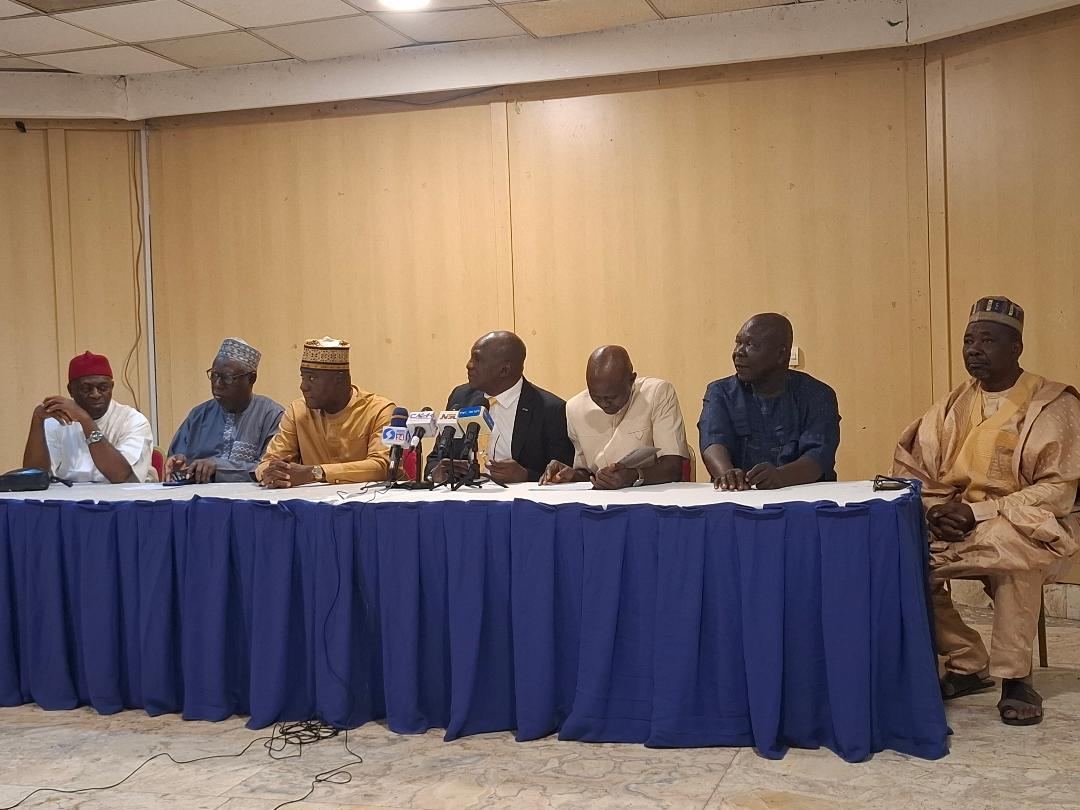
IMPI Chairman, Dr. Omoniyi Moses Akinsiju, told journalists at a press conference, in Abuja, at the weekend, that they have considered the actions of northern state governments as needless distraction away from the economically redeeming attributes of the tax bills.
He said: “These reforms, as coded in the bills, are built on three functional pillars of critical growth drivers which are revenue generation, enterprise development, and enhancement of citizens’ purchasing power.
“Indeed, this is the first time in the history of fiscal policy deployments in Nigeria that the fiscal authorities will combine these three attributions in the tax law. Before now, tax laws were primarily focused on revenue generation without any consideration for enterprise development and citizens’ economic enablement through facilitating aggregate demand.
“We are, however, not surprised by the furore generated over the proposed sharing formula for the proceeds of Value Added Tax (VAT) as contained in the bills, It is the typical expression of the hangover from the era of squabbling over who gets the lion’s share from revenue so generated when, indeed, all that is needed to be done is to innovate to create a symbiotic fiscal relationship between the state and the people in a win-win situation as captured in the bills.”
Dr. Ahmed Sajo, former Commissioner for Information in Adamawa State, and a senior official of IMPI, in his submissions, said the fears of northern governments were based on the very wrong notion of a northern Nigeria that does not want to support productive activities.
He explained further: “VAT is about value addition. The north mus agree that, as northerners and as northern governors and northern governments, there’s the need to add value to the products we have, even if they are just agricultural.
“Take a cow, for instance. It has multiple value chains. If a northern state government can establish a world-class abattoir that slaughter about a thousand cows a day and processes it into meat; do a channel through which the blood is assembled. That would be a very huge gain. Imagine the blood of a thousand cattle. If you process it, it can be used for so many other things. The bones are valuable. The horns are valuable. The hooves and the skin are valuable.
“A few years ago, there were factories in Maiduguri and Kano that produced shoes, bags, belts, and others, using animal skin. If they could only learn to begin to add value to the products we have, they would not even worry about VAT, or any other tax for that matter, because the north is rich.
“Nassarawa state has just established a Lithium processing factory. Kaduna is doing the same. So, the leaders should begin to think about adding value to the products that we produce in the north. They should begin to think productive engagement, not what is going on.
“So, I don’t think there’s any need for us to begin to fear about the tax reform bills that might alter VAT distribution patterns. It’s sad that some people keep saying the north is going to be cheated in the new tax system. But if you sit down and ask them to tell you what are the areas that the north will be cheated, Wallahi, they will not tell you.”
Responding to the fears of the Academic Staff Union of Universities (ASUU) on the effect of the reforms on the funding of Tertiary Education Trust Fund (TETFund), Dr. Sajo reminded ASUU that TETFund is an intervention agency that’s not supposed to last forever.
He said: “I think their position is based on a misunderstanding of the fact that TETFund is an intervention agency. But now, they want to make it look like we have to continue to intervene for life. I think owners of universities, federal, state, and individual, should begin to consider that their primary responsibility is to ensure that the universities operate optimally. And if it is through an intervention fund, fine! If it is through a direct funding, fine!