Follow Us on Google

•ALTON calls for review
By Chinenye Anuforo
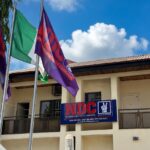
The Association of Licensed Telecommunications Operators of Nigeria (ALTON) has expressed concern over the recent review of the annual payment structure for private companies under the Financial Reporting Council Amendment Act 2023. ALTON said the new structure, based on a percentage of annual turnover, poses significant challenges for telecommunications operators, particularly given the current economic climate.
Under the new structure, non-quoted public interest companies are required to pay dues based on a percentage of their annual turnover, which could reach N500 million for some firms. In contrast, publicly quoted companies with similar financial metrics face a maximum annual payment of N25 million.
In a statement signed by its chairman, Gbenga Adebayo, and executive secretary, Gbolahan Awonuga, on Tuesday, ALTON expressed concern over the disparity in the treatment of quoted and non-quoted entities. The body noted that the dues for quoted companies are calculated based on their market capitalisation and capped at a predetermined amount, while non-quoted companies are subjected to higher payments based solely on their turnover.
The association detailed the new dues structure, which includes the following tiers: 0.02 percent of annual turnover for companies with N25 million or less; 0.025 percent for turnovers above N25 million but not exceeding ₦50 million; 0.03 percent for turnovers above ₦50 million but not exceeding ₦500 million; 0.04 percent for turnovers above ₦500 million but not exceeding ₦1 billion; 0.045 percent for turnovers above ₦1 billion but not exceeding ₦10 billion, and 0.05 percent for turnovers exceeding ₦10 billion.
The disparity is particularly stark for private companies with turnovers above ₦10 billion, which would be required to pay ₦500 million annually, compared to the ₦25 million cap for publicly quoted companies with market capitalizations of ₦1 trillion.
ALTON argued that the new structure, while aimed at raising revenue for the government, could stifle the operations of private companies, especially those in the telecommunications sector. The industry is already grappling with rising operating costs, foreign exchange volatility, and other economic challenges, making the new payment requirements particularly onerous.
To address the issue, ALTON proposed two alternative approaches. First, it suggested that dues should be calculated based on a company’s profit rather than its turnover. The association noted that the telecommunications industry requires significant capital investment, often resulting in a wide gap between revenue and profit. For instance, a company with a turnover of ₦200 billion might declare a profit of only ₦15 billion, making a turnover-based dues structure disproportionately burdensome.
ALTON called for the reintroduction of a predetermined cap on dues payable by non-quoted entities, similar to the cap applied to quoted companies. This, the association argued, would ensure fairness and mitigate the financial strain on private firms.
“We believe that implementing the new structure as it stands would place an undue burden on our members, potentially affecting their ability to maintain operations and provide critical services to Nigerians,” the statement said.
ALTON reaffirmed its commitment to engaging constructively with the FRC to find a mutually acceptable resolution. The association offered to hold meetings with the council to discuss alternative solutions that would better reflect the realities of the telecommunications industry and the broader economic environment.
“We firmly believe that a collaborative approach would be in the best interest of the industry, the regulatory environment, and the overall economic well-being of the country,” ALTON suggested.