Follow Us on Google
…stakeholders meet at Abuja for solutions
From Fred Ezeh, Abuja
The presidency has described the rising cases of neurological disorder in Nigeria as a big threat to the health of Nigerians, demanding a collaborative effort to tackle the challenges.
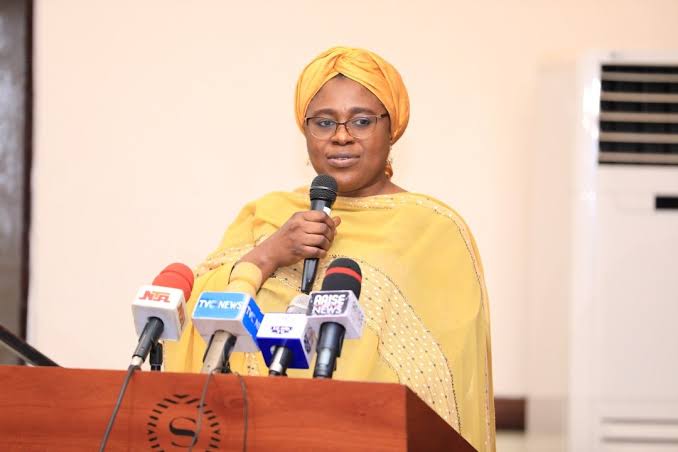
The Special Adviser to the President on Health, Dr. Salma Ibrahim Anas, raised the concerns at the 2025 Africa Neurological Health Summit organised by Brain and Spine Foundation Africa on the theme “Policy and Advocacy in Neurological Healthcare: “Bridging the Gap Towards Achieving WHO-IGAP Goals 2022-2031” with the sub-theme: “Revolutionizing Neurological Healthcare in Nigeria” held in Abuja, on Tuesday.
She said: “This is a huge challenge across our nation and continent. It’s touching millions of lives and families. From epilepsy to stroke, Parkinson’s to traumatic spinal injuries, the burden extends beyond clinical symptoms; it reverberates through communities, economies, and our shared future for a prosperous nation. Hence, the sub-theme, Revolutionizing Neurological Healthcare in Nigeria, calls us to move beyond fragmented interventions and to craft an integrated, sustainable roadmap that leaves no Nigerian behind.”
She highlighted five priority pillars that will guide the joint action on brain and spine health which includes the establishment of a National Neurological Health Framework for clear standards, protocols, and outcome indicators to ensure quality care across all levels of our health system.
“Others are strengthening diagnostics, workforce, and infrastructure; expanding health financing and insurance coverage; accelerating digital health and tele-neurology; and advancing brain health equity through policy and advocacy.”
The Founder and the Executive Director, Brain and Spine Foundation Africa, Chika Okwuolisa, in his welcome address, highlighted the importance of the summit to the course of brain and spine health in Nigeria and Africa.
She insisted that brain health must be brought to the centre of national health planning just like cancer and other Non-Communicable Diseases (NCDs) insisting that brain health can no longer be sidelined, as it’s gradually becoming a public health emergency that demands urgent and sustained intervention from government, health institutions, and society at large.
She said that brain tumours and neurological diseases have become a silent national crisis stressing the importance of collaborations between the health care facilities, first responders, particularly military and paramilitary agencies, and other relevant stakeholders
“There’s also the need for adequate funding and relevant information. Without adequate information, patients are disempowered, and caregivers are helpless. Our healthcare system is not yet designed to accommodate the financial and emotional weight that these conditions impose on families,” she said.
She recounted her own experience supporting her sister’s treatment and how she had to beg from house to house to raise funds. “I have lived through the nightmare. It was like walking through death itself. That’s why we need the government to step in. This should not be a private struggle.”
She challenged all sakeholders, notably clinicians, researchers, policymakers, donors, and patient advocates; to embrace collaboration for integrated approaches. “Share data, evidence-based information, best practices, and innovative ideas to change the status quo and challenge the government to do better, hold them accountable, so that together we can actualize the WHO-IGAP’s vision for epilepsy and other neurological disorders.”
Coordinating Minister of Health and Social Welfare, Prof. Muhammad Ali Pate, in his keynote address, confirmed that neurological disorders are the leading cause of Disability-Adjusted Life Years (DALYs) and the second leading cause of death globally, accounting for nine million deaths per year.
“The five largest contributors of neurological DALYs in 2016 were stroke (42.2%), migraine (16.3%), dementia (10.4%), meningitis (7.9%) and epilepsy (4.9%). Globally, in 2016, 52.9 million children younger than 5 years had developmental disabilities and 95% of these children lived in low – and middle-income countries. The high burden associated with neurological disorders is compounded by profound health inequities.
“For example, nearly 80% of the 50 million people with epilepsy live in low and middle income countries, where treatment gaps exceed 75% in most low-income countries and exceed 50% in most middle-income countries. Disabilities associated with neurological conditions disproportionately affect women, older people, and those with poor socioeconomic backgrounds.
“This reality is changing deliberately and decisively. We have developed and implemented national policy and multisectoral action plans for the prevention and control of NCDs. In addition to this overarching NCD policy, we are scaling up mental and neurological services across the country.
“We are also mainstreaming mental health into vertical disease programmes like HIV, TB, NTDs, and RMNCH (Reproductive, Maternal, Newborn, and Child Health) fostering systems efficiency and synergy,” the Minister said.
Earlier, Akinkoye Kehinde of the NCDs Division, Federal Ministry of Health and Social Welfare, said the summit was designed to highlight the burden of neurological conditions and the necessary measures to elevate neurological health services as a national and continental priority.
“This could be done by initiating high-level policy and advocacy dialogue aligned with the WHO-IGAP for epilepsy and other neurological disorders,” he said.