Follow Us on Google
•NEMSMAS inadequacies compound situation –Stakeholders
From Fred Ezeh, Abuja
A major content of the National Health Act, 2014, was the establishment of Basic Health Care Provision Fund (BHCPF). Also, one per cent of the Consolidated Revenue Account (CRA) was to be channeled to BHCPF for disbursement through several gateways.

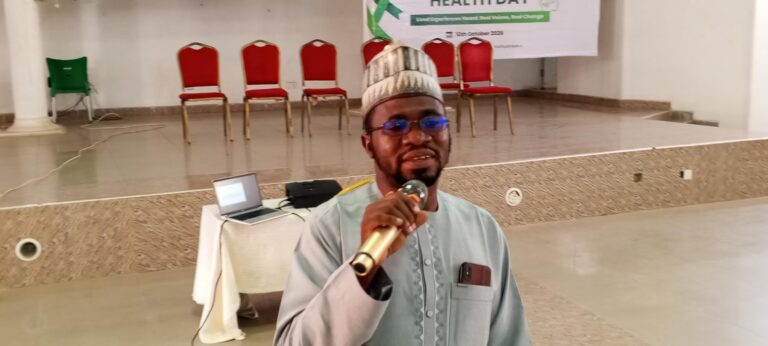
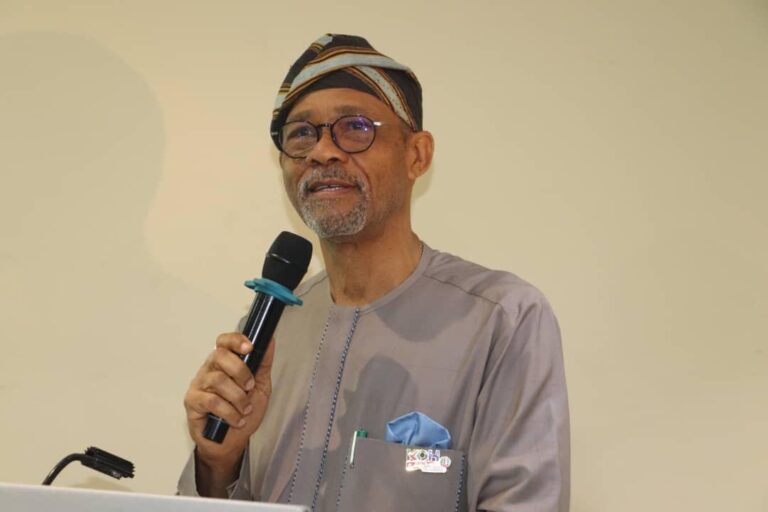
•Okwuolisa; Zubairu and Dr. Douglas Okor
There was the recommendation for the establishment of National Emergency Medical Service and Ambulance System (NEMSAS), to serve as the operational arm of the third disbursement gateway, designated in the National Health Act (NHA), with five per cent of the BHCPF for emergency medical treatment to provide urgent health services to Nigerians.
NEMSAS was designed to address some identified weaknesses in Nigeria’s health system, which made no provision for physical and financial access to first aid and healthcare in case of life-threatening emergencies of any type.
The implementation of the BHCPF began under Prof. Isaac Adewole, as Minister of Health. But his successor, Dr. Osagie Ehanire, who was part of the initiative ab initio, halted the programme. He ordered a total review of the programme for, according to him, improved efficiency.
In October 2022, the ministry announced that plans were concluded for the commencement of the pilot phase of the emergency ambulance services to facilitate access to first aid and healthcare in life-threatening situations.
The ministry said the objective was to ensure that Nigerians enjoy similar national emergency medical services as being experienced in other developed countries.
Unfortunately, NEMSAS services have recorded abysmal performance from what was expected by Nigerians, thus exposing Nigerians to further health dangers and loss of lives that could have been saved with efficient NEMSAS services.
Some Nigerians who interacted with Daily Sun, said they are completely disappointed with the poor performance of the NEMSAS services contrary to the promises made by the government on otherwise.
Many said they are not aware of the programme, neither have they benefited from the services at any point of their health care emergencies.
Meanwhile, some stakeholders in the health sector confirmed that the NEMSAS services have been poor in operations, and that, unfortunately, has defeated the objective of the programme, which was to provide emergency health care response to Nigerians.
An intervention
A non-governmental organisation, Brain and Spine Foundation Africa, told Daily Sun, that it upon itself to close the gap created by inefficiencies of the government, by providing care for several people involved in neurological challenges.
The foundation said NEMSAS has failed Nigerians, hence it’s relying on possible help that could come from philanthropists in Nigeria, notably, Aliko Dangote Foundation, TY Danjuma Foundation and Sir Emeka Offor Foundation, for its continued care for victims of neurological challenges.
It said there’s no recent data regarding the cases of neurological challenges in Nigeria, but there are indications that about 25 persons die of neurological emergencies every day.
It said it has repeatedly raised the alarm over the increasing cases of neurological challenges in Nigeria, which could be attributed to poor management of accident victims, in addition to inadequate facilities and manpower to quickly respond to neurological emergencies in Nigeria.
It decried the poor knowledge of neurological emergencies among some Nigerians, particularly emergency responders, thus leading to avoidable bodily injuries resulting from road accidents or death in some cases.
It advocated regular trainings for the emergency responders, particularly the officials of Nigeria Police Force; Federal Road Safety Corp (FRSC); Directorate of Road Traffic Services (DRTS) otherwise known as VIO; Nigeria Security and Civil Defence Corp (NSCDC); National Union of Road Transport Workers (NURTW), and several other Para-Military officials who might be involved in handling road accident victims or other related accidents.
Its founder, Chika Okwuolisa, said the organisation over the years strived to create massive awareness on neurological emergencies and conditions:
“But despite our efforts, we have been hindered by a severe lack of financial resources. This has prevented us from making the impactful strides we desire. Compounding this issue was what seems like the government’s lack of attention to neurological healthcare, which is a reflection of the broader neglect of the healthcare ecosystem.
“We advocate for substantial investments in educating the public on preventive measures. This proactive approach is crucial in curbing the rising crises. Timely diagnosis and treatment are imperative, and public education serves as a vital tool in ensuring prevention, early recognition and intervention.
“At present, we have numerous patients in dire need of funding for immediate treatment and rehabilitation. We, thus, appeal to the Senate President, Senator Godswill Akpabio, to facilitate the realization of this crucial support for them.
“We urgently call on the government to allocate significant resources to neurological healthcare, prioritize prevention by allocating funding for advocacy for entire citizens; development of pre-hospital care centres, including a coordinated call centres to facilitate timely care for acute and emergency neuro-patients, as well as other individuals experiencing emergencies such as.a heart attack.
“There’s a need for the establishment of an endowment Brain and Spinal Cord Injury Trust Fund, as well as continuous multi-disciplinary training and capacity building for healthcare staff in both A&E and ICU. Establishment of favourable and conducive working conditions for healthcare professionals is also crucial, as it will promote brain gain while discouraging brain drain.”
NMA’s reactions
Dr. Charles Ugwuanyi, Chairman, FCT Chapter, Nigeria Medical Association (NMA), confirmed that reports from FCT hospitals indicated that avoidable deaths are being recorded as a result of neurological challenges. He frowned at the increasing dilapidation of the public health care system in Nigeria, and the poor interest of the government in changing the poor state of Nigeria’s health care system:
“Obviously, there’s increase in budgetary allocation to the health sector in the 2024 fiscal year. But convert the figure into dollars, and you will realize that it won’t solve the huge infrastructural and logistics challenges being faced in the hospitals.” He said avoidable deaths are being recorded across FCT and beyond on a daily basis as a result of neurological emergencies.
He disclosed that FCT has 14 district hospitals that are, unfortunately, ill-equipped in terms of response equipment for neurological emergencies and “this has resulted in some avoidable deaths.
“This is in addition to three tertiary hospitals in FCT, namely, National Hospital, Federal Medical Centre (FMC), Jabi, and University of Abuja Teaching Hospital (UATH), that are equally overburdened by the high number of patients that visit the facilities for medical attention.”
He advocated a legislation that would compel public office holders to reduce the capital flight from foreign medical care and other “unnecessary spendings” and channel such savings into the improvement of health care facilities and equipment in Nigeria, as well as the relevant health care manpower in Nigeria.
“We are losing so many people in Nigeria to brain traumatic and spinal cord injuries. Poor national emergency and ambulance services were majorly responsible for this. We have all it takes, financial, logistics and human capacity, to tackle these challenges. All that is required is commitment from the government.
“Doctors and professional health care workers are massively leaving the country for professional practice abroad. Some who were trained there want to return to practice in Nigeria, but they are increasingly being discouraged by the poor working conditions and remuneration in Nigeria.”
United Nations’ charge
Dr. Yusuf Zubairu, NGOs/CSOs Representative on UN Decade of Action on Road Safety and Injury Prevention in Nigeria, said the data from World Health Organization (WHO) indicated that road crashes have become a major cause of sudden deaths in the world.
He said that the UN was concerned with the alarming cases of road crashes and loss of lives in Nigeria; hence it’s intensifying its engagements with individuals, stakeholders, NGOs and the media to amplify the campaign on road safety:
“We used to focus on the effects of post-crashes. But now, we are paying more attention to cases of pre-crashes, as well as other domestic accidents that could result in neurological emergencies, in addition to enlightenments and training on first aid response.
“The UN wants CSO and NGOs across the world to do their jobs as pressure groups that they are. Nigeria is a signatory to the UN treaty that promotes health and road safety. So, it’s your right and responsibility to demand a good response from the government. Besides, the WHO had declared road crashes as the leading killing health challenge in the world.
“NGOs should rise to the occasion and put pressure on the government to do the needful. There are fundings that are available for the NGOs but there must be sustained pressure for the funds to be released.”
He made reference to a resolution in the UN that compelled major companies to put money in health and road safety.
Those resolutions should be enforced so that adequate funds could be made available for responses to issues of road safety and neurological emergencies.
A brain surgeon, Dr. Douglas Okoh, advocated improved efficiency of NEMSAS as a critical aim of emergency health care services in Nigeria, as well as coordinated response to issues of neurological emergencies: “We may not have accurate data, but on the average, 25 persons lose their lives on a daily basis as a result of road accidents.
“Seventy per cent of the figure is from brain and spinal cord injuries. Unfortunately, we have a weak system accompanied by poverty and illiteracy.
“The brain is time and time is brain, hence urgency should always be considered in handling cases of neurological emergencies in order to save lives of the victims. There’s a need for adequate provision of CT and MRI scan services at all secondary health care facilities, and should be evenly distributed for the health care services.”