Follow Us on Google
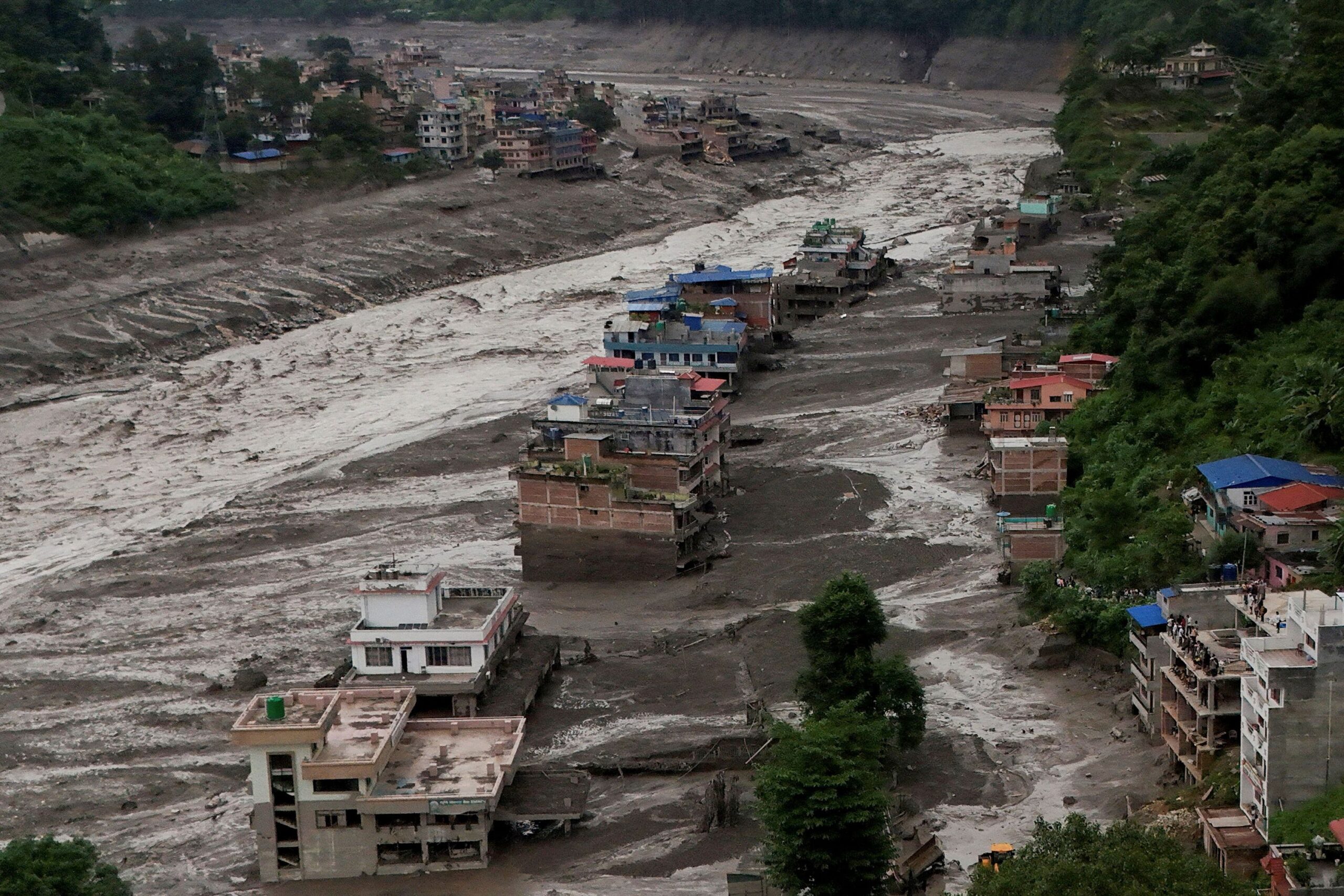
At least 180 people have been killed and more than 1,300 others are missing after flash floods and landslides devastated communities along the Nepal-Tibet border.
Rescue teams were deployed across affected areas on Thursday, searching through mud and debris for survivors a day after torrents of water and earth swept through villages and towns.
The disaster struck on Wednesday morning along the Bhote Koshi and Trishuli rivers, with floodwaters engulfing homes and sweeping away vehicles and structures.
Nepali authorities said 177 bodies had been recovered, while 823 people in the country remained unaccounted for. The missing included 517 foreign tourists.
In Tibet, Chinese state media reported that three people were killed in the mudslide disaster around Gyirong Port, while 558 others, including 260 foreigners, were missing.
The scale of the disaster has raised fears over the fate of tourists travelling through the mountainous region, including nationals from India, Australia, Britain, Malaysia, the Netherlands, Portugal, South Africa, South Korea and the United States.
The United States Geological Survey said initial reports had suggested that the disaster was triggered by an earthquake. However, analysis of seismic recordings indicated that a glacial collapse and subsequent debris flow were responsible.
The collapse reportedly unleashed a massive flow of icy debris and water downstream, producing what environmental historian Ruth Gamble described as an “inland tsunami” that travelled nearly 170 kilometres into Nepal.
Rasuwa district in northern Nepal was among the first areas hit, while flooding subsequently affected seven districts as the waters moved south towards Chitwan, near the Indian border.
Other News
Rescue operations have been complicated by extensive mud and debris, while authorities remain concerned about the possibility of additional flooding.
Qianggong Zhang, head of climate and environmental risks at the International Centre for Integrated Mountain Development, warned that a blockage upstream on the Nepal-China border river could trigger another flood.
A Nepali government technical report similarly said the possibility of additional water flow could not immediately be ruled out.
Chinese authorities have also mobilised hundreds of emergency personnel, sniffer dogs and speedboats to support rescue operations in Tibet.
The disaster has also affected pilgrims travelling to Mount Kailash in Tibet. Indian spiritual leader Sadhguru said hundreds of Hindu devotees returning from the pilgrimage were among those caught at an immigration post hit by the floods.
In an emotional video message, Sadhguru described the incident as a “terrible and extraordinary event.”
The International Federation of Red Cross and Red Crescent Societies said it was sending emergency supplies, including blankets, first-aid kits, stretchers and body bags, to support the response.
Authorities in both Nepal and Tibet continue to search for missing people while assessing the risk of further flooding in the affected mountainous areas.