Follow Us on Google
By Benson Michael
In the halls of hospitals, nonprofit organizations, and international NGOs, the story of burnout has become all too familiar.
Physicians are leaving the workforce in record numbers, social workers are struggling under impossible caseloads, and mission-driven professionals across sectors face an exhausting mix of long hours, low pay, and little recognition. While wellness programs—from yoga classes to mindfulness apps—have proliferated as quick fixes, they often fail to address the structural roots of the crisis.
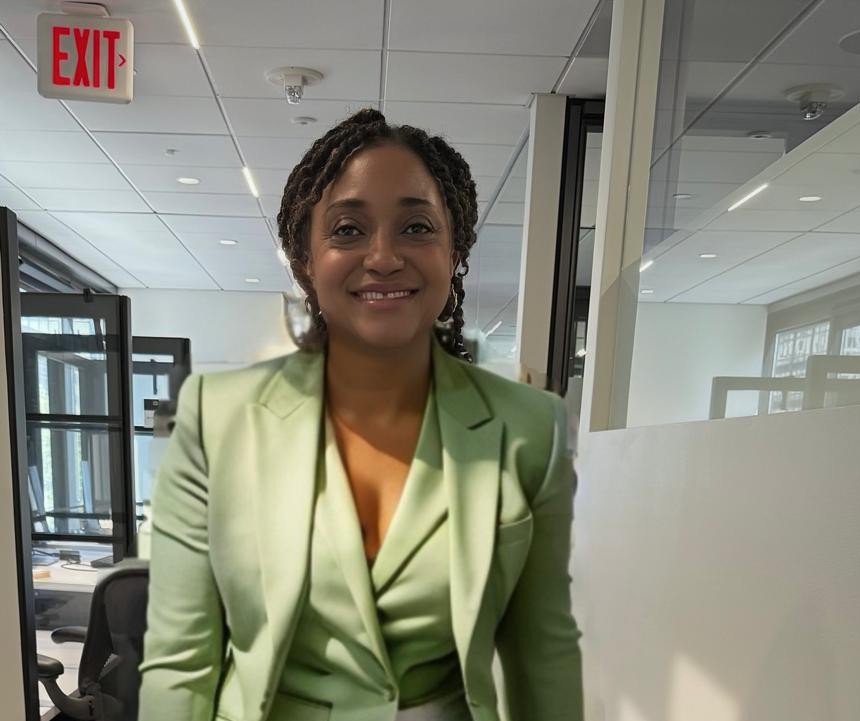
Into this conversation steps Ndifreke Deborah Essien, a global human resources leader and scholar whose groundbreaking research is reframing how organizations confront burnout. Her recent peer-reviewed article, Burnout and Compensation Equity in Mission-Driven Workforces: A Systemic Review of HR Interventions in Healthcare and Nonprofit Sectors, published in the International Journal of Management & Entrepreneurship Research in 2025, is not merely academic theory.
It is a manifesto for practical reform, anchored in evidence and informed by more than 15 years of her leadership across global organizations including the World Bank, Malala Fund, and Cambridge Education (Mott MacDonald Group).
“Improving compensation fairness can mitigate burnout more sustainably than standalone wellness programs,” Essien writes in the paper. With this assertion, she challenges an industry trend of treating burnout as an individual failing, instead demanding systemic solutions rooted in pay transparency, equity audits, and leadership accountability.
The urgency of Essien’s work is clear. According to the American Medical Association, nearly half of U.S. physicians reported symptoms of burnout in 2023, with many citing inequitable pay as a primary factor. The National Council of Nonprofits reported that three-quarters of nonprofits struggled with vacancies in 2022, often because wages could not compete with other sectors. Beyond U.S. borders, Essien’s review highlights international parallels. In Japan, for instance, long-term care workers who received equitable pay were significantly less likely to report burnout symptoms, underscoring that fair compensation is a universal lever for workforce stability.
This evidence is more than statistical noise. For Essien, it represents the lived reality of workers who are pushed to the breaking point not because they lack resilience but because their labor is undervalued. By centering compensation fairness, her research reframes burnout as a policy and management issue—not a personal shortcoming.
What makes Essien’s study resonate is its rare combination of academic rigor and practical applicability. Drawing on workforce models such as Job Demands–Resources (JD-R) and Effort–Reward Imbalance, she demonstrates how inequitable pay structures deepen burnout cycles. But she does not stop at diagnosis. Her paper lays out actionable strategies: transparent pay scales, regular equity audits, job grading systems, and linking leadership evaluation to well-being outcomes.
“Mission-driven organizations cannot fulfill their missions if their employees are exhausted and underpaid,” she notes. This philosophy has defined her own professional journey, where she has consistently implemented reforms that align with her scholarship. At CCSI Essien designed the organization’s first Compensation Philosophy, eliminating inequity and benchmarking the organizational pay structure with industry data.. Stil at CCSI, she transitioned 60 consultants into full-time employees, introducing equitable grading structures that set a new benchmark for nonprofit sustainability.
At Malala Fund she directed compensation benchmarking across 7 countries and developed competitive salary scales reducing gender-based salary gaps by 15 percent and cutting turnover by 20 percent across 100 employees in four countries At the World Bank, she currently integrates predictive workforce analytics into recruitment, shaping staffing strategies across 20+ countries.
In this way, Essien is both theorist and practitioner—a rare duality that makes her work deeply persuasive to policymakers, HR leaders, and organizational boards.
For decades, organizational responses to burnout have emphasized resilience training, wellness workshops, and employee assistance programs. While valuable, these interventions often fail to address what Essien identifies as the “elephant in the room”: systemic inequities in compensation. Her article argues that burnout cannot be solved without examining whether employees feel fairly compensated for their efforts.
This view is gaining traction. Recent studies by the World Health Organization and the National Institute for Occupational Safety and Health (NIOSH) emphasize organizational fairness as a determinant of workforce well-being. By synthesizing global research and adding her own case studies, Essien provides what one HR director at a major U.S. healthcare system called “the missing link between well-being and pay equity.”
The paradigm shift she advances is simple but radical: burnout is not just about overwork; it is about undervaluation.
Essien’s article has implications that extend far beyond healthcare and nonprofits. By linking compensation equity to workforce resilience, she provides a framework relevant to any sector grappling with attrition, from education to technology. Her recommendations—such as equity audits and transparent pay structures—are already being cited in boardroom discussions and incorporated into pilot programs.
In the U.S., where healthcare worker shortages threaten patient care and nonprofit turnover weakens social safety nets, her research offers an urgently needed roadmap. Globally, where cultural and regulatory differences complicate workforce policies, her cross-cultural expertise makes the case for adaptable equity models that respect local contexts while upholding universal standards of fairness.
“This research changes the conversation,” notes a forthcoming letter of recommendation from a senior colleague. “For years, organizations treated burnout as a wellness issue, but Ms. Essien’s review proves that unless pay equity is addressed, no amount of wellness programming will keep staff from leaving.”
Essien’s scholarship has not gone unnoticed. In July 2025, she was profiled in Business Insider / Markets Insider for winning a Global Recognition Award honoring her 15-year career in HR leadership across 11 countries. The article praised her for setting “a global standard for innovation and inclusion” through her compensation equity projects and digital HR transformations. Coverage in such a widely read platform underscores both the originality of her work and its resonance with international audiences.
What distinguishes Essien is her insistence on connecting policy with practice. She understands that compensation equity is not just an HR initiative but a public health intervention, a sustainability strategy, and a justice issue. Her article concludes with a powerful call: “Fairness in compensation is not just a moral obligation; it is a strategy for sustainability.”
Her career, spanning organizations from the World Bank to grassroots nonprofits, demonstrates that this is more than rhetoric. She has built the systems, authored the scholarship, and led the reforms that show equity in action.
As workforce shortages deepen in mission-critical sectors, Essien’s work offers not just analysis but hope. By reframing burnout through the lens of fairness, she charts a path toward organizations that are not only more resilient but more just.