Follow Us on Google

By Chinenye Anuforo
The Nigerian Communications Commission has urged stakeholders in telecommunications sector to prepare for the opportunities as well as the risks associated with the evolution of emerging technologies and beyond instead of only addressing the challenges posed by current technologies.
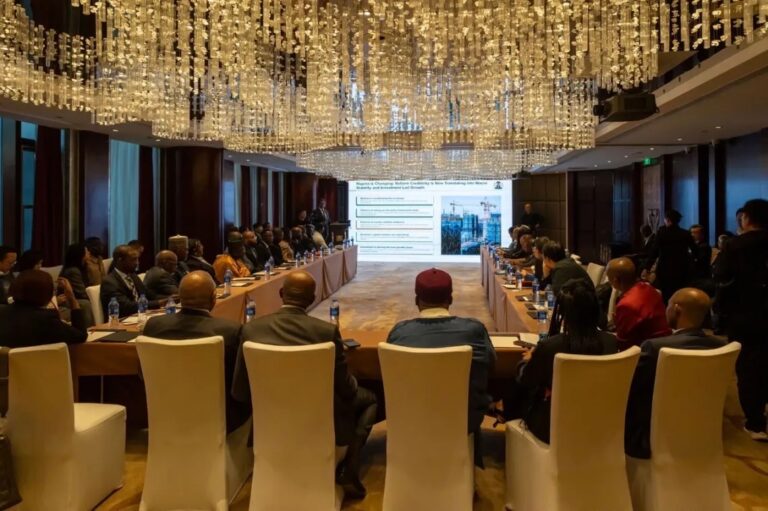
The NCC Executive Vice Chairman, Aminu Maida, during the maiden edition of “Telecoms Industry Risk Management Conference,” in Lagos recently stated that by doing so, the stakeholders can ensure that the telecoms industry not only adapts to change but thrives at the forefront of technological innovation.
Represented by Ubale Maska, Executive Commissioner, Technical Services, NCC, the EVC explained that, building a culture of risk awareness is paramount. He said, “As an industry, we must empower our people with the knowledge and skills to proactively identify and report risks and embed security awareness and risk management practices throughout our business processes. Emerging technologies such as AI should be leveraged to generate data-driven insights needed to predict, detect, and respond to risks in real-time. We should also monitor evolving threats and vulnerabilities on a continuous basis and streamline incidence response processes to build a resilient telecom industry.”
He averred that the NCC remains committed to fostering an environment that encourages innovation while prioritising the security and stability of telecom infrastructure. “As we navigate through 5G and the uncharted territory of the next generations of wireless technologies, collaborative efforts among regulators, industry players, and other stakeholders become even more crucial for sharing best practices, threat intelligence, resources and implementing robust risk management strategies. We should therefore move beyond mere compliance and reactive measures, and instead, harness the power of these new technologies and trends to build a resilient and future-proof industry”, he stated.
In addition to the evolution of connectivity, Maida urged the telecommunications community to consider the implications of emerging technologies such as quantum technologies (computing, sensing, and communications), advanced artificial intelligence, and Block Chain (distributed ledger) technologies. “These trends, when harnessed effectively, hold the potential to transform our industry positively. However, they also introduce complexities that demand careful consideration in our risk management strategies.”
In his opening remarks, Kelechi Nwankwo, the Head, Corporate Planning, Strategy and Risk Management, NCC, explained that the fast-disruptive world of the telecoms industry has witnessed convergence of diverse technological advancements with the potential of reshaping the future. “From 5G networks, the Internet of Things (IoT), and Artificial Intelligence (AI), to Cloud Computing and beyond, the possibilities are limitless. However, with great opportunities, comes great risks, and it is our collective responsibility to address these risks and possibly safeguarding the industry’s growth and sustainability,” he said.
He pointed out the conference is a testament to the collective commitment towards recognizing the evolving risks and challenges experience by stakeholders, while embracing the immense opportunities emerging technologies and trends bring. “The World Economic Forum (WEF) in a survey of global leaders on the five risks most likely to present material crisis on a global scale in 2024, reported AI-generated misinformation/disinformation as number two (2) and cyberattacks as number five (5) . These two are technological risks. The number one (1) risk is extreme weather (environment) while numbers three (3) and four (4) are societal/political polarisation and cost-of-living crisis respectively, which are societal issues.”
He added, “The telecoms industry has gone through remarkable transformations, and it is our responsibility to stay informed, prepared, and proactive in managing the potential risks ahead.”