Follow Us on Google
From Sola Ojo, Abuja
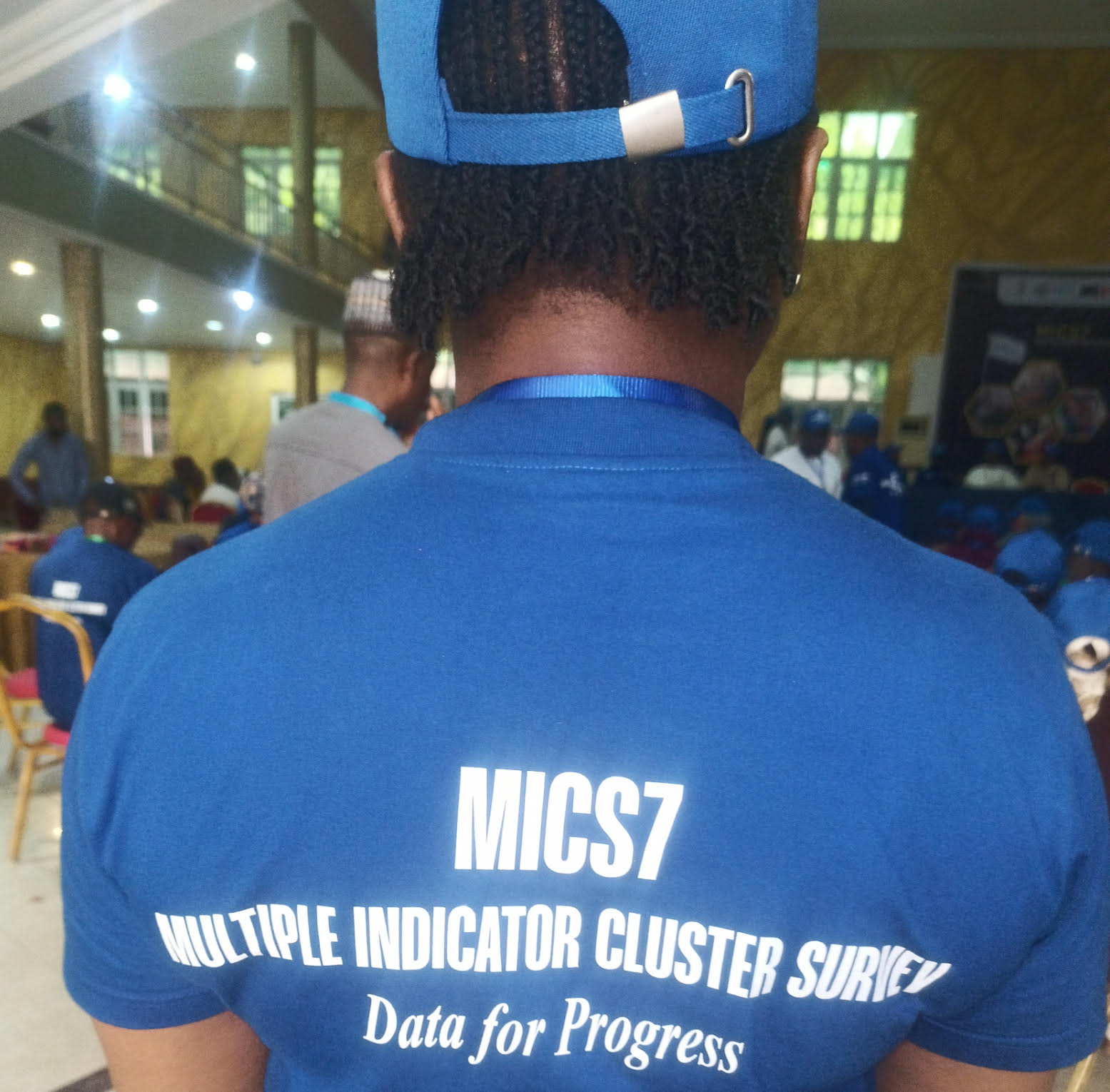
The Kaduna State Bureau of Statistics, on Thursday, November 27, led the official flag-off of the seventh round of the Multiple Indicator Cluster Survey (MICS-7) for the North-West geopolitical zone.
The event, which took place at a hotel in Kaduna after a month of rigorous training for prospective enumerators from the seven states in the zone—Kaduna, Kano, Katsina, Zamfara, Sokoto, Kebbi and Jigawa—ahead of the commencement of fieldwork scheduled for February to March 2026.
In an interview with newsmen on the sidelines of the event, the Statistician-General of Kaduna State and Chief Executive Officer of the Kaduna State Bureau of Statistics, Dr Bukar Alhaji, said the national survey was designed to generate reliable data on women and children, especially those under five years of age, to guide policy formulation and development planning.
“MICS is a multiple cluster indicator survey. This is the seventh round happening across all states of the federation.
“The aim is to gather vital information on children and women of childbearing age for effective policy formulation by government, partners and researchers.
“Data is life; data is the new oil. This exercise helps policymakers channel resources appropriately to improve the lives of people, especially children,” he said.
Dr Bukar added that more than 100 enumerators have been trained across the seven North-West states, drawn from the ministries of health and education, state statistical agencies, and the National Bureau of Statistics (NBS).
The nationwide training of over 500 field personnel was concluded earlier to prepare for the demanding survey exercise.
Other News
A participant and Deputy Director in the Census and Survey Department of the Kaduna State Bureau of Statistics, Fatimah Ibrahim, commended the preparations and emphasised the importance of quality data collection for development planning.
To her, the survey would produce robust data on maternal, newborn and child health (MNCH), education, and socioeconomic indicators.
She appealed for greater public awareness and community mobilisation to ensure maximum cooperation from households.
“If jingles or other forms of community sensitisation can be provided, it will help us achieve high response rates,” she said.
Antonia Moses-Okei of the National Bureau of Statistics highlighted the scope of the survey.
According to her, MICS-7 would be conducted concurrently across the 36 states and the FCT, using multiple questionnaires tailored to specific age and sex groups.
“In every state, 50 enumeration areas will be visited, and in each EA, we are expected to interview 20 households,” she said.
MICS-7 is conducted in collaboration with UNICEF and other development partners.
The results are expected to provide updated insights into child nutrition, education, health, sanitation and general well-being, which are critical for shaping national and state-level interventions.