Follow Us on Google
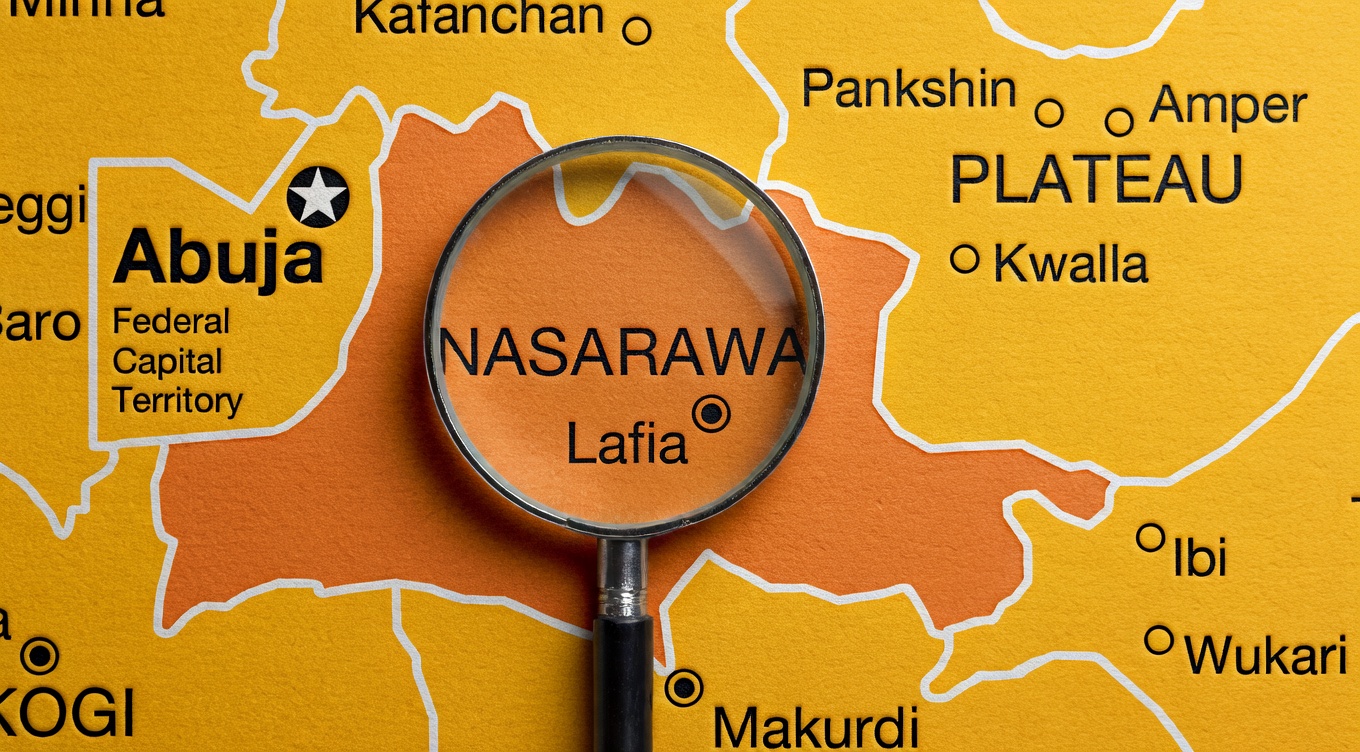
From Abel Leonard, Lafia
The forthcoming Nasarawa North senatorial by-election has evolved into far more than a contest to fill a vacant legislative seat. Across the three local government areas of Akwanga, Wamba, and Nasarawa Eggon, the election is increasingly being viewed as a major political test ahead of the 2027 governorship race and a referendum on the influence of the state’s leading political actors.
Four formidable contenders are in the race: Dr David Emmanuel Ombugadu of the Peoples Democratic Party (PDP), former Minister of Information Labaran Maku of the Labour Party (LP), Danladi Halilu Envulu-Anza of the All Progressives Congress (APC), and Duba Dodo Ishaya of the National Democratic Coalition (NDC).
Political observers believe voters face a difficult choice between experience, performance, party loyalty, and the quest for alternative leadership.
Political analyst Musa Ibrahim described the election as “one of the most competitive senatorial contests Nasarawa North has witnessed in recent years.”
“This election is not just about who goes to the Senate,” he said. “It is also about which political tendency appears strongest ahead of the bigger battles of 2027.”
Among the candidates, David Emmanuel Ombugadu appears to enjoy perhaps the strongest grassroots visibility. A former member of the House of Representatives and the PDP governorship candidate in the 2023 election, Ombugadu has maintained a considerable political following throughout the senatorial district. Supporters frequently point to his numerous empowerment initiatives, educational interventions, healthcare support programmes, and water projects executed during and after his tenure in the National Assembly.
In many communities across Nasarawa North, residents still reference boreholes, scholarships, health insurance interventions, and youth support programmes associated with Ombugadu. These projects have helped sustain his popularity despite the PDP’s challenges at both state and national levels.
According to political commentator Samuel Angbazo, “Ombugadu’s greatest strength is that many voters can identify specific projects linked to him. Whether one agrees with his politics or not, there is no denying that he has maintained a relationship with the grassroots.”
However, analysts note that his greatest challenge may be the lingering divisions within the PDP and the disappointment among some supporters following the outcome of the 2023 governorship election. Critics also argue that the opposition party may not possess the same organisational strength it once enjoyed across some parts of the district.
Yet many pundits still regard Ombugadu as one of the leading contenders because of his extensive political network and personal popularity that often transcends party affiliation.
Labaran Maku enters the contest from a different position of strength. Few politicians in Nasarawa State possess his level of name recognition. Having served as Deputy Governor of Nasarawa State and later as Minister of Information, Maku remains one of the state’s most experienced political figures.
For many older voters, Maku’s candidacy evokes memories of an era when he occupied prominent positions in government and national politics. His supporters describe him as a seasoned administrator, effective communicator, and accomplished public servant with the capacity to represent the district effectively in the Senate.
A Labour Party stakeholder in Akwanga, who spoke on condition of anonymity, said Maku enjoys widespread acceptance beyond partisan boundaries.
“Labaran Maku has supporters in virtually every political party. His experience and accessibility are major assets. Many people know him personally and believe he understands the needs of the district but does not have any visible projects or developmental plan to his name in the zone compared to Ombugadu,” the stakeholder said.
Political observers also believe Maku could benefit from voters seeking an alternative to both the APC and PDP.
Withal, the former minister faces significant hurdles. While his personal popularity is undisputed, the Labour Party’s structure in Nasarawa North remains less extensive than those of the APC and PDP. Internal disputes that have affected the party nationally are also viewed as potential obstacles to mobilising voters effectively on election day.
For many analysts, the key question is whether Maku’s popularity can compensate for the Labour Party’s comparatively limited grassroots machinery.
On the side of the ruling APC stands Danladi Halilu Envulu-Anza, a respected legal practitioner and former Secretary of the National Judicial Council. Unlike his major rivals whose strengths are rooted largely in partisan politics, Envulu-Anza’s appeal is anchored on his vast administrative experience, legal expertise, and association with the ruling party.
Supporters argue that his extensive public service career has equipped him with the knowledge and connections necessary to attract federal projects and investments to the district. An APC chieftain in Wamba described him as “a bridge between the district and the corridors of power.”
“He has spent decades in public service and understands government systems. With APC controlling both the federal and state governments, he is well positioned to bring development to Nasarawa North,” the party official said.
The APC also enjoys the advantage of an established political structure across the district. Governor Abdullahi Sule’s administration retains substantial influence in many communities, and party loyalists are counting on that advantage to secure victory.
However, some political analysts believe Envulu-Anza’s principal challenge lies in matching the grassroots popularity of candidates such as Ombugadu and Maku. While widely respected within professional circles, critics argue that he lacks the mass political profile of some of his rivals.
“The APC structure is formidable,” said political analyst Ibrahim Hassan. “But elections are ultimately won by candidates, and the party must convince voters that Envulu-Anza can connect with ordinary people as effectively as his opponents.”
The fourth major contender, Duba Dodo Ishaya of the NDC, represents what many observers describe as the alternative option in the race. Running on a platform centred on competence, reform, and issue-based politics, Dodo has sought to distinguish himself from the established political order.
His campaign message has resonated particularly among younger professionals, civil servants, and voters who express frustration with the dominant parties.
A university lecturer in Nasarawa Eggon, Dr James Ashe, believes Dodo’s candidacy reflects growing public demand for fresh ideas.
“There is a segment of the electorate that wants a departure from traditional politics. Duba Dodo appeals to that constituency because he focuses more on policy discussions than political history,” he said.
Yet analysts agree that the NDC’s limited political structure remains a major obstacle. While Dodo may perform strongly in certain urban and educated demographics, translating goodwill into votes across hundreds of polling units will require a level of organisation that many smaller parties struggle to achieve.
As the campaign enters its final stages, political observers increasingly view the race as a contest involving four distinct strengths. Ombugadu offers a track record of constituency interventions and strong grassroots appeal. Maku brings experience, name recognition, and cross-party acceptability. Envulu-Anza relies on the strength of the APC machinery and his administrative credentials. Dodo represents a reform-minded alternative seeking to capitalise on voter dissatisfaction.
A retired civil servant in Akwanga who does not want his name in print summarised the contest succinctly.
“Ombugadu has the projects. Maku has the experience. Envulu-Anza has the ruling party. Dodo has the message of change. The question is which of these qualities voters value most at this moment.”
While no outcome can be predicted with certainty, many independent commentators place Ombugadu marginally ahead because of his visible grassroots presence and previous electoral performance in the district.
Maku is widely regarded as a strong challenger capable of attracting support beyond traditional party lines. Envulu-Anza remains a serious contender due to the APC’s organisational strength and incumbency advantages, while Dodo could emerge as the surprise factor if disenchanted voters rally behind his reform agenda.
Ultimately, the election may be decided by turnout, voter mobilisation, and the ability of each candidate to convert goodwill into votes. What is beyond dispute, however, is that Nasarawa North is heading into one of the most consequential senatorial contests in its recent political history.
As voters prepare to cast their ballots, the district stands at a crossroads. Whether they choose experience, performance, party loyalty, or change, the outcome will almost certainly shape the political landscape of Nasarawa State well beyond the walls of the Senate chamber.