Follow Us on Google
From Ismail Omipidan, Abuja
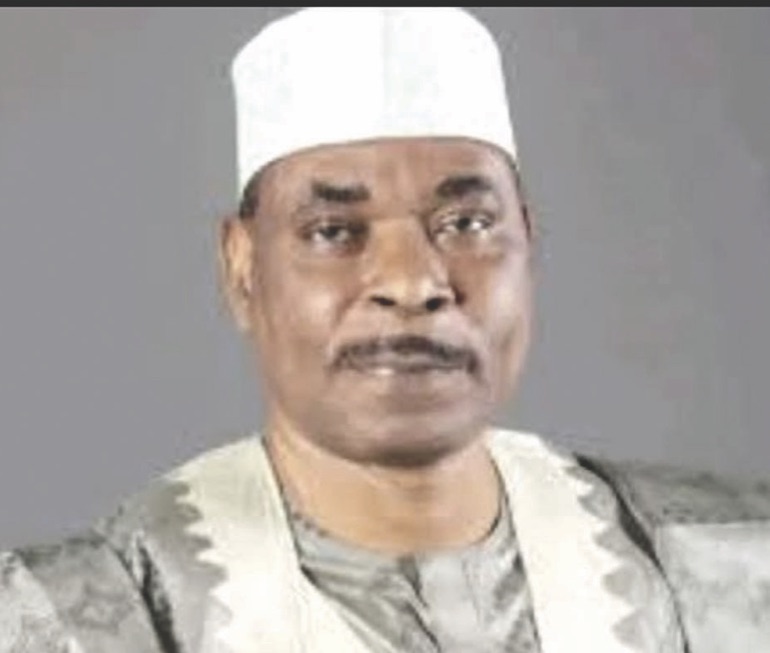
Former Inspector-General of Police, Mohammed Abubakar Adamu, has said that he is head and shoulders above the other aspirants eying the Nasarawa State governorship seat. He made this known at the weekend in Abuja when he spoke to some journalists on his governorship ambition. He spoke about his plans for the state in the areas of security, infrastructure, and economic development. He also spoke about his views on state police, and the zoning controversy in Nasarawa State.
Excerpts:
Why are you interested in Nasarawa State governorship seat?
My decision to contest the Nasarawa State governorship is rooted in my experience and understanding of the challenges facing not just Nasarawa State, but the entire North-Central region. Security issues are not isolated; what happens in Nasarawa affects neighbouring states like Benue, Kogi, Plateau, Kaduna and Niger. Having worked at the highest level of policing in this country, I have been part of advising and implementing strategies to tackle insecurity. I now believe the time has come for me to be in a position where I can directly apply political solutions to these challenges. Security is not just about force; it requires political will, economic planning and community engagement.
You mentioned political solutions to insecurity. Can you elaborate on what you mean?
Yes. The mistake we often make is to think that security can be solved purely through force. That is not sustainable. The root causes of insecurity—poverty, unemployment, and social dislocation—must be addressed. When people do not have legitimate means of livelihood, they resort to crime. So, political solutions involve creating opportunities, addressing grievances, and building trust within communities. If we do that, the pressure on security agencies will reduce significantly.
What are the key security challenges in Nasarawa State, and how will you address them?
The major issues in Nasarawa are farmer-herder conflicts and kidnapping. These are not unique to the state, but they are particularly pronounced in the North-Central region. To address them, we must first understand their causes. For instance, conflicts between farmers and herders often arise from competition over resources and, in some cases, deep-seated mistrust. So, my approach is multi-layered. First, we will create jobs, especially for the youth, through agriculture and mining. Second, we will promote dialogue and conflict resolution at the community level, bringing farmers and herders together to agree on acceptable norms. Third, we will strengthen community policing by working closely with traditional institutions. They understand their people and can provide valuable intelligence.
What is your position on the controversial issue of state police?
The Constitution of the Federal Republic of Nigeria provides for one police force, but in reality, we already have different forms of policing. When you look at vigilante groups, neighbourhood watch, and other local security arrangements like Amotekun in the South-West, they are performing policing functions. So, whether we formally call it state police or not, it already exists in practice. The real issue is not whether to create state police, but how to strengthen and regulate these existing structures to make them more effective and accountable. Some people fear that governors may misuse state police, but even now, local security outfits are being used in various ways. So, the fear that governors will misuse it is misplaced. What we need is a proper framework to ensure professionalism and oversight.
Beyond security, what are your priorities for the state?
Economic development is a major priority. Nasarawa State has enormous potential, particularly in agriculture and solid minerals. Unfortunately, these resources are not being fully utilised. With the right investments and policies, we can create jobs, increase revenue and improve living standards. The current governor has done his best in this regard. Ours will be to build on the things he has done for the maximum benefit of our people. During my consultations, I visited all 147 wards in the state. I saw the challenges firsthand—youth unemployment, lack of opportunities for women, and inadequate infrastructure. These are areas that require urgent attention. If we empower the youth and women, we will not only improve the economy but also reduce insecurity.
You mentioned infrastructure, what specific challenges did you observe?
The infrastructure deficit is significant. For example, electricity supply is unreliable, even in the state capital. Small businesses depend on power to operate, and when it is not available, their livelihoods are affected. Road infrastructure is another major issue. While there are some good roads in urban areas, rural roads are in poor condition. Farmers find it difficult to transport their produce to markets, which affects both their income and food supply.
Water supply is also a challenge. In many parts of the state, including the state capital, residents cannot rely on public water systems and have to depend on boreholes. This has implications for public health and overall quality of life. Therefore, I will prioritise these areas if given the mandate.
Other News
Lafia, the state capital is still not looking like a real state capital. What are your plans for the state capital, Lafia?
I agree that Lafia does not reflect the status of a state capital. It still looks more like a glorified local government headquarters. This is largely due to the lack of consistent focus on urban development by previous administrations. They never prioritise the development of the city as a state capital. But His Excellency, Senator Tanko Al-Makura raised the development level of the state capital. And the incumbent governor has also tried his best. Therefore, my plan is to transform Lafia into a modern city with proper infrastructure and urban planning. We will also develop satellite towns to accommodate the growing population, especially given the state’s proximity to Abuja. And for me, this presents a unique opportunity that has not been fully exploited.
Look at Mararaba, for instance, that area is a product of historical developments. It started as a temporary settlement during the construction of Abuja, but it has grown into a densely populated area without proper planning. However, that does not mean it cannot be improved upon. We will focus on urban renewal by creating new, well-planned settlements and upgrading existing ones. We will also develop alternative road networks to ease congestion and improve connectivity. With proper planning and investment, Mararaba can be transformed.
The issue of zoning appears very contentious in your state. What is your position on zoning in Nasarawa politics?
Historically, Nasarawa State has not strictly practised zoning. Leadership has emerged based on political dynamics rather than regional rotation. While some stakeholders advocate zoning, I believe the position of governor should be open to any competent individual from any part of the state. What matters most is the ability to deliver good governance. Restricting leadership based on zoning may limit the pool of capable candidates. While the governor, in his wisdom, wants to support somebody from Nasarawa West—and he has a right to do so—my zone, Nasarawa South, is also saying it should be left open. So, I have gone to the 147 wards in the state and I have seen their problems, and I told them, let’s work together. As journalists, I plead with you to focus on Nasarawa State—nobody can beat me, since it is direct primary. Whoever came up with the idea of Direct Primary must have suffered some kinds of injustices in the past through the indirect primary. They manipulate through indirect primaries. But that threat has been removed. Nobody can take my delegates and keep them somewhere and tell them to vote in a certain way. So, we are confident that the people will choose me ahead of others. We will be vigilant and keep our eyes open to make sure that the primaries are free and fair.
Do you have the support of key political stakeholders in the state?
In politics, the most important stakeholders are the people. I have taken my campaign directly to the electorate. I visited all the wards, engaged with party officials and community leaders, and listened to their concerns. While political endorsements are important, they are not decisive. Ultimately, it is the people who determine the outcome of an election. I am confident in the support I have received at the grassroots level.
Critics say you are more of a technocrat than a politician. How do you respond to that?
Politics is not limited to campaigning or holding political office. It involves understanding systems, managing relationships, and resolving conflicts. Throughout my career, I have engaged in these activities at various levels. Even as a police officer, I was involved in negotiations, conflict resolution and strategic decision-making. These are all elements of politics. So, I would say I bring both technocratic experience and political understanding to the table.
What is your stance on local government autonomy?
Local government autonomy is essential for grassroots development. In any functional democracy, the three tiers of government must operate effectively. Unfortunately, in Nigeria, local governments are often dependent on state governments, which limits their ability to deliver services. If the law provides for autonomy, it should be implemented fully. Local governments should have access to their resources and be held accountable for how they use them. This will bring development closer to the people.
Will you probe your predecessors if elected?
Governance should not be driven by vendetta. My focus will be on moving the state forward.
Some say you are not one of them. They see you more of an outsider, what have you personally contributed to Nasarawa State?
I was born and raised in Lafia, and my roots are firmly in the state. As Inspector-General of Police, I contributed to national security efforts that also benefited Nasarawa. Specifically, I facilitated recruitment into the police, which Nasarawa State also benefitted from, established a Police Mobile Training School in the state, and supported the development of police secondary schools and hospitals. I also contributed to infrastructure development. So, I have already given back to the state in various ways. Leadership is about service and results. I bring experience, vision and a deep understanding of the challenges facing the state. I have a clear plan to address insecurity, create jobs, improve infrastructure and promote development. I have also engaged directly with the people and understand their needs. If given the opportunity, I will work tirelessly to improve their lives and move Nasarawa State forward.