Follow Us on Google
From Abel Leonard, Lafia
As political gladiators sharpen their strategies ahead of the 2027 governorship election in Nasarawa State, the ruling All Progressives Congress (APC) is already caught in a stormy debate that threatens to shape the party’s future and possibly its grip on power.
The argument over whether the next governorship ticket should be zoned to a particular region or thrown open for all aspirants is heating up the political space, with stakeholders in different camps pushing their agenda.
What began as routine consultations in the three senatorial zones of the state has now snowballed into a serious political issue. At the heart of the matter lies a fundamental question: should the APC stick to zoning for the sake of equity and inclusiveness, or should it embrace open contest to project itself as a party that believes in merit.
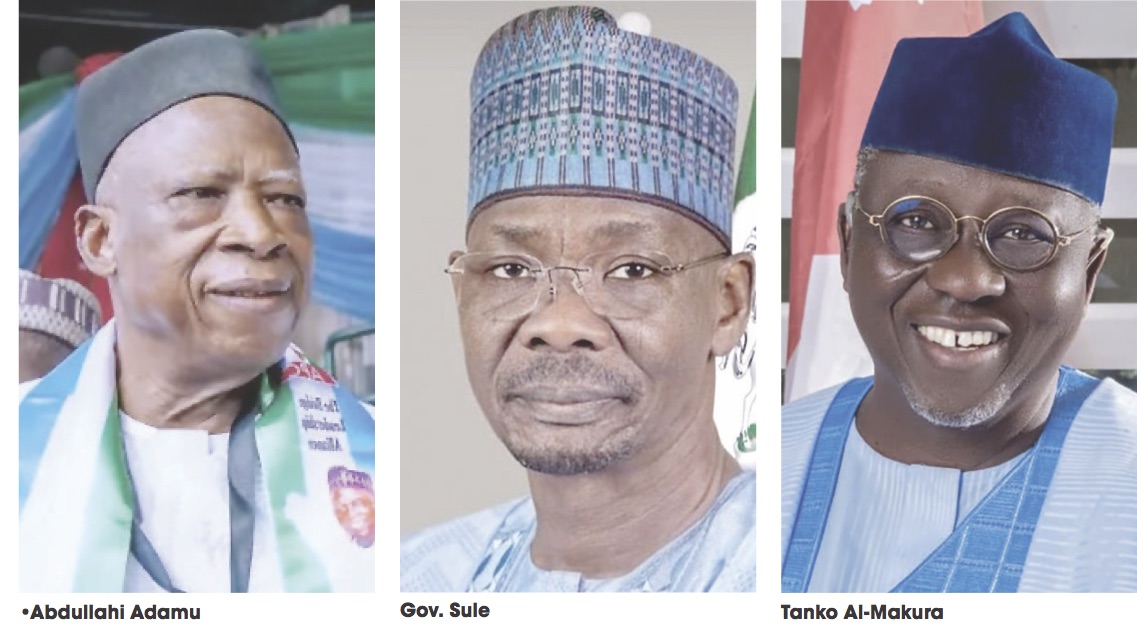
Governor Abdullahi Sule, who is completing his second term by 2027, has been thrust into the center of the debate. His words during a recent APC stakeholders’ engagement in Lafia, which was led by a former governor, Senator Umaru Tanko Almakura, revealed a careful balancing act.
Addressing the stakeholders during the meeting, Governor Sule called for decorum as aspirants for the position of governor of the state embark on early campaigns, urging them not to heat up the polity.
The governor affirmed that the Nigerian constitution gives every citizen the right to contest for any office, and he will not stop anyone from campaigning, but however restated his earlier call on those still holding political appointments to resign if they wish to campaign fully.
“Everybody has come here to say one thing that I have always said. The constitution of Nigeria allows not just the aspirants but any citizen of this state to contest for the office of the governor. Nobody can stop it. Nobody has any right to stop it and I am someone that believes in democracy, live in a democratic nation. I can’t stop it and I am not interested in stopping it,” he stated.
He thanked his immediate predecessor, Senator Umaru Tanko Al-makura for his support during his own election but made it clear that he will not be forced to name a successor this early.
Governor Sule appealed to all aspirants to avoid heating up the polity, noting that his eventual support for a candidate does not automatically guarantee victory, as seen in other states.
He pointed out that with Nasarawa’s emerging economic prospects, he is only interested in someone who is coming to effectively manage the state’s resources, promising to consult widely with party leaders when the time is right.
He equally promised to support the party’s candidate financially from his own pocket, emphasising that he will not take money from any aspirant.
“When the times comes I will consult. I will consult with the right people that I need to consult with. When I consult with them, I will tell them, this is the person I have in mind. If majority of them believe that is not the right person, we will collectively think together and come out with the right person,” he said.
He expressed confidence in the state’s growing economy and prospects, stating that his goal is to hand over to a competent APC governor who can manage the state’s resources well.
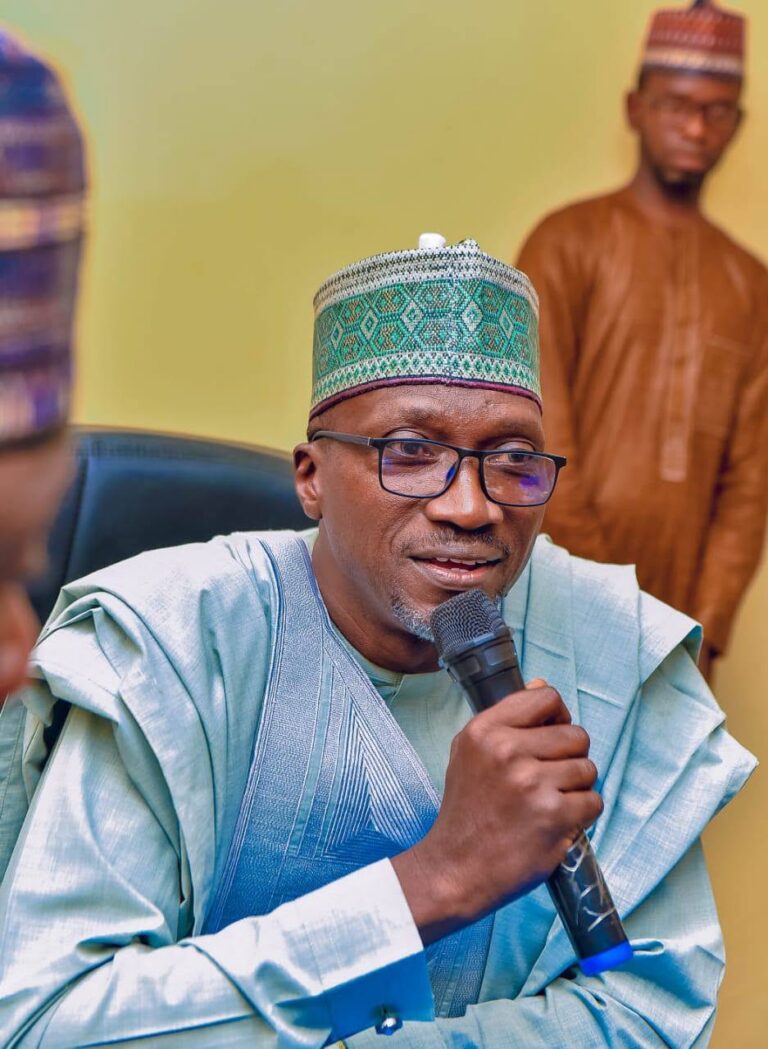
If Governor Sule is neutral, Senator Umaru Tanko Almakura, his predecessor and a key stakeholder from the southern zone, is firmly against zoning. Addressing APC leaders at the Lafia meeting, Almakura minced no words in his opening remarks as Chairman of the occasion stating that zone supports every aspirant’s constitutional right to contest, whether zoning is discussed or not, emphasising that it is wrong to deny any zone from contesting.
The former governor assured that he is convinced that Governor Sule will choose his successor in the best interest of the people of the state and that Nasarawa South Senatorial District will support his decision.
He however appealed for peace among aspirants so that when Governor Sule eventually picks his successor, the party can collectively support that person.
He expressed confidence that the governor, as a gentleman, will do what is right for the state, with the leaders present to offer counsel.
“Looking back at the 2019 governorship election, nothing contributed more to the success of the election of Governor Sule than the fairness and transparent processes of the primary election. It is evidently clear that the people of Nasarawa State are not regretting the election of A. A Sule. Because of that, we will also like A. A. Sule to do what we will not regret in bringing his successor,” he said.
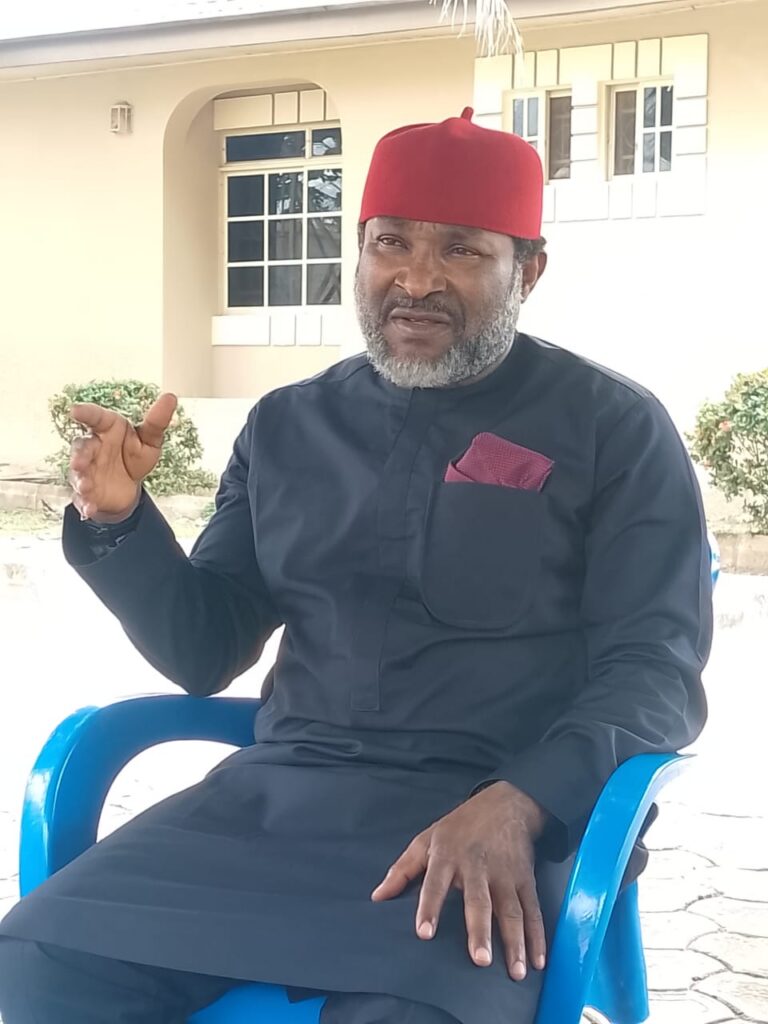
Findings indicate that Almakura and some southern stakeholders are quietly pushing former Inspector-General of Police, Mohammed Adamu, as a potential consensus candidate. But the list of hopefuls is long: Abubakar Hassan Nalaraba, Joseph Haruna Kigbu, Dr. Kigbu, and even Hon. Abu Giza are among those believed to be eyeing the seat.
State Chairman of the APC, Dr. Aliyu Bello, stated that the purpose of the meeting was to show the governor that the southern zone is united and will move as a block once a decision is made.
Bello recalled that since the creation of Nasarawa State, governorship contests have always been open to all zones, but the party has always followed the direction of its leaders.
He cited the example of the 2019 primaries where many aspirants contested and, after a fair process, accepted the outcome.
“We came here to show you that our zone is united. That we are going to go as a bloc by the time the decision has been taken,” he said.
According to him, destiny is greater than ambition and that the people of the zone are ready to “Muje Maha” once Governor Sule gives the direction.
Ambassador Umaru Suleiman Azore stated that the Nasarawa South zone is the most populous and hosts the state capital.
He confirmed that every aspirant has a right to contest, but since the state’s creation, the zone has always waited for guidance from the sitting governor to ensure the party’s interest and peaceful coexistence.
He said the governor deserves the privilege to point the way forward so that his good work can continue, a fact he believes even opposition parties acknowledge.
During the event, chairperson of the Commissioners’ Forum, Princess Dr. Margaret Elayo, who hails from the Nasarawa South Senatorial District, delivered a speech that stressed that true loyalty is demonstrated through actions rather than words.
Other News
She expressed said state commissioners are prepared to rally round any gubernatorial aspirant endorsed by Governor Abdullahi Sule.
On the other side, stakeholders in the northern zone are strongly insisting that zoning should restart with them. Their argument is rooted in historical rotation: Abdullahi Adamu (west), Tanko Almakura (south), Abdullahi Sule (north). By their calculation, the cycle should begin again in the north for equity and fairness.
A northern stakeholder, Alhaji Musa Ibrahim from Akwanga, explained this view in a chat with journalists. “If we abandon zoning now, we risk creating tension and mistrust. Our people believe strongly that the north should start again after Sule. Zoning is not just about politics, it is about balancing our fragile diversity,” he said.
This perspective resonates particularly in communities that fear political marginalisation if zoning is discarded.
Meanwhile, the western zone has also made its voice heard. At an earlier meeting in Keffi, presided over by former governor, Senator Abdullahi Adamu, stakeholders signaled that their region should not be left out of the equation.
Speaking at a stakeholders’ meeting of the APC held in Keffi, Nasarawa West Senatorial District early this year, Adamu argued that zoning remains a vital tool for equity, stability, and unity in the state’s political arrangements.
“It is a constitutional right for every citizen to contest, but to align with the existing zoning arrangement, power must be shifted to the Keffi zone for the political stability and unity of the state,” Adamu said.
He noted that the principle of zoning has guided the state since its creation, explaining that while Keffi zone (Nasarawa West) had produced a governor for eight years, Lafia zone (Nasarawa South) governed for twelve years, and Akwanga zone (Nasarawa North) is currently serving its second and final term under Governor Abdullahi Sule.
“Therefore, the western (Keffi) zone should produce the next governor in 2027,” Adamu declared.
The former governor urged party stakeholders and leaders to defend what he described as their “birthright,” warning that abandoning zoning could destabilise the delicate balance that has kept the state politically stable.
Malam Sani Bature, an elder from Keffi, told reporters, “Western Nasarawa must not be seen as a spectator. We have capable leaders who can contest. The party should create a level playing field, and if zoning must continue, we should also be considered.”
Their arguments reflect both pride in the zone’s role in shaping Nasarawa politics and a desire to remain relevant in the succession equation.
One of the most vocal opponents of zoning in the state is Senator Aliyu Wadada of Nasarawa West. Wadada has consistently dismissed zoning as a political formula.
“I do not believe in zoning. Leadership should be about competence, credibility, and what the candidate can offer, not where he comes from,” he said at a recent media parley.
His view appeals particularly to younger party members who see zoning as outdated and restrictive. However, it also unsettles traditional power brokers who see zoning as a stabilizer in Nasarawa’s multi-ethnic context.
Political commentators are divided on whether zoning will make or break the APC.
Dr. Umaru Suleiman a political analyst believes zoning is crucial to Nasarawa’s stability. “Zoning has historically kept Nasarawa stable. Removing it abruptly risks alienating some groups and could even push aggrieved aspirants to opposition parties,” Williams said.
Danjuma Joseph a veteran journalist in Lafia feels zoning is outdated. “The truth is that zoning has outlived its usefulness. Nasarawa has matured politically. What APC needs now is a candidate with wide acceptability across zones, not a candidate chosen because of zoning,” he argued.
Lafia-based lawyer and commentator, Mrs. Salamatu Aboki, took a middle path. “If the party fails to agree on a framework—whether zoning or open contest—it could produce parallel primaries and weaken APC ahead of 2027. Unity is more important than zoning. The party must manage its process carefully,” she advised.
While the debate rages, political observers are increasingly worried about the potential dangers the zoning controversy could pose for APC. They caution that factionalisation is already setting in, with camps aligning around different zones and aspirants. Should these divisions harden, the party could head into the primaries deeply fractured.
Observers also fear that unresolved disagreements could trigger defections, as aggrieved aspirants denied tickets might cross over to opposition parties. This would not be the first time defections would undermine APC in Nasarawa, and with the PDP, SDP, Labour Party and ADC positioning themselves as alternatives, the stakes are even higher.
Another concern raised is the risk of ethnic and regional tension. Given Nasarawa’s delicate mix of ethnicities and religions, any perception of exclusion could spark bitterness that transcends party politics. “It is not just about APC. If one zone feels cheated, it can spill into the general election and polarise communities,” warned a political commentator in Lafia.
Equally troubling is the possibility of the opposition capitalising on APC’s divisions. With multiple strong aspirants in the race, a divided APC ticket could hand the PDP or SDP a path to power. “Elections are not only about popularity but also about unity. The more divided a ruling party is, the easier it becomes for the opposition,” a local analyst noted.
Observers further suggest that prolonged focus on zoning at the expense of governance could erode public trust. Many citizens, already burdened by economic hardship and insecurity, may see the APC as consumed by internal power struggles rather than delivering services.
Daily Sun gathered that the zoning debate in Nasarawa is more than just about who succeeds Governor Sule. It has become a litmus test for the APC’s ability to manage diversity, ambition, and democracy within its ranks.
On one hand are those who insist that zoning guarantees equity and prevents the domination of one zone over others. On the other are those who believe that competence and popular acceptance should be the only criteria for leadership. Hovering between these camps is Governor Sule, who has maintained cautious neutrality, and Almakura, who has openly dismissed zoning as divisive.
The APC in Nasarawa now faces a choice: whether to embrace zoning and risk sidelining competent aspirants, or to discard zoning and risk alienating entire zones. Either path carries risks that could shape not only the 2027 elections but also the party’s long-term survival.
For now, the political tempo continues to rise as aspirants mobilise quietly, stakeholders hold zonal meetings, and pundits issue warnings. One thing, however, is clear: unless the APC carefully navigates this debate, the zoning question could become the Achilles’ heel that weakens the party before the real battle even begins.