Follow Us on Google
Battle to save generation under siege
Nigeria, a nation of 242.4 million people, about 70 per cent of whom are under the age of 30, is fighting many battles within its shores.
While terrorism, kidnapping, armed robbery and other crimes make headlines on a daily basis, less attention is paid to narcotics smuggling and abuse.
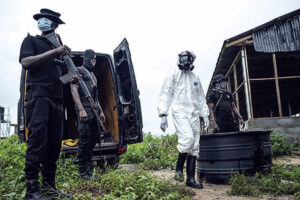
Millions of youths have died due to hard drug abuse over the years.
According to the United Nations Office on Drugs and Crime (UNODC), cannabis (marijuana) is the most widely and frequently abused illicit drug in Nigeria, with millions of users across the country.
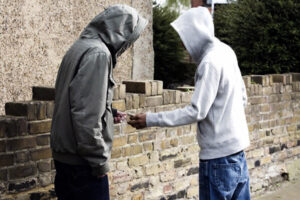
Also abused as a stimulant is methamphetamine (locally known as mkpuru-mmiri) and cocaine.
Others are pharmaceutical opioids (tramadol and codeine-based cough syrups), which are heavily misused for non-medical purposes.
That is why for Nigeria, the war against narcotics is no longer just a battle against drug traffickers, dealers and illicit consignments.
It is now a fight for the future of a generation caught at the intersection of drug abuse, terrorism, mental health challenges and a widening web of social vulnerabilities.
The World Health Organisation has repeatedly warned that untreated drug-use disorders can cause serious suffering and impairment in people’s family, social, educational and occupational lives, while also creating wider costs through lost productivity, healthcare and the criminal justice system.
From the streets and schools to remote cannabis farms and organised trafficking networks, the threat is spreading across communities, forcing the National Drug Law Enforcement Agency (NDLEA) to wage a battle that goes far beyond arrests and seizures.
With tens of thousands arrested, millions of kilogrammes of illicit drugs intercepted and thousands of people counselled or rehabilitated in recent years, the numbers reveal not only the scale of the offensive but also the depth of the crisis confronting the nation.
War against illicit drugs enters a new phase
What was once largely viewed as a law-enforcement problem has evolved into a complex national challenge involving public health, youth development, organised crime, insecurity, border control, community safety and the future of millions of Nigerians.
Leading the onslaught is the National Drug Law Enforcement Agency (NDLEA), the country’s lead agency for combating illicit drug trafficking and abuse.
For more than three decades, the agency has been charged with disrupting the production, trafficking and distribution of narcotic drugs.
However, the scale and sophistication of the threat have changed considerably, forcing the NDLEA to expand its approach from arrests and seizures to prevention, rehabilitation, intelligence gathering, international cooperation and community mobilisation.
The figures from January 2021 to June 2026 illustrate the scale of that offensive. During the period, the NDLEA recorded 88,981 arrests, including 240 alleged drug barons. It seized 15,555,658.95 kilogrammes of illicit drugs, secured 15,999 convictions and counselled or rehabilitated 52,477 people.
It also destroyed 2,074.81 hectares of cannabis farms and reached 5,749,516 participants through its War Against Drug Abuse (WADA) advocacy programmes in schools and other institutions.
Behind every figure is a different dimension of Nigeria’s drug problem.
The arrests, social commentators note, point to the scale of the criminal market. The seizures show the volume of narcotics being produced and moved. The convictions reflect the pressure on the justice system. The rehabilitation figures reveal the human cost of addiction, while the millions reached through prevention programmes show the growing recognition that the country cannot arrest its way out of the crisis.
That broader approach has clearly defined the leadership of Brig. Gen. Mohamed Buba Marwa (retd.), who became NDLEA chairman in January 2021 and was reappointed for another five-year term in 2025.
Marwa has brought a military-style urgency to the assignment, but his tenure has also placed greater emphasis on prevention and treatment.
His message from the beginning was unmistakable and has remained consistent. Shortly after assuming office in 2021, Marwa described the drug war under his leadership as “a moving train” and warned: “Please, let nobody stand in its front. The train will crush any such person.”
That approach was soon reflected in the operational tempo of the agency. The NDLEA intensified raids, border operations, airport surveillance, intelligence-led investigations and interdictions of drug consignments. Cannabis farms were destroyed across several states, while major seizures of cocaine, heroin, methamphetamine, opioids and other substances became regular features of the agency’s operations.
But Marwa has consistently argued that the fight is bigger than enforcement.
Following the conviction of 11 drug kingpins in 2026, he said the convictions sent an “unambiguous message” that Nigeria was no longer a safe haven for people who profit from destroying the lives of young people.
In August 2026, he described the drug war as a “generational task,” stressing that the battle would require sustained resilience and cooperation.
The NDLEA has similarly acknowledged that enforcement alone cannot defeat the problem.
That acknowledgement is important because Nigeria’s drug problem is not static.
The substances change. The trafficking routes change. The methods of concealment change. The people involved change.
And increasingly, the drug market is being influenced by technology.
The NDLEA has warned of new synthetic threats, sophisticated trafficking networks and digital illicit markets. Speaking ahead of the 2026 World Drug Day, Marwa said the evolving global drug landscape required “proactive, technology-driven, and highly innovative responses.”
The implication is clear that an agency trained only to intercept physical consignments at airports, seaports, borders and highways would eventually be overtaken by traffickers who are increasingly able to exploit technology and international networks.
Nigeria, therefore, needs a drug-control system that can operate simultaneously on the streets, at the borders, in cyberspace, in financial systems, in schools and inside communities.
That is where the role of the NDLEA becomes particularly significant.
NDLEA’s changing role
The agency was created in 1989 against the backdrop of growing concern about Nigeria’s involvement in international drug trafficking. Over the years, its responsibilities have expanded beyond simply catching traffickers.
Today, its role encompasses drug supply reduction, investigation, prosecution, public education, prevention, counselling, treatment, rehabilitation, destruction of illicit crops and cooperation with foreign law-enforcement agencies.
The airport is one battlefield. Nigeria’s land borders are another. The ports are another.
But increasingly, rural communities where cannabis is cultivated and urban neighbourhoods where drugs are distributed have become equally important.
The NDLEA, therefore, has to operate across a huge geographical and social landscape.
Its challenge is further complicated by Nigeria’s position as a major African country with extensive international connections.
Traffickers can exploit legitimate trade routes, commercial aviation, maritime transportation and porous borders.
International cooperation highly essential
A cocaine consignment may originate in South America, pass through another country and arrive in Nigeria before being transported elsewhere. Heroin may move through different continents before reaching Nigerian territory.
Synthetic drugs can be manufactured in clandestine laboratories or transported through sophisticated courier networks.
The agency has consequently developed stronger partnerships with foreign law-enforcement organisations and international institutions.
The Nigerian government has also increasingly recognised the strategic importance of the NDLEA.
In August 2025, National Security Adviser, Nuhu Ribadu, said the Tinubu administration would continue to strengthen the agency because of its “strategic value” to Nigeria’s national security architecture. He commended Marwa and his team for their sustained commitment to transforming the NDLEA into a result-oriented force against illicit drugs.
That endorsement reflects a major shift in how the drug problem is perceived.
Drugs are no longer treated solely as a criminal-justice concern. They are highly regarded as a national-security issue.
Why the drug war matters beyond drugs
The consequences of drug abuse extend into virtually every part of society.
Families can lose income when breadwinners become dependent on drugs. Young people can abandon education. Employers can lose productive workers. Communities can experience increased crime and social disorder.
The government also bears a cost. Treatment and rehabilitation require resources. Law enforcement operations require personnel and equipment. Courts must process drug-related cases. Prisons accommodate convicted offenders.
Marwa has argued that the economic consequences of illicit drugs go even further.
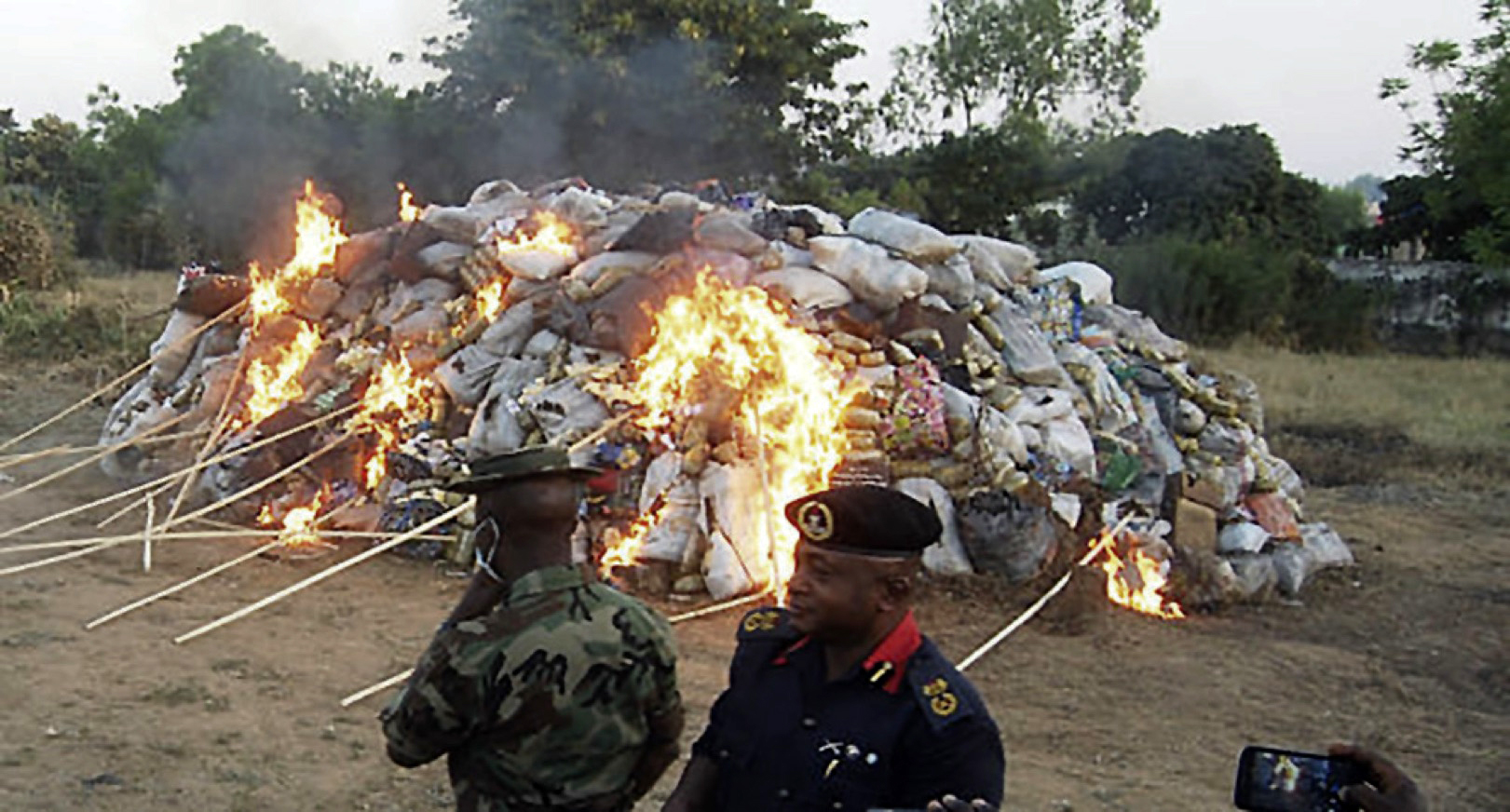
At a recent destruction of seized drugs worth an estimated N301 billion, he said illicit drugs weaken the labour force, raise healthcare costs, discourage investment and drain public resources that should instead support education, healthcare and infrastructure.
This makes the drug war an economic issue.
Every young person lost to addiction represents lost human capital.
Every productive worker incapacitated by substance abuse represents a loss to a family, an employer and the wider economy.
Every community destabilised by drug-related crime represents an additional burden on the government.
The problem is, therefore, not simply how many bags of cocaine, cannabis or opioids the NDLEA can seize.
The deeper question is how much social and economic damage Nigeria can prevent by keeping people away from drugs in the first place.
The supply side
The 15.5 million kilogrammes of illicit drugs seized between January 2021 and June 2026 represents an extraordinary enforcement record.
But the number also demonstrates the size of the market.
Drug traffickers do not move such quantities without an established infrastructure.
There are suppliers, financiers, couriers, distributors and customers.
This explains why the arrest of 240 alleged drug barons is important.
For years, enforcement operations around the world have faced the problem of catching couriers while the people who finance and organise the trade remain hidden.
The real test of a drug agency is therefore not merely how many people it arrests but whether it can dismantle the organisations behind the trade. That requires intelligence.
It requires financial investigations.
Other News
It requires international cooperation.
And it requires investigators who can follow a shipment beyond the immediate suspect to identify the network behind it.
The NDLEA’s growing emphasis on major traffickers reflects that understanding.
But supply reduction has another important dimension: production.
The destruction of 2,074.81 hectares of cannabis farms shows that the drug economy begins long before a consignment reaches an airport or highway.
Cannabis cultivation provides income for some rural communities, making eradication particularly complicated.
Destroying a farm may remove an illegal crop, but it does not necessarily remove the economic reason why the farmer cultivated it.
This is why alternative development has become increasingly important.
Marwa has argued that tackling illicit cultivation requires more than crop destruction. Alternative livelihoods, stronger rural value chains and agricultural diversification can help reduce the incentive to return to illegal cultivation.
That approach recognises a basic reality: poverty can become an ally of the drug trade.
The demand side
If supply is one side of the problem, demand is the other.
The 52,477 people counselled and rehabilitated since 2021 show why treatment must remain central to Nigeria’s drug policy.
Addiction cannot always be addressed through punishment.
Some people require medical intervention, psychological support, counselling and long-term rehabilitation.
They may also need vocational training and social reintegration.
Without those interventions, someone leaving a rehabilitation facility can return to the same environment, same pressures and same lack of opportunities that contributed to drug use in the first place.
That is why rehabilitation must not be treated as the end of the process. Recovery requires continuity. It requires family support. It requires employment and social acceptance.
And it requires communities that are prepared to support people who are trying to rebuild their lives.
The battle for Nigeria’s youth
Perhaps the most important front in the drug war is the battle for young Nigerians.
The NDLEA’s WADA programme has reached 5,749,516 participants through advocacy activities in schools and other institutions.
That figure represents a massive audience.
But the ultimate test of prevention is not how many people attend an advocacy event.
It is how many young people avoid drug use because of what they learn.
Nigeria has a young population, and young people are particularly important to the country’s economic future.
Losing them to addiction has consequences that go beyond individual health.
It reduces the country’s productive capacity and places additional pressure on families and public institutions.
This explains why schools have become a major battlefield in the NDLEA’s prevention campaign.
The agency has also increasingly involved traditional rulers, religious leaders, parents, teachers, civil society organisations and the media.
In July 2026, Marwa called on traditional rulers and parents to take ownership of the war against drug abuse, reflecting the agency’s growing emphasis on community participation.
The message is that government agencies cannot win the war alone.
A community that refuses to tolerate drug dealers is an important line of defence.
A parent who recognises early signs of substance abuse can intervene before addiction becomes severe.
A teacher who identifies a vulnerable student can connect that child with appropriate support.
A journalist who exposes trafficking networks can contribute to public awareness and accountability.
Marwa and the changing face of the NDLEA
The transformation of the NDLEA cannot be discussed without examining Marwa’s role.
Before taking charge of the agency, Marwa had served as a military officer and administrator, including as governor of Lagos State. His leadership of the NDLEA has been marked by a highly visible public profile and a willingness to speak forcefully about the consequences of drugs.
His approach has also coincided with an expansion of the agency’s public visibility.
The NDLEA has become more active on social media and in public advocacy. Major seizures are publicised quickly. Rehabilitation and prevention programmes receive greater attention. The agency increasingly presents its work as part of a broader national campaign.
The result is that the NDLEA is no longer viewed simply as a relatively obscure enforcement agency.
It has become one of the most visible institutions in Nigeria’s fight against organised crime and substance abuse.
That visibility carries responsibilities.
The more prominent the agency becomes, the more Nigerians will expect measurable results.
It must demonstrate that seizures are leading to dismantled networks, that arrests are resulting in successful prosecutions, that major traffickers are being removed from the market and that rehabilitation is helping people return to productive lives.
It must also maintain institutional integrity.
Drug trafficking is highly profitable, and traffickers have strong incentives to corrupt officials who can facilitate their operations.
Marwa has repeatedly warned NDLEA personnel to resist such temptations and remain committed to the agency’s mission.
That is essential. An anti-drug agency compromised by corruption cannot effectively fight a criminal economy built on enormous profits.
A war without an end date
Perhaps the most significant lesson from the NDLEA’s experience since 2021 is that the drug war has no quick conclusion.
The agency itself now describes it as a generational task. That description is realistic.
As long as there is demand, traffickers will seek to supply it.
As long as drug trafficking remains profitable, new criminal networks will emerge.
As long as vulnerable communities lack economic opportunities, illicit cultivation can return.
As long as young people remain exposed to drugs, prevention will remain necessary.
And as long as addiction exists, rehabilitation will remain essential.
The goal, therefore, should not be to declare victory after a particular seizure or arrest.
The goal should be to progressively reduce the size and influence of the illicit drug economy.
That means making trafficking riskier. Making drug profits harder to hide. Making production more difficult. Reducing demand. Expanding treatment. Strengthening communities. And giving young Nigerians alternatives.
Marwa’s recent description of the battle as generational perhaps captures the reality better than any statistic.
The NDLEA can seize drugs today, but another consignment may be prepared tomorrow.
It can arrest a trafficker, but another may attempt to take his place.
It can destroy a cannabis farm, but cultivation can return if economic conditions remain unchanged.
It can counsel an addict, but recovery may take years.
The battle is therefore not one operation.
It is a continuous national project.
Nigeria’s record between January 2021 and June 2026 — 88,981 arrests, 15,999 convictions, more than 15.5 million kilogrammes of drugs seized, 52,477 people counselled or rehabilitated and more than 5.7 million people reached through advocacy — shows the intensity of the campaign.
But the figures should not only be read as evidence of enforcement.
They should also be read as a warning about the scale of the problem.
The next stage of Nigeria’s drug war must therefore be about sustaining the NDLEA’s enforcement gains while strengthening the less visible parts of the campaign: prevention, treatment, rehabilitation, alternative livelihoods, community engagement, intelligence and financial investigations.
The objective is not simply to put more people behind bars.
It is to make fewer people enter the drug trade, fewer young people become users, fewer communities depend on illicit cultivation and more people recover from addiction.
That is the real measure of success.
And for Nigeria, it may be the difference between endlessly fighting the symptoms of the drug crisis and finally attacking its roots.