Follow Us on Google
•Seeks investment in professional development for teachers
By Gabriel Dike
The National Association of Proprietors of Private Schools (NAPPS) have called on members nationwide to accord top priority to teaching of digital literacy and STEM education as part of their academic curricula.
NAPPS also tasked members to sustain their investment in professional development for teachers by exposing them to current teaching methods through regular training.
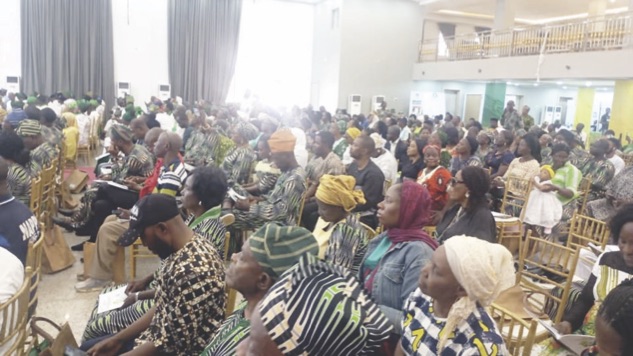
The decisions were part of NAPPS communique at the 18th National Conference held in Ilorin, Kwara State with the theme: “Education for Sustainable Development: A Technology-Driven, Innovative and Inclusivity Approach.”
The resolution was signed by the National President, Dr. Samira Jibir and the National Secretary, Dr. Kayode Adeyemi, said the conference attracted private school owners, education leaders, policymakers, technology partners, security stakeholders, and development partners.
Jibir and Adeyemi said the event provided the avenue for NAPPS and stakeholders to look at the role of private education in advancing sustainable national development through technology, innovation, Inclusivity, sound governance and effective stakeholders collaboration.
The conference urged members to prioritise digital literacy and STEM education as core components of school curricula, in preparation for a technology-driven future as well as partnerships and events to look forward to: I- Code and Hackathon 2026
The association resolved to promote innovative teaching and learning methodologies that strengthen critical thinking, creativity, collaboration, and problem-solving skills among learners.
It also pledged to encourage the strategic use of technology to bridge educational gaps between urban and rural communities and to improve access to quality education.
NAPPS called for sustained in continuous professional development for teachers, with particular emphasis on emerging technologies, innovative pedagogies, and inclusive education practices.
The body advocated for strategic partnerships with EdTech providers, training institutions, and industry partners to support ongoing teacher capacity building.
It acknowledged global experiences where excessive digital exposure has led to restrictions and resolved that Nigeria must take proactive steps to guide technology use in schools.
The conference tasked NAPPS to spearhead the development of a National Artificial Intelligence (AI) Policy Framework for private schools in the country, to guide the ethical, responsible, and age-appropriate use of AI and digital technologies.
The conference commended the critical role of private schools in Nigeria, noting evidence from recent World Bank Report; indicating that approximately 75 percent of school enrolment in Lagos State, is in private schools.
It further observed that despite the enormous contribution to the education of the Nigeria children, private schools continue to face challenges such as policy inconsistencies, funding constraints, and limited access to innovative resources, and urged authorities to address these concerns
NAPPS called for stronger collaboration between private schools and government agencies, NGOs, technology companies, and international partners to enhance the quality and sustainability of private education sector.
The body called on government and relevant authorities to create a supportive policy environment that enables innovation, growth, and stability in the private education sector.
It advocated for education-sensitive tax policies and structured engagement through the consolidation of all tax-related concerns, affecting private schools and submit a harmonised position paper to the Presidential Committee on Tax and Fiscal Policy Reform.
The association reaffirmed the need to accelerate the adoption of technology in teaching, learning, assessment, and school administration across private schools nationwide.
NAPPS lauded the West African Examinations Council (WAEC) on efforts to curb examination malpractices, through the introduction of Computer-Based Testing (CBT) and recommended a phased and well-coordinated implementation to avoid unintended negative consequences.
It further reaffirmed its commitment to inclusive education and resolved that private schools must ensure access, participation, and appropriate support for learners with disabilities and diverse learning needs.
The conference also resolved that sustainable development principles, including environmental responsibility, social equity, and economic sustainability, should be integrated into school curricula.
The association urged private schools to adopt sustainable operational practices, including waste reduction, energy conservation, and environmentally friendly initiatives.
The conference commended NAPPS collaboration with the National Crime Awareness Month and resolved to strengthen planning and community engagement ahead of NCAM 2026.
The communique recommended the adoption of NAPPS Nigeria Digital Platform, as the official system for registration and payment of membership dues.
It reaffirmed that NAPPS operates a defined organisational structure which must be followed for escalation and resolution of issues.
The association resolved to implement the resolutions in collaboration with stakeholders.
The conference was jointly presided over by the National President, Hajia Jibir and the Chairman, NAPPS Board of Trustees, Dr. Said Mijinyawa, while over 1,500 delegates participated, onsite and online.