Follow Us on Google
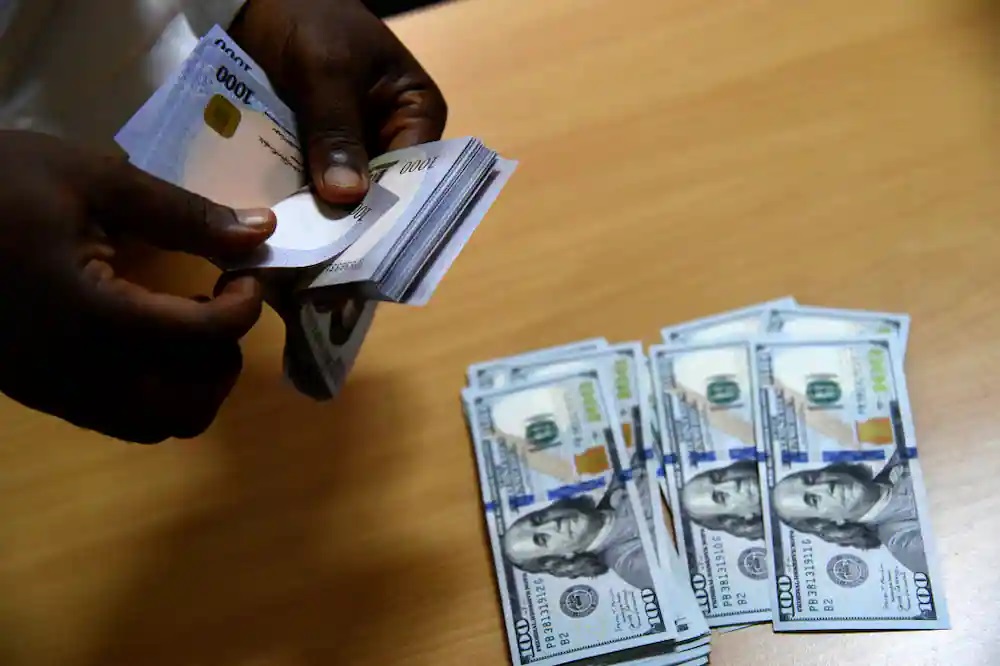
The naira lost ground against the United States dollar at the official foreign exchange market last week, closing at N1,381.70/$1, even as Nigeria’s foreign reserves climbed to $51.74 billion, the highest level in years.
Data released by the Central Bank of Nigeria (CBN) showed that the local currency depreciated by N11.70, or 0.85 per cent, from N1,370/$1 recorded on July 3 to N1,381.70/$1 on July 10.
The naira came under pressure for most of the week, weakening on four out of the five trading days.
The currency opened the week at N1,371/$1 on Monday before falling to N1,379/$1 on Tuesday. It remained unchanged on Wednesday but weakened slightly to N1,379.25/$1 on Thursday and dropped further to N1,381.70/$1 on Friday, its weakest official exchange rate during the week.
Despite the decline in the value of the naira, Nigeria’s foreign reserves continued to improve.
CBN figures showed that the country’s external reserves rose to $51.74 billion as of July 9, an increase of $217.7 million from $51.52 billion recorded a week earlier.
The reserves had crossed the $51 billion mark in June for the first time in about 17 years, supported by stronger foreign exchange inflows and the impact of the CBN’s reforms in the foreign exchange market.
Other News
Analysts say higher foreign reserves usually strengthen a country’s ability to defend its currency, pay for imports and meet external debt obligations. However, they note that reserves alone do not guarantee a stronger exchange rate, especially when demand for foreign exchange remains high.
Trading activity in the official market also fluctuated during the week. Daily turnover rose from $220.18 million on Monday to a peak of $504.67 million on Wednesday before slowing later in the week.
Similarly, transactions in the interbank foreign exchange market increased in the middle of the week before easing on Thursday and Friday.
Meanwhile, global brokerage firm EBC Financial Group has warned that Nigeria’s growing foreign reserves may not be sustainable if the country fails to attract more long-term foreign investment.
According to the firm, much of the recent increase in reserves has been driven by short-term capital inflows, which could leave the country quickly if global market conditions change.
It added that while investor confidence has improved following the CBN’s foreign exchange reforms, Nigeria must continue to boost oil earnings, attract stable foreign investments and sustain confidence in the naira to maintain the current reserve levels.
Economic analysts say the movement of the naira and the country’s external reserves will remain closely watched by businesses and investors, as both are key indicators of Nigeria’s economic stability and its ability to withstand external shocks.