Follow Us on Google
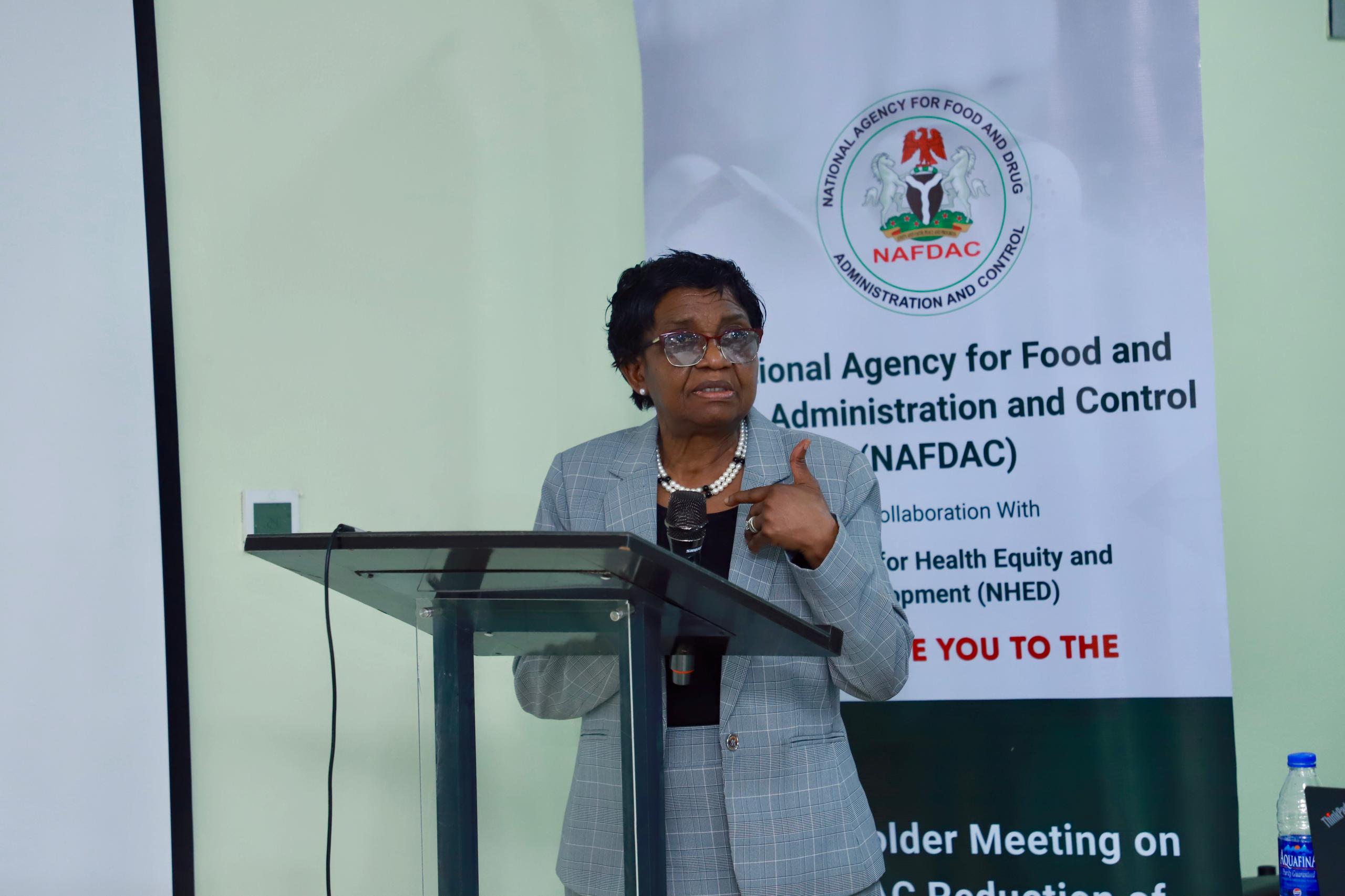
The Director-General of the National Agency for Food and Drug Administration and Control (NAFDAC), Prof. Mojisola Adeyeye, has defended the agency’s product registration fees, saying Micro, Small and Medium Enterprises (MSMEs) pay as little as ₦35,000 to register their products as part of efforts to support local businesses.
Speaking during an interview on Channels Television’s Sunrise Daily, Adeyeye dismissed claims that NAFDAC’s registration process is prohibitively expensive, insisting that the agency has deliberately kept its tariffs low despite prevailing economic challenges.
She said NAFDAC considers itself a partner of businesses and has introduced several measures to encourage trade and boost local manufacturing.
“We are partners of traders. NAFDAC is the partner of traders. We are for trade,” she said.
According to the NAFDAC boss, the agency has not increased its registration tariffs since 2020 in order to cushion the impact of the country’s economic downturn on businesses.
“We gave palliatives to MSMEs twice. We charged very little, ₦35,000. We have not reviewed our tariff since 2020 because we want to make sure that the economic downturn has improved.”
Adeyeye, however, warned small business owners against relying on consultants, alleging that many of them exploit entrepreneurs by charging exorbitant fees for services they can access directly from the agency.
“If an MSME goes to a consultant, the consultant will dupe them. There have been a lot of cases where consultants dupe MSMEs. We charge very, very little.”
She explained that the agency also subsidises laboratory testing for MSMEs to make product registration more affordable.
Other News
“If you’re an MSME, we’re still going to take your product to the lab compared to the larger facility. We beat the cost down to make sure that our MSMEs thrive.”
The NAFDAC DG also highlighted the agency’s “Five Plus Five” policy introduced in 2019 to encourage local pharmaceutical production, saying it has significantly reduced Nigeria’s dependence on imported medicines.
“We have decreased importation of products under those categories, Five Plus Five and Ceiling List. We have decreased importation by 70%. We have saved our pharmaceutical industry from oblivion because of our policies.”
She disclosed that NAFDAC is developing a similar policy for the food industry, which would encourage manufacturers to produce locally or partner with Nigerian producers where such products can be made within the country.
Adeyeye added that President Bola Tinubu’s 2024 Executive Order providing incentives for pharmaceutical manufacturers had further strengthened local production.
On concerns about delays in product registration, she said NAFDAC has digitised many of its processes but maintained that laboratory analysis and facility inspections cannot be rushed without compromising safety.
“We have digitised our system to make it easier. We know that it may be a little slower, but testing in the lab, you cannot rush it. Inspection, you cannot rush it based on our staff capacity.”
Reaffirming the agency’s commitment to supporting businesses while protecting public health, Adeyeye said NAFDAC would continue to balance efficient service delivery with rigorous product safety standards.
“We are partners of trade, and we will continue to be partners of trade.”