Follow Us on Google

National Agency for Food and Drug Administration and Control (NAFDAC) is on a familiar terrain again. It is never undaunted by controversies that often trail its statutory mandate. As a matter of fact, NAFDAC is empowered by law to regulate and control the manufacture, importation, exportation, advertisement, distribution, sale and use of drugs and food. Under the headship of late Dora Akunyili, the agency battled the merchants of counterfeit and adulterated drugs to a standstill. From then, the pharmaceutical sector became commendably sanitized; producers of packaged food, beverages, and water were served with stricter public health preservation measures. To that end, NAFDAC became a dread agency because of stricter enforcement of standards. Hence, it has been a thorn in the flesh of those who made the country a dumping ground for fake and substandard food and drugs.
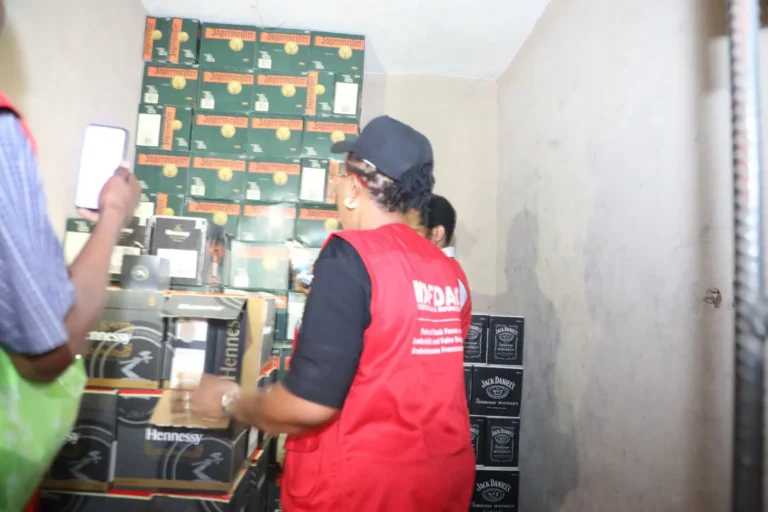
Currently, NAFDAC is in another an all-out war against the manufacturers and distributors of sachet alcoholic beverages in Nigeria. In a statement released in November 2025, NAFDAC affirmed its commitment to enforce the ban from December 2025, noting that, “The proliferation of high-alcohol-content beverages in sachets and small containers has made such products easily accessible, affordable and concealable, leading to widespread misuse and addiction among minors and commercial drivers. The public heath menace has been linked to increased incidences of domestic violence, road accidents, school dropouts, and social vices across communities.” Nigeria is not alone in this campaign. The Director General of NAFDAC, Prof. Mojisola Adeyeye revealed that as far back as 2010, over 183 countries met at a World Assembly of WHO Global Strategy to Reduce the Harmful Use of Alcohol and adopted the agreement to ban alcohol sachets.
Expectedly, the news of has sent shockwaves to those at the receiving end. The Manufacturers Association of Nigeria (MAN) and the National Employers Consultative Assembly (NECA) have released well-worded press statements to condemn the renewed enforcement of ban on production, distribution and sales of alcoholic beverages in sachets, PET bottles and small containers (of 200ml) across the country. They contended that the ban will hurt the economy through disruption of businesses, loss of thousands of jobs, and possible rise in illicit trade through smuggling. NECA specifically accused NAFDAC of regulatory misstep and “explained that sachet and small pack formats were an affordability response within Nigeria’s economic structure, where many adult consumers make low value, daily purchases.” Thus, “eliminating these formats will not eliminate demand. Instead, it risks pushing consumers toward informal and unregulated alternatives, increasing public health risks while shrinking the formal economy.”
However, in maintaining its stance, NAFDAC explained that the back and forth did not start today. When the agency discovered that the sachets contained 43% to 45% of liquid alcohol “small enough to be squeezed into the pocket of a primary or secondary school child,” it made efforts to persuade the producing companies to reduce the packaging size and alcohol concentration. This was resisted by the industry players who petitioned the Federal Ministry of Health. Consequently, the Ministry brought all the stakeholders, including the industry organizations, the Federal Competition and Consumer Protection Commission (FCCPC) to a negotiation table with NAFDAC. In December 2018, the Association of Food, Beverage and Tobacco Employers (AFBTE) and the Distillers and Blenders Association of Nigeria (D-BAN) entered into an agreement with the Federal Ministry of Health and NAFDAC to phase out sachet alcohol and PET bottles (below 200ml) by January 13, 2024. The agreement gave room for a five-year moratorium to enable the manufacturers adapt and come up with safer market offerings. NAFDAC also reiterated that further interventions from National Assembly and the Minister of Health led to one more year of gracious extension which elapsed by December 2025. On the whole, they were given six years to find alternatives but they thought that Nigerian factor would prevail.
Other News
NAFDAC explained that its decisive action is in line with global public health framework, particularly to shield the children from early exposure, abuse, and associated health risks, and not an attempt to clampdown businesses or, to get at alcohol consumers. “We are not banning alcohol. Alcohol is available in different packages. It is only small packages that we are banning,” NAFDAC DG reiterated recently. Both MAN and NECA had argued that NAFDAC’s assertion is not supported by empirical inquiry. But NAFDAC floored the argument based on “anecdotal evidence from school principals” which indicated that many students get addicted by consuming multiple sachets of alcohol on daily basis. Hence, apart from the hangover that could result in low attention span, NAFDAC insists that, “A child’s body is not that of a small adult. Early exposure increases the risk of liver damage and cirrhosis later in life.”
Even the proposal for further extension by the industry players is not getting any support. Nigeria’s Senate Committee oversighting NAFDAC’s operations has given a nod for the latest enforcement by NAFDAC. Also, This Day reported that the suggestions by the manufacturers for reduction of alcohol concentration in sachet bags instead of outright ban was rejected by NAFDAC as Adeyeye maintained that the critical issues revolve around the packaging size and ease of concealment. There are also insinuations that the producers of sachet alcohol beverages may approach the law courts for a restraining order against NAFDAC.
Be that as it may, the issue here is mental health and preservation of the future of the growing population. Today, drug abuse is on an alarming increase in Nigeria and all hands should be on deck to stamp it out. For the manufacturers, I know their hard position is driven by the psychology of profit maximization through selling of shrimp instead of whale. Old habits die hard but we cannot continue to encourage such self-indulgent lifestyle. They have to make the sacrifice. Government has been fair to them. The way the young people and artisans rush to drink and buy these sachets/ small bottles alcohol in bulk leaves much to be desired. The nation does not need further evidence to know that it has become a cankerworm. NAFDAC should be supported to do its job.