Follow Us on Google

From Ogbonnaya Ndukwe, Aba
The Nigerian government, has been cautioned to sincerely review its recent economic policies, in order not to fall into the ditch of repeating an errors made by former military President, Ibrahim Babangida, in the devaluation of naira, during his tenure (1985-1993).
President Tinubu’s administration’s policy makers, were also warned not to accept every advice from world financial bodies, especially the International Monetary Fund (IMF), as adopting such, may not augur well for the nation’s peculiar situation.
Prof Innocent Eleazu, President of Nigeria Association of Economists (NAE), who gave the advice from far away United States of America (USA), said the Central Bank of Nigeria (CBN), allowed the Naira, to drop as much as 36 per cent on the official market, days after Tinubu suspended former CBN Governor, Godwin Emefiele, a situation that turned out to prove that the apex bank had devalued the Naira by 7.6per cent, against the dollar.
Eleazu, stated that Nigeria should not have attempted devaluing the Naira again, because of the painful history of it’s economic sufferings during the Babangida administration, when the currency got devalued in 1986, on the advice of the International Monetary Fund (IMF), against advice of most Nigerian Economists, including himself.
“The General Ibrahim Babangida Military administration, marked a turning point. Nigeria suffered a massive devaluation of the Naira, exchange rate at $1.75 to the Naira in 1986.”
“Most Nigerian economists, condemned the devaluation in the strongest term. Ibrahim Babangida responded that he did not devalue the Naira and that what he did was merely to revise the Naira.”
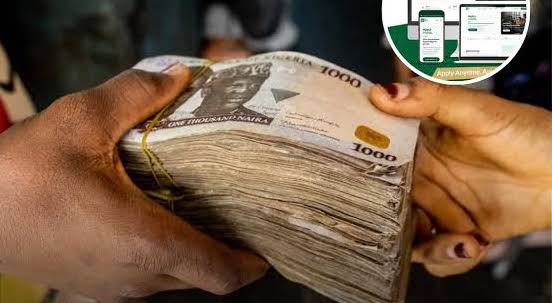
“The President Bola Tinubu administration, employed the same Babangida’s policy tactics. For example, the Central Bank, stated that it allowed the currency to drop as much as 36per cent on the official market.” “In other words, the Central Bank of Nigeria, devalued the naira by 36%, yet refused to admit that the Naira has been devalued. As of June 14, 2023, the Naira exchange rate was 630/$1.”
“The parallel market exchange rate which is popularly called the black market, stood at 750/$1. Unfortunately, it is the same 1986 Babangida’s costly mistakes of devaluation of the Naira, that President Bola Tinubu administration, has repeated or duplicated.”
Eleazu, however, said that devaluation which he says is a Government Policy that lowers the nation’s exchange rate, so that it’s currency is worth less than it had been relative to foreign currencies, is not a terrible economic policy, but must be done when it is appropriate, not without plans.
According to him, it is a sound economic policy to devalue a nation’s currency if the policymakers want to sell more of the nation’s products through International trade, which most likely will result in mass production and mass consumption that enhance the living standards of the overwhelming majority of the citizenry.
He said devaluation has exactly the same effects, as the decrease of prices which also, results in an increase in sales/revenues in an economy.
“If I may ask: Why would policymakers, want to devalue the nation’s currency, the Naira? Is it because the policymakers want to reduce the price of oil, to increase the sales of oil, and/or reduce the prices of the nation’s products, in order to sell more of Nigeria’s products in International trade? I don’t understand,” Eleazu said.
The renowned International economist, said that Nigeria, as a one-product-economy, which has unfortunately refused to diversify, depends mainly on oil, for its foreign exchange right now, which is evident in the unprecedented shortage of consumer goods and services in the country.
Eleazu, further said, that the devaluation of the Naira, will have serious consequences, as it lowers the nation’s exchange rate, so that it’s currency becomes worthless than it had been, relative to other foreign currencies.
“The above, he went further, “implies that Nigeria needs more foreign exchange to buy the same goods and services it bought previously.”
“For example, if Nigeria were buying certain foreign goods or services at N100 (One hundred Naira}, before the devaluation, it will now cost N150, to buy the same goods or services. Unfortunately, it has exactly the same effects, in the Nigerian market.
“If it costs N450, to buy one small size of peak milk before the devaluation, it will now cost N550, to buy the same small size of peak milk, after devaluation.”
“Put professionally, more Naira will pursue few goods. This is how we get a substantial increase of prices of goods and services after devaluation that inevitably destabilizes prices/economy, and shakes the confidence of foreign investors as well as local investors.”
He said that devaluation will also increase Nigeria’s National Debt which stood at $77T (Seventy-seven Trillion Dollars) as of February 22, 2022.
“For every N100 Nigeria spent, N61 is used to service its national debt. Despite the huge financial burden on Nigeria, I read recently that the International Monetary Fund (IMF) is encouraging Nigeria to borrow more money to finance the budget deficit.
“It will be recalled that it was the same International Monetary Fund (IMF) that advised General Ibrahim Babangida Rtd in 1986 to devalue the naira.
“It is the same IMF that has endorsed the unification of the naira without mentioning the word devaluation. What Nigeria’s policymakers don’t understand or refused to understand is whose best interest the International Monetary Fund {IMF) is working for.”
He said a few other implications of the devaluation of the Naira that must not be ignored, include that Nigeria’s creditworthiness in the International market, will be seriously in doubt.
Eleazu, recommended solutions he said were concrete measures any nation can take, to avoid devaluation of its currency, in the case of Naira and Nigeria, which he said were increased productivity and adopting another country’s currency, as a legal tender.
“The first option is to increase productivity substantially. I strongly recommend this option (increased productivity}, because Nigeria, has a vast area of land and the technical no how, to achieve an appreciable increase in productivity within a reasonable period.
“The second, is dollarization. Dollarization, refers to the adoption of another country’s currency as a legal tender. Dollarization is chosen by countries, that have high inflation rates, and want to stabilize their price levels and economies.”
The financial economics expert, said despite the second solution not being his preferred option, the good news was that nations, that dollarize their currencies, can de-dollarize any time, at no costs, whatsoever.
Noting that he has examined the attempts of Tinubu’s administration, to deal with the fallout of the devaluation of the Naira, he said the CBN’s floating of the national currency, against the Dollar and other global currencies, meant that market forces {supply and demand), will determine the exchange rate of the Naira.
“If the policymakers, ab initio, intended to float the Naira, why will they first devalue, before floating it at the free market?” he argued in conclusion.
•