Follow Us on Google

From Taiwo Oluwadare, Ibadan
The National Agricultural Development Fund (NADF) is championing a structural shift in Nigeria’s agricultural financing system, calling for the adoption of long-term, capital-market-driven investment models to unlock the nation’s agrifood potential.
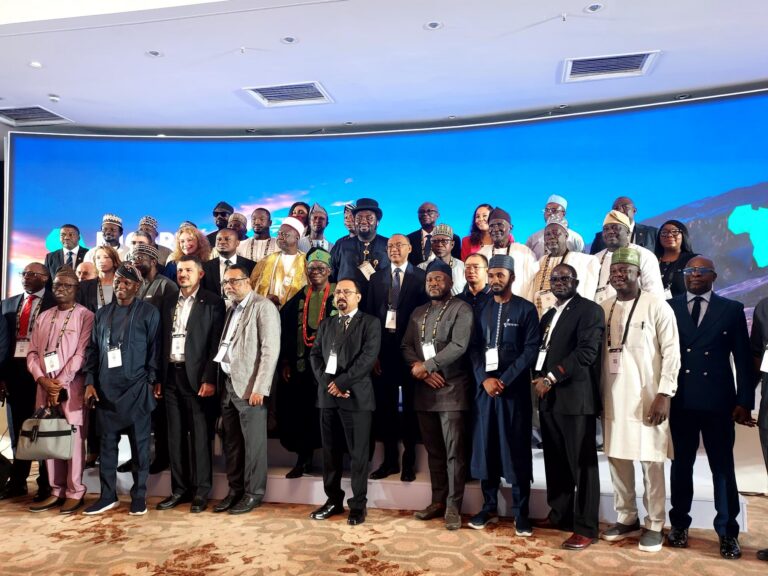
This renewed push emerged at NADF’s inaugural Networking Session with Fund Managers, held on Wednesday at the Oriental Hotel, Lagos, where leading fund managers, capital market operators, investment institutions and development finance experts converged to chart new pathways for sustainable agricultural financing.
Positioned under the theme “Unlocking Agribusiness Financing in Nigeria: NADF as a Catalytic Partner”, the session underscored the urgent need for patient capital to drive large-scale agricultural transformation, an agenda aligned with President Bola Tinubu’s Renewed Hope vision for food security and food sovereignty.
NADF Executive Secretary, Mohammed Ibrahim, said Nigeria’s agricultural sector can no longer rely on seasonal, short-term lending if it hopes to achieve true industrialisation. He argued that only long-tenure, structured financing models can unlock the kind of investment needed for processing plants, logistics systems, storage infrastructure, mechanisation and value-chain coordination.
“Agriculture requires capital that understands scale, gestation and risk,” Ibrahim said. “Our mission at NADF is to build a transparent, investable pipeline and catalyse private-sector participation with instruments that reduce risk and attract commercial capital.”
He added that the Fund’s recent initiatives, including digital farmer verification, on-lending programmes, youth- and women-targeted support, and the AgGrow processor-led integration scheme, demonstrate NADF’s commitment to creating investor-friendly value chains.
A key presentation by Aakif Merchant of Convergence Blended Finance highlighted global blended-finance models that Nigeria can adapt. Merchant emphasised the power of tools such as guarantees, concessional tranches and technical assistance to de-risk early-stage agricultural investment.
Other News
In his intervention, Chapel Hill Denham CEO Bolaji Balogun made a strong case for transitioning Nigeria’s agric financing from traditional bank loans to capital-market-led instruments. He warned that Nigeria’s enormous agricultural potential will remain unrealised unless the investment community deploys long-term, patient capital.
“We must embrace blended finance and longer-tenor investments if we are serious about unlocking the future of this economy,” Balogun said, stressing that agriculture should be treated as a long-term economic driver rather than a short-term credit activity.
Other panellists, including Tony Idugboe of ARM Agribusiness Fund Managers and Oluwatosin Ojo of Sahel Capital, echoed the need for diversified funding sources, stronger expertise and instruments that reflect the realities of agricultural value chains.
They described NADF as a crucial bridge linking government priorities with the capital market’s investment appetite, adding that Nigeria’s food system will only thrive when financing models match the sector’s structural demands.
The session ended with a broad consensus that Nigeria must shift from fragmented, short-term financing to a coordinated, long-term investment architecture, one that reduces risk, expands investor confidence and strengthens value-chain competitiveness.
By convening the investment community and advocating for patient capital, NADF has positioned itself at the forefront of Nigeria’s agricultural financing reform, signalling a new era in the country’s agrifood transformation agenda.