Follow Us on Google

By Moses Akaigwe
…Insists dealer registration not tax burden
The National Automotive Design andDevelopment Council (NADDC) has taken another bold step in its efforts to sanitise Nigeria’s motor dealership sector through a digital registration portal designed to weed out fraudulent operators, curb the sale of uncustomed vehicles and improve access to bank financing for legitimate dealers.
Expected to transform the regulation, monitoring and development of the automotive industry through real-time data management and automated compliance processes, the National Automotive Repository Portal (NARP) was first launched in July 2026 at a well-attended ceremony that attracted key stakeholders in Lagos.
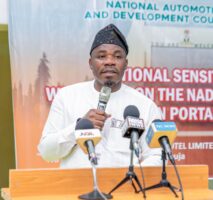
Commenting on the NARP at a workshop on Thursday, the director-general of NADDC, Otunba Oluwemimo Joseph Osanipin, said the initiative would address longstanding challenges associated with unstructured dealership operations, unreliable industry data and inadequate consumer protection.
Osanipin made the remarks at the Federal Capital Territory (FCT) edition of the National Sensitisation Workshop on the NADDC Dealership Registration Portal in Abuja.
He explained that the portal would provide a centralised digital platform for formalising dealership operations nationwide, authenticating legitimate operators and bridging verification gaps between dealers, commercial banks and distributors of original equipment manufacturers (OEMs).
According to him, the absence of reliable data in the motor dealership subsector has made it difficult for financial institutions to extend asset financing and credit facilities to dealers, while limiting the government’s ability to track market trends and formulate effective policies.
He added that consumers had also been exposed to unverified, uncustomed and substandard vehicles without adequate consumer protection guarantees.
The NADDC boss said the council was committed to transforming Nigeria’s vehicle trading market into a structured and globally competitive automotive industry driven by reliable data and digital governance.
He stressed that the registration portal was not a tax scheme or an additional barrier to revenue generation, but a framework designed to protect legitimate local investors, strengthen consumer confidence and give accredited dealers recognised business identities.
Osanipin said the platform would also facilitate the integration of data from relevant government agencies, including the Nigeria Customs Service and tax authorities, to tackle smuggling, address concerns about double taxation and prevent uncustomed vehicles from being displayed for sale in showrooms.
He further linked the initiative to the Federal Government’s Nigeria-First Policy, saying the centralised registry would help ensure that preferential public procurement and government fleet purchases prioritised accredited local vehicle assemblers and their authorised dealership networks.
According to him, registration would position dealers to benefit from government procurement opportunities and expand their participation in cross-border trade under the African Continental Free Trade Area (AfCFTA) agreement.
The Director-General noted that previous sensitisation sessions in Lagos, Awka, Port Harcourt and Kaduna had indicated the willingness of motor dealers to embrace digital compliance.
He said the Abuja workshop was designed to provide practical guidance, onboarding support and technical training to facilitate registration by dealerships operating in the FCT.
Osanipin urged dealership owners and other automotive stakeholders to register on the platform, embrace transparency and support efforts to establish a more secure and profitable automotive marketplace.
He maintained that formalising dealership operations was essential to protecting legitimate businesses, improving regulatory oversight and strengthening Nigeria’s automotive industry.
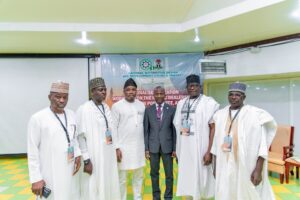
The workshop brought together the leadership of the Association of Motor Dealers of Nigeria (AMDON) and other stakeholders across the automotive value chain.
Also speaking at the event, the Director of Policy, Planning and Statistics at the council, Mr Umar Nura Sidi, said the Dealership Registration Portal was a formalisation framework for motor dealers, not a tax measure, as the council brought its nationwide sensitisation campaign to the Federal Capital Territory.
Sidi described the portal as the “digital backbone” of the nation’s automotive market.
According to him, it is designed to formalise dealership operations, protect legitimate business owners from irregular operators, unlock institutional financing and original equipment manufacturer (OEM) partnerships, and provide real-time market intelligence for national policy formulation.
He said the platform would be integrated with agencies such as the Nigeria Customs Service, a move he said would protect verified, tax-paying dealers from illicit operators, curb smuggling and ease vehicle clearance processes.
Dealers who register, he added, would receive a trusted digital identity that would improve their creditworthiness with commercial banks, boost market transparency and attract foreign direct investment into the sector.
The NADDC official said the Abuja event marked a major milestone in the nationwide rollout of the portal, building on earlier regional sessions held in Lagos, Awka, Port Harcourt and Kaduna.
He noted that the implementation of the portal had the backing of the National Assembly and the Association of Motor Dealers of Nigeria (AMDON), led by Prince Ajibola Adedoyin.
Sidi recalled that, for decades, Nigeria’s motor dealership trade had operated in a fragmented and informal environment, hampered by manual documentation and limited visibility.
He said the absence of centralised data had created several challenges. Financial institutions struggled to verify legitimate dealers, limiting their access to asset financing and credit lines. Policymakers lacked real-time market data for evidence-based planning and industrial incentives, while corporate buyers and consumers were exposed to unverified, uncustomed or substandard vehicles.
The director said the portal was aligned with the goals of the National Automotive Industry Development Plan (NAIDP) 2023–2033.
Explaining why the workshop was held in the FCT, Sidi said Abuja served as the primary gateway for policy execution, regulatory coordination and large-scale fleet acquisition.
He added that the motor dealership subsector in the FCT and surrounding areas played a crucial role in supporting corporate logistics, government transport infrastructure and private mobility.
He said registration would give dealerships in the FCT a verified digital identity, enhance financial trust and secure direct stakeholder representation in national automotive policy discussions.
Sidi urged dealers and other stakeholders at the workshop to embrace the initiative as an investment in the security, credibility and growth of their businesses.
He said formalising operations through the portal would safeguard enterprises, build consumer confidence and position dealers to participate in government fleet distribution, particularly under the Nigeria First Policy, which, he said, strictly prioritised recognised local vehicle assemblers and their authorised distribution networks.
He described the workshop as practical, transparent and fully interactive, adding that he looked forward to shared success in building a modern, technology-driven and prosperous Nigerian automotive sector.