Follow Us on Google

By Adewale Sanyaolu
The downstream arm of the petroleum industry may be heading for the rocks as a N800 billion petroleum marketers debt owed members of the Major Oil Marketers Association of Nigeria (MOMAN) Depot and Petroleum Products Marketers Association (DAPPMA) and Independent Petroleum Products Importers by the Federal Government is currently threatening the multi trillion investments in that sector.
Regrettably, marketers debt profile to banks was $1 billion in January 2017, but due to the lack of political will on the part of government to clear all outstanding arrears, the debt profile had hit an all time high of $2 billion as at last August.
As a mark of solidarity to ensure that its members were not thrown into the labour market as a result of the huge debt, the Petroleum and Natural Gas Workers Senior Staff Association (PENGASSAN) and the National Union of Petroleum and Natural Gas Workers (NUPENG) are threatening to embark on a nationwide strike over the backlog of salaries owed their members.
The marketers, had in a communiqué after their joint National Executive Council meeting held recently, said the salaries were owed following the inability of Federal Government to settle the accumulated debts of over N800bn owed oil marketers.
More worrisome is the recent decision of some Deposit Money Banks (DMB) to place about 13 tank farms and filling stations on sale over their inability to repay their loans totaling about $600m.
The Banks said the $600 million debt had contributed hugely to the rising profile of its Non Performing Loan (NPL) ratio while its books was adversely being affected as shareholders have consistently raised queries on such figure.
Genesis of the debt profile
Over 20 percent of the N800 billion debt figure was inherited by the current administration which came in the form of subsidy arrears during the erstwhile President Goodluck Jonathan era. At time, marketers were constantly issuing notices to suspend importation of petroleum products. These threats in most cases forced government to pay a part of what was being owed marketers, while the outstanding was always carried forward.
According to the marketers, the first source of the N800bn debt is the non-payment of the balance of over N300bn under-recoveries under the Petroleum Products Pricing Regulatory Agency (PPPRA) importation template owed the marketers, which has been reconciled and audited since 2015 and provided for in the 2015 supplementary budget as well as the 2016 budget.
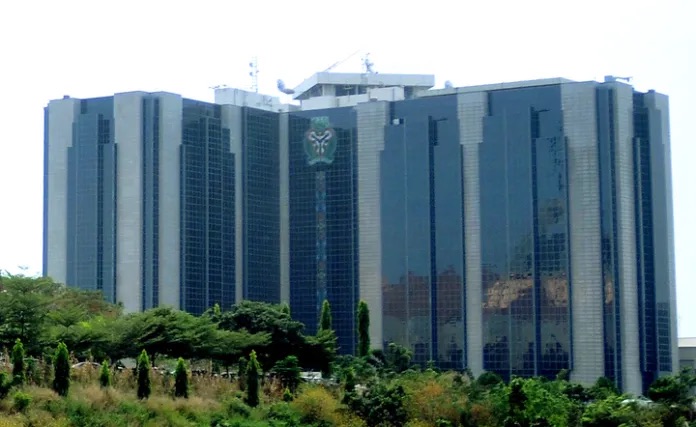
They said the second source of the N800bn debt was the failure of the government and the Central Bank of Nigeria (CBN) to provide foreign exchange to banks that financed the importation of the petroleum products, particularly the Premium Motor Spirit, in 2015 by marketers on behalf of the government. According to the statement, the banks used their dollar confirmation credit lines with foreign banks to open Letters of Credit (LC) at exchange rates between N168/$ and N198/$, in line with the approved PPPRA template as of the date of each import.
Govt. penchant for non-adherence to agreements
The marketers explained that when the LCs became due, the Nigerian banks defaulted in their obligations because the central bank did not provide the dollars.
They said that the defaults by Nigerian banks made many foreign banks to withdraw their dollar confirmation lines to the Nigerian banks and they started insisting on dollar cash for the LCs from Nigeria.
“Following this development, the CBN then did the so-called intervention by providing dollars to local banks for the payment of past due Letters of Credit to their foreign creditor banks.
For reasons best known to the CBN and the government, they provided the dollars for these Letters of Credit at rates between N285/$ and N320/$ as against the N168 $ and N198/$ that was the government approved template for the LCs.
This resulted in an additional N500bn in debt; this debit balance the banks quickly passed into the account of the marketers instead of asking the central bank to take responsibility,’’ the marketers stated.
The statement said the Federal Government in June 2017 concluded the reconciliation with the marketers and the PPPRA and made a commitment to pay before the end of July.
“This was following the intervention of the Vice President (who was Acting President at that time). The reconciliation team was led by the Chief of Staff to the President and the Minister of Finance.
PENGASSAN, NUPENG intervenes to save job loses
The unions said the strike had become absolutely necessary following the continuous deteriorating welfare of their members working in the various companies owned by oil marketers.
The marketers said most banks were planning to take over their tank farms.
They said this was as a result of their inability to pay back money borrowed to import products, for which the government had not paid.
According to The unions, many of the oil marketing companies are owed up to nine months’ salaries while some marketers have resorted to retrenchment of workers.
“There is a need for President Muhammadu Buhari’s government to keep improving governance, especially by correcting wrongs of previous governments and making government responsive to its contracts and responsibilities.
For the banks, their action is to see how they can avert another round of banking system failure that could be triggered by this huge non-performing loans owed them by oil marketers who cannot pay because the government is yet to pay them outstanding indebtedness,” the union warned.
Banks to take over marketers assets over loan default
Confirming the fears expressed by marketers and the unions that Banks have threatened to take over assets, which included tank farms and filling stations over their inability to service their loans, Head of Energy Research, Ecobank Transnational Plc., Mr. Dolapo Oni, confirmed the development, lamenting that the sale, which began some weeks back, was suffering low patronage and undervalue.
“We have placed assets, including tank farms, filling stations and some landed properties obtained from the loan recovery efforts of banks for sale,” he said.
Oni Stated that the liquidity challenge in the system had also constituted a threat to the banks’ efforts to secure buyers for the seized assets, Oni said that most of those who have the financial muscle to buy the assets on sale could not come forward because of fear of anti-graft agencies.
“The major challenge we now have is that the assets are suffering very low patronage because no one wants to bring out huge amount needed to purchase these assets without fear of being followed by anti-graft agencies,” he said.
The Asset Management Company of Nigeria (AMCON), which, according to him, is prepared to take over the assets is, on the other hand, under-valuing the assets.
“Where we place N100 million on some of them, the commission usually values them at around N30 million,” he said.
Bankers, Accountants raise the alarm over liquidity gap
But, some stakeholders in the banking sector, last week, said the unpaid N800 billion debt to oil marketers by the Federal Government has created liquidity gap in the industry.
They called on the Federal Government to dialogue with the oil sector unions to shelve the idea of their proposed strike.
First Vice President of the Chartered Institute of Bankers of Nigeria (CIBN), Dr. Uche Olowu, said that the debts had affected the quality of the banks’ portfolios, adding that the the non-payment of the outstanding arrears has led to a negative impact on banks’ operational costs.
According to him, the development has led to transactional velocity of money, which has impacted negatively on the economy.
“There should be transactional velocity of money. This means that if the money comes, the money will go to other traders who will continue to use the money. Once this is in place, it will be able to broaden the market.
However, this has not happened because of the gap created by not paying back loans.And this has forced the economy to shrink. This shrink in economy should not have happened in the first place if the money had been paid,’’ he said.
Olowu said that if the money had been refunded, it would have in return created jobs, businesses and while investments in the economy would thrive, adding that the development has contracted the economy
“On the other hand, if the government says it does not have the money, it should have at least found an alternative means to ensure that the gap was not created. Sovereign risk in every other developed clime means when a government says it was going to pay, you can take the promise home.
He noted that Government should have raised the money either through bonds and fulfill its obligation, stressing that, all that was needed from Government was to inject liquidity into the financial sector in orcer not to allow the industry to suffer “Mind you, the financial system is the engine that lubricates every other sector. So, if it suffers, every other sector is grounded.
If something urgent is not done, it can reduce the banks’ portfolios and that can have adverse effect on banks’ liquidity, profit and loan provision to other sector of the economy,’’ he warned.
On his part, the former President of Association of National Accountants of Nigeria (ANAN), Mr Samuel Nzekwe, urged the Federal Government to enter into dialogue with oil unions to stop their proposed strike.
Nzekwe, said that the government needed to pay the aggrieved marketers because the transaction was one that had occurred in the past and which the two parties agreed to the terms of engagement.
He wondered why government would still be delaying the payment of the accrued subsidy; querying that, could it be that the government was not sure of the figure presented by the marketers.
The accountant suggested that government could clear the outstanding arrears by paying the money in installments to the marketers if the money was too huge to pay at once. He said that it would reduce the effects of the burden on government and at the same time, it would give the market the assurance that the government did not forget them.