Follow Us on Google
From Idu Jude, Abuja
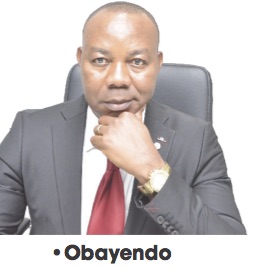
As Nigerians continue to struggle under harsh economic conditions made worse by the removal of fuel subsidy, some economic experts have continued to profer solutions that government can adopt to remedy the situation. In this interview with Daily Sun, the President and Governing Council Chair of the Chartered Institute of Transport Administration (CIOTA), Prince Segun Obayendo, faulted the Federal Government’s policy of paying poor Nigerians N8,000 as palliative describing it as unsustainable.
Obayendo however said that the transportation sector if adequately explored, can be a veritable tool to help alleviate the sufferings of millions of Nigerians within 90 days. He said this can be achieved with his association’s capacity to aid the government to deploy mass transport buses and train the members of staff at 774 local governments for the creation of permanent employment.
How our association can help Federal Government bring permanent solution to economic hardship arising fro fuel subsidy removal
CIOTA is a professional body and we give recommendations to the Federal Government on how to ameliorate the suffering of Nigerians amidst hardship caused by fuel subsidy removal. We have outlined areas of concern and one is the need for the government to reintroduce the urban mass transportation system to ensure conveyance of people with low transportation fare.
This is the kind of system we used to have before and also part of our recommendations are that we can through our contacts, donate mass transport busses to help the country at low cost. We are ready with our own resources whom we know that can run this transportation effectively and in the best way possible that can benefit everyone in this country. We have this as one of the recommendation. Enough is enough of abandoning some programs that have worked in the past.
Secondly, it does not mean we do not have alternative to fossil fuel. Of course we do. Here we should be thinking of gas and others which can replace fuel and to drive motoring, air transportation as well as water transportation. So we are calling on government to expeditionsly respond to the creation of facility for the conversion of fuel to gas usage in Nigeria at all the 774 local governments across Nigeria. As we are setting up all these, we also call on the FG to empower people to set up dispensing facility to empower people through job creation. We do not think this is difficult to achieve, we do not think this is esoteric solution but rather a pragmatic solution that can be deployed immediately and it is something that is achievable within 90 days.
Does CIOTA have resources to deploy Nigeria’s needs to fortify transportation industry?
Many Nigerians are not aware of the capacity of CIOTA members or it’s partners. I believe in the capability of CIOTA in providing manpower in the area of expertise across the 774 local governments.
Upon this promise , we are making ourselves available. For us, it is a national clarion call and it is an order to rise and rescue our country. We are equally calling on President Bola Tinubu to as a matter of urgency, revisit the transportation policy which is lying at the National Assembly.
Also we are reminding the FG that part of our country is that we import virtually everything we need in this country and that no economy survives like this. We should empower local manufacturers, local automobile industry to give us what we need as far as transportation is concerned. Nigeria has become a dumping ground for tokunbo vehicles and this is not how it used to be in the past. We can grow above this. Before now we used to have a Peugeot Automobile company of Nigeria (PAN). We now having Innoson Motors and these companies need to the empowered so that we have job creation for the youths. We can as well end this capital flight in the purchase of vehicles made oversea with high tariffs on importation.
How CIOTA operates in non-regulated transport sector
It is a source of serious concern and that is why we clamour for registration and training of operators and administrators in the transport sector. Be it private or government staff. This is because the transportation industry, presently seem to be a dumping ground for not well to do people and such is being fought against to ensure proper regulations.
We are clamoring for the National Assembly passage into law the National Transportation Bill, which would see a better managed sector. This bill is still at the National Assembly and I think that CIOTA would be better run under it because it may look like an auto pilot administration. CIOTA would be great if the bill is given assent because it could mean professionalising transportation sector.
It may no longer be a sector for all comers. I remember when I took a trip to USA and England, not all comers drive commercial vehicles on the road. I was meant to know that no one drives a cab without undergoing six months intensive training after which he or she would be issued a license to drive. This goes with technical knowledge of the vehicle one drives to be able to apply minor repairs in case sudden breakdown of vehicles. These are constitutional provisions and they are kind of policies we need in this country. These are some of the things put on ground to make the environment conducive.
My disagreement with Federal Government’s 8,000.00 palliative and transportation sector is worst hit from removal of fuel subsidy
Yes, I disagreed with the federal Government’s sharing of palliatives as a remedy to cushioning the effect of subsidy removal. Like I said, CIOTA never endorsed palliative as it is never a permanent solution to the suffering of Nigerians. This is a short term plan. But now that the subsidy removal has begun, we should look for a permanent solutions to our economic woes when talking of the so called palliative. You and I know that Nigeria does not have a scientific data base to implement the idea. So, we are basically moving in circles without stepping forward. But rather, in CIOTA, we believe we can create a permanent solution to our problems. Like I said before, it is easy to make Nigerians have sustainable jobs at the 774 local governments using this palliative money to create job platforms for sustainable development.
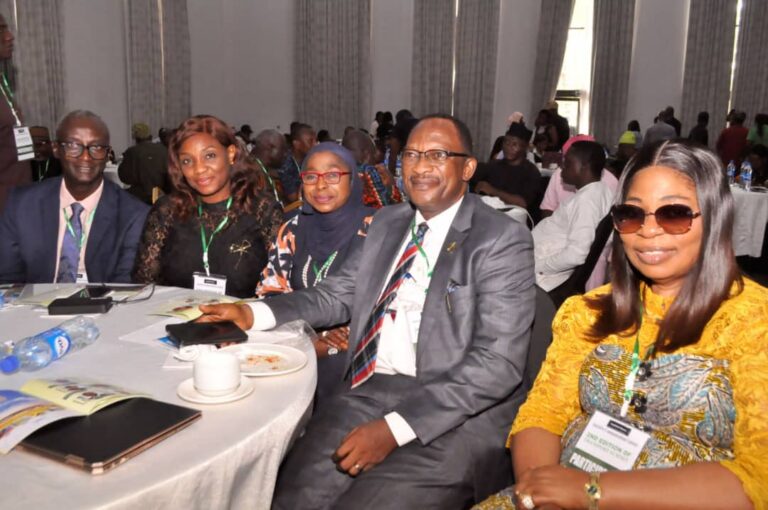
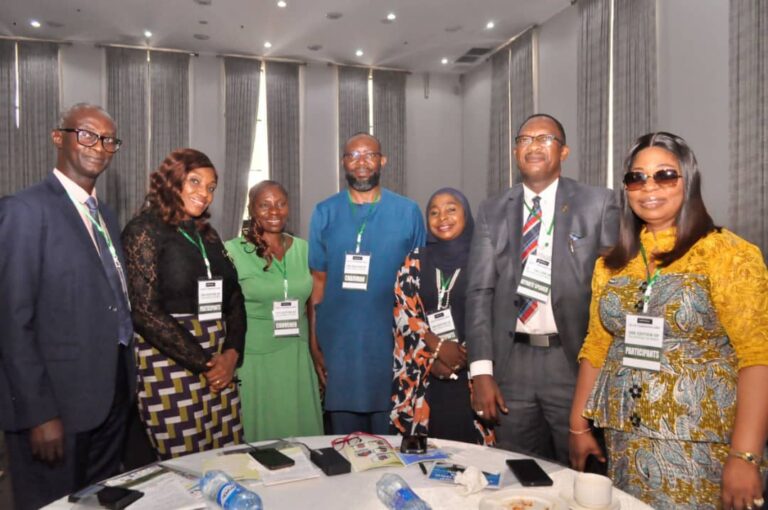
Like I told you, the transport manager’s conference held in Abuja recently was the time to discuss interventions that would ensure a safe, smart and sustainable transportation sector amidst various issues facing the sector such as the recent fuel subsidy removal, the inland waterways accidents in Kwara and Calabar States, the level crossing train and bus collision that occurred in Lagos State sometimes ago and some other incidents and accidents that have occurred in recent times.
At the last National Council on Transportation (NCT), awareness was created on the Nigerian Gas Expansion Programme and presented the advantages inherent in converting PMS fuel to CNG. Undoubtedly, if 50 to 60per cent of our state owned transport companies and private operators have subscribed to this conversion, it would have greatly reduced the impact of the fuel subsidy removal on Nigerians. The onus has fallen on us all to take the bull by the horns to encourage Nigerians to subscribe to this alternative to fuel.
Let me also reiterate the impact of transportation practices on secure and sustainable mobility in the country indirectly concerns us as our practices (human factors) in terms of obeying safety signs, keeping to safety rules and protocols, timely maintenance and obeying other regulatory standards is the only way to achieve a secure and sustainable mobility in our country.
CIOTA became a legal entity in 1996, when do we see it emerge stronger like NMA, CORAN MDCN and others?
CIOTA is no longer young but we have been doing well more especially in registering members and ensuring that National Assembly does the needful. Do not forget that the vision of CIOTA to begin regulating all transport professionals in Nigeria as stipulated in its Act is a welcome development. I therefore implore all transporters to collaborate with the Council for the regulation of transport professional (CORTRANS) a body of CIOTA to carry out its mandate of regulation, such as ensuring transporters are equipped with relevant licenses to carry out any professional transport task. This will certainly place CORTRANS on the same pedestal with other sister regulatory Councils, such as the Medical and Dentist Council of Nigeria (MDCN), Nursing & Midwifery Registration Council of Nigeria, among others.
As mangers in the transportation sector, we can leverage on our positions to cause a change to the various issues raised during the recent transportation mangers conference. We should ensure we drive this discourse to a reasonable conclusion.
The theme of your conference was ‘The impact of transportation practices on security and sustainable mobility’, can we say CIOTA has remedy for insecurity?
Insecurity is the only reason why the economy of many countries has collapsed. This is because a country that lacks peace may not be stable for foreign investment. No investor can feel comfortable investing in a country with crises. Such economy is unpredictable and dangerous for investment. I can also tell you that there are so many other areas which we can classify as part of insecurity as it affects the growth of the economy. These are areas where we are ready to provide expertise and help the administration.
Let’s aggregate all these, so that we know how it can be tackled headlong. One amongst many factors includes, poor infrastructure. This however, brings the economy to a halt, making the country a dependent economy with lots of capital flight. Others are inadequate investments poor policy making and inconsistency that drives away investors.
We also have the problem of weak intermodal coordination, non or total neglect of rural transportation, the issue of vandalism of infrastructure and motor park touting. In all these, we can say that transportation which is an enabler to criminal activities across the country and for us to have a bottom to top approach, there should be collaboration with CIOTA for possible public enlightenment which is key to educating Nigerians on the best way to help and ensure proper economic coordination through professionals like CIOTA.
You would agree with me also that fighting crime can no longer be manual in this digital world and since the economy revolves around the transportation sector, building of data base to fight crime has become necessary. For instance, lots of criminal activities wouldn’t have been carried out if the FG had priotised this. We need to change the way we do things. We need to employ all digital tools to fight crime to avoid economic setbacks.
What do you think CIOTA can provide to change Nigeria from dependent economy to productive economy?
Let start by saying that we should learn how to creat enabling environment, where lay down policies give equal opportunities to citizens to participate in the economic development and sustainability. In Nigeria, we have so many brains who have beautiful ideas that if put together, the country would improve. But we allow such endorsements vanish to other countries sue negligence by authorities.
Many Nigerians abroad have contributed in the development of other Nations economically. So CIOTA, has this capacity to meditate and involve Nigerian experts in the diaspora to come home for the FG to declare state of emergency on industrialization for aggressive creation of employment which is an automatic means of fighting insecurity. So you see when we neglect our own industries, we buy abroad and our deny our youths job opportunities. A practical example, is the dead refineries we have in Nigeria, while we refine crude oil abroad and buy refined products for domestic use. And now that some Nigerians can build auto Industries like that of Innoson motors, we should stop buying cars abroad. We should patronize Innoson motors to stimulate the economy. So a productive economy grows faster across board. That is our stance and that is what we can offer to the federal government to help grow the economy.