Follow Us on Google
…Demands reversal of privatisation
From Adanna Nnamani, Abuja
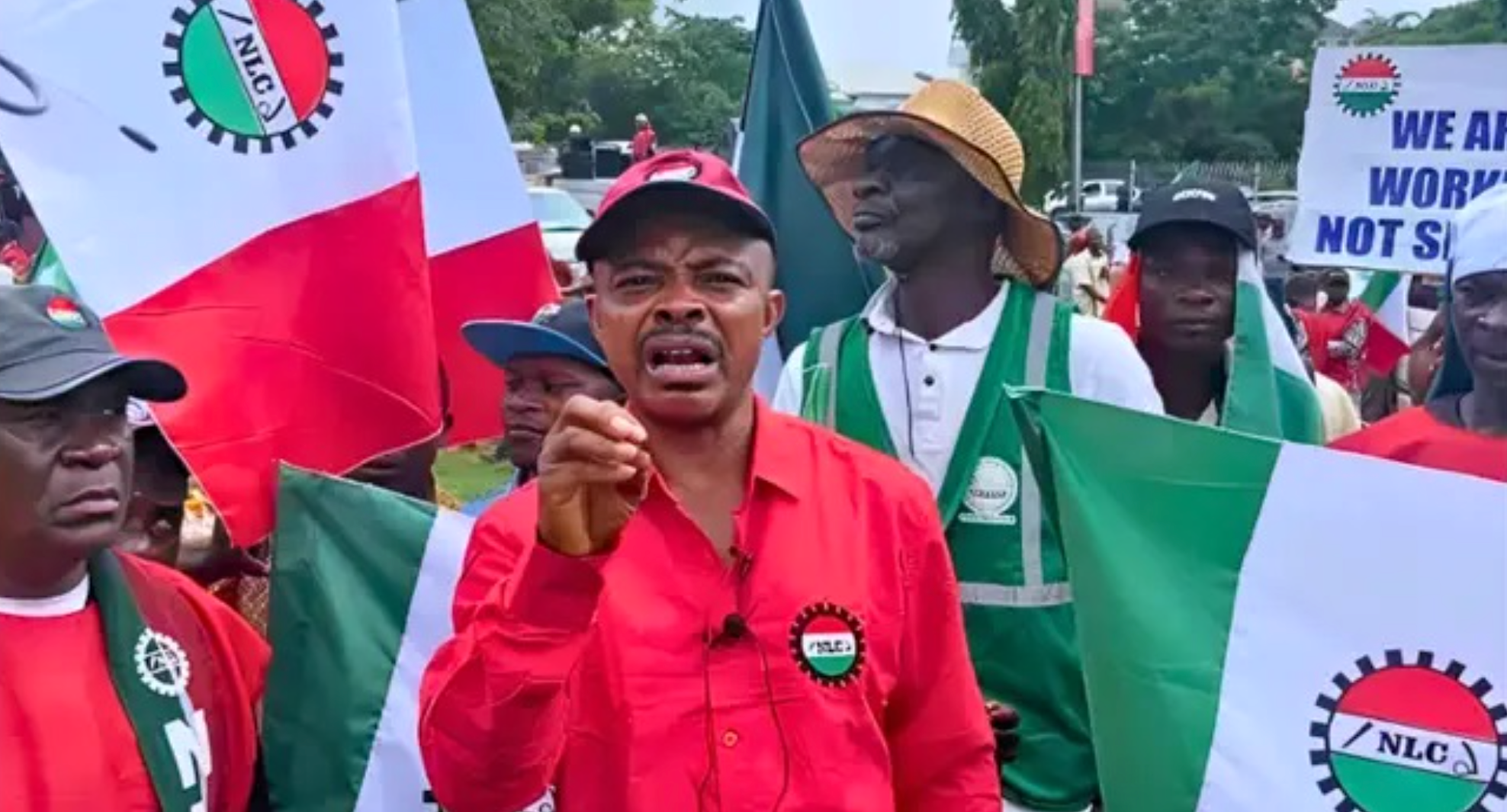
The Nigeria Labour Congress (NLC) has alleged that the Federal Government’s proposed plan to pay between N2 trillion and N3 trillion to power generation companies (GENCOs) as subsidies is a clandestine move to “settle the boys” as the 2027 general elections approach.
President of the NLC, Joe Ajaero, made the allegation while speaking at the National Union of Electricity Employees (NUEE) Annual Conference of Women and Youth in Abuja recently.
Ajaero said labour views the proposed bailout as politically motivated and unjustifiable, insisting that there is no reason to commit trillions of naira in public funds to private electricity firms that have failed to improve power supply more than a decade after privatisation.
He described the move as a backdoor arrangement designed to favour a select group of investors under the guise of subsidy payments.
According to him, electricity generation has remained between 4,000 and 5,000 megawatts since the privatisation exercise, a figure he noted is nearly the same as the pre-privatisation era.
The labour leader maintained that Nigerians are still grappling with frequent national grid collapses, erratic supply and rising tariffs despite repeated promises of reform.
He further criticised the current band classification system, saying it has imposed higher financial burdens on consumers without guaranteeing improved service delivery.
The NLC reiterated its call for a reversal of the privatisation model, arguing that the power sector should be treated as a social service rather than a profit-driven enterprise.
Other News
“The electricity subsidy claim remains a phantom as the 3 Trillion Naira is another ruse and goes nowhere. We question the rationale behind the Federal Government’s alleged plan to pay between 2 and 3 trillion Naira to the GENCOs. We describe it as a clandestine move to “settle the boys” as the 2027 elections approach.
“We insist that there is no justification for such a massive bailout to private firms that have failed to deliver. If this government is serious about the welfare of Nigerians, it must stop using our commonwealth to enrich a cartel of failed investors. Every kobo of the treasury belongs to the workers and people of Nigeria.
“NLC insist that the State Must Return the Power sector as a Social Service if we wish to make progress as a nation. Global examples shows that no nation has successfully run its electricity sector purely as a profit-driven enterprise without inflicting hardship on it’s citizens . We call for the immediate return of the State as the primary driver of the PowerSector.
“Electricity is not a luxury for the rich; it is a social service essential for national development. It is only the State that can bear the huge capital investment required and the long gestation period for returns. The private sector has failed. It is time to take back the power for the people.
We therefore call for a People’s Power Roadmap. While acknowledging the new Electricity Act which devolves power to the States, the NLC warned that decentralisation alone is not a magic wand. Without a clear, national, and worker-centred roadmap, the bottlenecks will persist.
“The NLC, therefore, demands a National Stakeholders’ Summit; not another talk shop, but a genuine convergence of workers led by their unions, manufacturers, and genuine experts; to draft a Power Sector Roadmap that prioritises: Affordable and stable electricity for all. A reversal of the failed privatisation model. Service reflective tariffs, not cost- reflective extortion and Public investment in generation and transmission infrastructure.
“The Nigerian people cannot continue to pay for darkness. The NLC stands ready to work with the masses and within our networks to resist any further exploitation in the name of electricity reform. When Power is not available, it cannot be affordable. Power sector must be returned to the people.
“The Nigerian people cannot continue to fund failure. If power is not available, it cannot be affordable. It is time to take back the sector for the benefit of all,” the statement added.