Follow Us on Google
By Adewale Sanyaolu
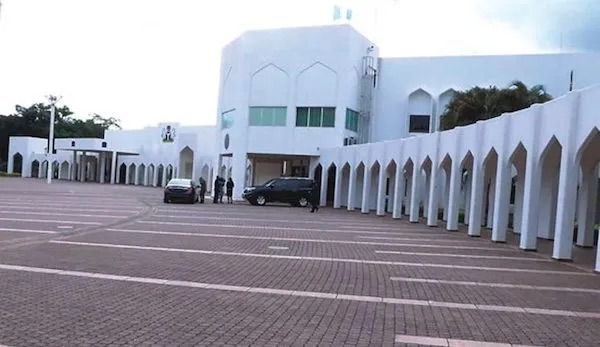
Nigeria is gradually witnessing a sharp drop in the cost of governance as the N10 billion Aso Rock solar power grid has crashed annual electricity expenses from N47 billion budgeted in 2025 to N311.09 million this year.
This is contained in the details of the 2026 State House headquarters budget.
President Bola Tinubu, as part of wider reforms to reduce the running cost of Aso Rock, approved a N10 billion solar power grid for Aso Rock. The project, which commenced last year, is still ongoing and the budget details indicate that N7 billion was earmarked for the solarisation of the Villa with solar mini grid.
Before the project was approved, Aso Rock was spending about N47 billion annually on electricity, a cost the government described as unsustainable.
The N311.09 million electricity cost for 2026 is the single largest item under general utilities. The figure reflects the enormous power demand of the sprawling complex, which houses offices, residences, security facilities and support services operating round the clock.
The Director-General of the Energy Commission of Nigeria, Mustapha Abdullahi, earlier defended the federal government’s decision to install a N10 billion solar power grid at the Aso Rock Presidential Villa.
This comes amid mounting public criticism over the cost and timing of the initiative, given Nigeria’s current economic challenges and growing concerns about government spending.
He stated that the decision was approved by the President as part of efforts to reduce the cost of governance and promote cleaner, more sustainable energy use.
“It is unsustainable for the Aso Rock Villa to continue to pay about N47 billion yearly in power bills.
“This is why Mr. President approved the deployment of a solar power grid within the Villa,” Abdullahi stated.
He added that it will bring uninterrupted and clean energy, create jobs, foster innovation among Nigerian engineers and energy experts, and ultimately reduce pressure on the national grid.
“This initiative will not only ensure uninterrupted and clean energy supply to the seat of power but will also stimulate job creation and foster innovation among Nigerian engineers and energy experts,” he said.
The Abuja Electricity Distribution Company (AEDC), in 2024, threatened to disconnect electricity supply to the Presidential Villa and 86 Federal Government’s Ministry Department and Agencies over N47.195 billion outstanding debts as of December 2023.
Following the threat, President Tinubu directed the State House management to offset its electricity debt to AEDC.
The directive to pay the debt, according to a press release signed by President Bola Tinubu’s special adviser on Information and Strategy, Bayo Onanuga, follows the reconciliation of accounts between the State House and AEDC.
The statement noted that contrary to the AEDC’s initial claim of N923million debt in paid advertorial in newspapers, the State House outstanding bill is N342, 352, 217.46, according to a letter by the management of AEDC to the State House Permanent Secretary dated 14 February.
The advertorial by the distribution company generated an outcry with many Nigerians blasting the State House for defaulting in paying its electricity bill.