Follow Us on Google
• Gives insight into commissioning of company’s headquaters, secret of his business success, life as philanthropist
By Chukwuma Umeora
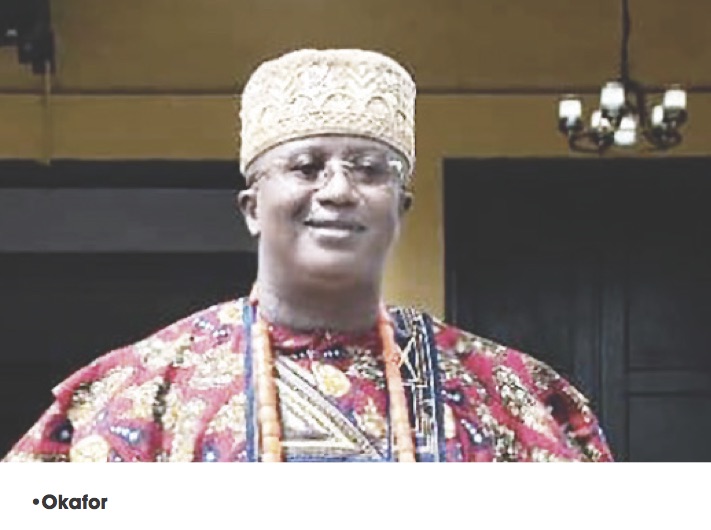
Chairman, Kevs Nigeria Limited, a multi- billion naira Logistics and Service company based in Port Harcourt, Rivers State, Chief Ikenna Okafor is a man with a purpose. He has a dream and he is stopping at nothing in bringing it to fruition.
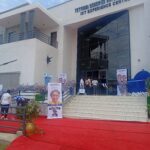
From almost nothing, Okafor has shown that with ideas one can ascend to an unimaginable height in life . He is being celebrated by people from all walks of life for the big success he has made of his business and the fact that the ultra-modern headquaters of the company is being commissioned in the Garden City.
In this interview, Okafor, a chartered accountant and former senior official of Arthur Andersen, shares his inspiring story – humble beginning, choice of Port Harcourt as base, challenges and mission.
He does not mince word that he wants to play big on land, sea and air. He also shares his thoughts on tough challenges businesses are contending with in Nigeria, unemployment issues and his love for philanthropy.
Your company will be commissioning its new headquarters in Port Harcourt. What does this translate to?
We started our company with a clear vision to be the best priced solution provider. Not the lowest priced because most times low prices are associated with low quality. So it’s simply to be able to sell our logistics solutions to our present clients and to our future clients.
Why the choice of Port Harcout as headquarters? Why not any other city in Nigeria?
First of all, Port Harcourt is one of the leading cities in Nigeria. And most things in Port Harcourt have been done on a highly informal basis. Lagos and Abuja have been highly formalized. And I believe that it is good to showcase that things can be done properly and in institutionalised manner in that part of Nigeria.
Having to always come to Lagos or Abuja to get what is good should be a thing of the past. So, it should be close to where I consider to be the treasure base of the nation. Most of the money you hear them spending in Abuja and Lagos or elsewhere flows from the underneath of the Niger Delta. Therefore, good things should also be there. So that is why.
How did your dream to build a multi-billion naira company start?
I was trained as a chemist before I was retrained to become an accountant at Arthur Andersen. I worked for some years at Arthur Andersen, which then was the foremost accounting consulting firm . They specialised in many industries. After my service there, I told myself it was time to change career again.
Leasing attracted my attention because it was new in Nigeria. And even up till now many people do not even know what leasing is all about. That was why I joined a company called C&I Leasing. It’s the first and still the only leasing company quoted on the Stock Exchange. I happened to be the branch manager in Port-Harcourt. After some years there, i decided to go on my own.
And still in that financial space trying to support mainly the oil industries by giving them what they need at a very good price. That is what made me enter into the business. We started from land logistics and equipment using things like cars, trucks, and cranes. From there we entered into water logistics using boats,barges and patrol boats. Then we also tried to get into drones, but our drone business is still in the embryonic stages. We want to provide drone solutions. There are times where we do not need to use human beings to do certain things again; drone solutions will be employed to get it done. And ultimately, we hope to go into aviation, not as an air transport but all to support the industry that we are playing in. As l said, our goal remains to be the best priced service provider.
In making business decision, what comes first – profit or impact on humanity ?
You have to look at what keeps a businessman awake at night. For the kind of things we do, we want to ensure that our customers sleep while we work.
So, if they want us to give them a crane, for instance, we have to make sure that the crane is well maintained, the crew are properly trained, and they observe the necessary safety and other regulatory needs. Instead of worrying about the functionality of the crane, they can worry about other things. For those kind of solutions that can be farmed out to people like us, we ensure that we do it very well.
Even when there are changes that come in between an agreement, for example, the announcement that was made about oil price and subsidy removal, we do not go back to the client to change the terms; we try to honour the contract completely. That takes away a good portion of management time to do other things.
Given the harsh business environment, what are some tough business decisions you have to make and how do they impact on the general wellbeing of the organisation?
The biggest decision we face every day even till now is the unpredictable nature of our economic environment. Costs keep rising on a daily basis. When you read about companies operating in countries like Japan, you find out that prices may remain the same for 12 years. But in Nigeria if you leave the market now and come back the next minute, prices have changed. And it changes only in the upward direction.
Because we always sign a forward contract in this business, sometimes 2-3 years, you end up doing jobs at a loss. But because you want to keep a reputation you must continue with the contract, you cannot, honestly, without injuring reputation, ask for a price review when you have already signed a contract. If we do that, it means that we will be in court with all our clients. Therefore, we try to make sure that even within very difficult conditions, we continue to offer best services.
The price of diesel, which is one of our highest component, is a big challenge. Most of the companies have different approach to it. Some say they will operate on cost plus. And the cost, they would have to use the lowest cost from the market. Some say give me a price, if it changes that’s a problem. So those are the problems we encounter on a daily basis. It’s difficult to find a solution to. But we are focused on sustaining the best standard of service.
The price of a Hilux vehicle when some contracts were signed 12 years ago was about six million naira. Now, a Hilux vehicle is about N45 million. The price of a tyre then was about N9,000, but now, some of them cost 90,000. A bag of rice used to be between N4,800 and N5,000 now it is about N55,000. A full cow used to be about N120,000 and N130,000. Now cow is about N850,000. That’s the environment we are operating in.
Imagine that the customer have given you a price that you have signed for three years, how can you manage this kind of situation. It is a very tough call but ingenuity and grace of God help us to navigate around it.
If you are to advise government on what should be done urgently to help businesses, what would tell them ?
Government should first of all evaluate and assess the impact of a decision they will take before they take it, not take the decision and leave consequences to resolve the situation. When they decide to float our currency regime, that decision was taken without consultation. So many contracts had already been entered into at the existing price. That policy was not anticipated even by the CBN themselves. You leave somebody in a lacuna. So, you end up fighting a battle you don’t know whether tomorrow, there will be another policy summersault.
Elsewhere, where things are properly planned, such a drastic change in policy cannot happen by mere announcement. It will be in national plan.
We should be able to predict the exchange rate in the next three years. As a businessman, if I cannot do that, It becomes difficult for me to do business.
People in the government should understand that their decisions have far-reaching impact, that no amount of fire brigade approach can resolve it.
To what extent is the policy inconsistency affecting businesses in the country ?
It has killed many businesses. Imagine if you were owing somebody in 2022 a sum of $1 million at N360 per dollar, and by an announcement, dollar becomes N1,200; what it means is that you would have to look for the current equivalent to pay back. How do you cope? It’s madness, if you apply for foreign exchange, you won’t get. If you say you have unified the exchange regime and somebody can walk into his bank, requests for $2,000 and is given, there will be no black market. But because every Tom, Dick and Harry holds dollar that he doesn’t need to speculate and trade on it, it kills the economy.
I do not see the reason why a student can walk into the bank and open a Dormiciliary account. There is no need for that. For you to have a dorm account you need to have evidence of foreign trade. When you implement this, give or take, in one week, those in black market and those hoarding dollars would vanish. But in Nigeria, everything goes one way, that is; if dollar doesn’t rise to #2,000 today, it would rise in December. The question becomes how long can one wait? The patient people would keep on speculating and it would never end. It becomes a vicious cycle.
Let us kill the incentive to hold foreign currency. If Nigeria wants to change currency, we can. But let us not dollarize a naira economy , let’s not make it a system where everything is dollar- determined. When the dollar is not available to people that need it for trade It kills productivity; it kills ingenuity. It only rewards laziness.
A few years ago, you marked your 50 th birthday. What was growing up like ?
I am a typical Nigerian born after the civil war. I grew up with my parents. My parents were civil servants. My father was a vet doctor. My mother was an admin officer in civil service. So, I will say I had a middle class upbringing, going to school when I was supposed to go. I was taken to school in a car whenever my father was happy with me while the other times I had to walk down to school because it’s not very far away from my house.
I grew up in a town called Nnewi, which is synonymous with the sale of spare parts. I did my primary and secondary school there. I did well in school, I passed out of college the best in 1988. And from there, i went to University of Calabar where I studied Chemistry. I came out the best in my class too.
I worked for Arthur Andersen. Then, for you to work at Andersen, you must have 2:1 and we were very few. If 100 people took the exam for Andersen, maybe only three or four would pass. Some people said that it was easier for somebody to acquire a PhD than to pass Arthur Andersen those days. Though I can’t tell if it’s the same now. I had that rigour and I found out that hard work and good things happen to people who have gone through that phase. I passed that phase and developed the right attitude to work.
It has been all hard work and work and work. After that, I changed career, went to Lagos Business School when I was later appointed as SA to DG of NMA (now NIMASA). I would say that I have paid my dues in trying to prepare myself for the future. I believe that all aspects of my life have been properly trained. When I was in secondary school, occasionally I helped my friends in their shops. I help them in selling spare parts. All those experiences are part of me . There are times I need to open my drawer of knowledge and apply one or two skills I learned.
In Nigeria, entrepreneurship cannot be taught anywhere because it is experience-based. Businesses are struggling to survive in Nigeria because of harsh operating environment.
If you check the level of mortality for start-ups it may surprise you to know that 70 per cent of businesses may die in their first two years. In Nigeria, I think it would be more than 90 per cent. It is not lack of hard work of the owners, but a very harsh operating environment. And many of these factors are heaped against you. Imagine suddenly getting cash becoming a problem.A government that suddenly decided to change currency, they want to change a cash economy in 60 days. Isn’t that madness? Businesses crashed, many people lost their lives.
So all those stuff were the building blocks I looked at celebrating my 50th birthday. This is a man that had little or no inheritance from his father. My father left me, as they say in Mathew 25, with one talent and that was sending me to school. That is one talent I used. I don’t know if I made it to five talents or 10 talents. That is for the society to judge. But I am happy that I am not that man that hid his own and gave back to his master.
What would you say is wrong with the youth? How do you think they can be transformed ?
The biggest problem with our youth is believing in magic. Somebody wakes up in the morning and says; ‘I believe, is well with me’ etc . It can never be well with a non-conscientious man and a non-working person. It can only be well with you if you plan and work and you pray. But if you just choose to pray, pray, pray, till thy kingdom come it can never be well for you.
What many people have learnt is turning optimism as if it is reality. Imagine I just woke up and say, ‘I am in America. I believe, I want to go to America,’ it is delusional. But if you really want that, I know America requires you to have a school certificate and a first degree. If you start the process by having what is required, then you work and pray.
But these days people refuse to do what is required and end up praying only. When the youth understand that there is a process for everything and that something good happens when there is an intentional direction, it then works out well. Maybe not immediately, but with perseverance, it will.
They should also set their targets to manageable levels. Experience is a purifying attitude. Experience is a patience-inducing attribute.
Yes, out of fortune, one might make it without doing much, but never use exception as a rule.
Schooling is not a guarantee for success, It’s just a preparation to learn how to acquire and use the tools you need in the direction of success.
That is why this world is full of different kind of things, depending on the horizon where you are. And what I may see with my own eyes because of where I am, you may see differently if you are in another place.
So that will be the model of education. And not then that once you go to school, it’s over. You don’t have to wait for people to employ you, if you have acquired the necessary tools you need in school.
All of us cannot be everywhere. If we all work in the civil service, there will be nobody to govern. So, people must be everywhere. The pyramid requires everyone to be part of it for it to be nice. The question is where can you function well? Put yourself there. Don’t look at other person’s own. Stay where you are. If the position is not good for you can go anywhere else. But don’t just be in one place.
There are times when you need to be hot so that when you have cold, you will appreciate it. I think every experience is required to make somebody a complete human being.
In the course of life, are there some regrets? Are there some hard lessons?
Patience is a virtue. Before you do anything in life, you must ponder before you take a decision . If you don’t do that, you would end up going forward and backward. I do not have regrets because I take whatever I see as a culmination of my reward.
I might decide to say I want to come to Lagos in search of a contract. I am aware that I might get the contract or not. So I put in all my savings to come to Lagos. And if at the end I don’t get it, I don’t regret it.
I tell myself, what did you learn from it? So, what other people will call regrets, I call mine learning points. Whatever I have achieved in life is all products of thanksgiving, not regrets.
You are deep into philanthropy. What informs your philanthropic gestures?
Naked we come to this world and naked we would leave. Once anybody dies, whether he left $1 or $1 billion, it is no longer his own. That is what should guide every human being. And if you read the book of Mathew 25 in the Bible, it should guide every human being in what he does. God did not bless you to be comfortable alone, He blessed you to comfort others.
Nigeria has become so difficult that it is impossible for the government to do it alone, and the government itself has failed to encourage or regulate philanthropy. Only very few states try to do that.
So, where a human being has achieved that basic level of getting your life comfort, do for other people.
The smile on another person’s face is better than the hundreds of clothes in your wardrobe. That is what guides what I do. I am not the best. I give myself a daily target of making at least one person smile everyday. And most times it is not to the people that know me or that can come back to say thank you. My happiness would be that if you appreciate it, then do it for somebody else. Whenever I identify a need of what I can do, I intervene immediately.
It is all what our Christian teaching preaches; sharing all what we have in this world. We have a society that everybody has a little of everything that can make things well. That is the main driving force that makes me want to turn around the school in my village to a modern school. I want to make whatever is in the best schools available for people there for almost free of charge. The Society should provide a level playing field for people who are not as well endowed to enjoy what is good.
Aside philanthropy, what else makes you happy and fulfilled?
I love and support sports a lot. I am the chairman of a tennis foundation that has been training children for the past 15 years now in Rivers State. Some of the people I have trained are representing Nigeria in tennis. I am also the Chairman of the Rivers Tennis Association. I was recently appointed the caretaker committee chairman of golf in Python Golf Club, Port-Harcourt. I entered golf by accident during Covid when sports was being done. Since then I have sponsored four tournaments in golf. At least I can tell you now that my tournament is the single biggest golf tournament in Nigeria.
I support football in Port-Harcourt where I have Football Amateur League, where we want to engage more professional footballers to identify with those who will represent us on the big stage. It is currently on and would finish on February 29.
The youths who are the future of tomorrow engages my fancy and I will do thy little I can to help.
What makes you sad?
I feel so unhappy when I see people that lack integrity. This can be as simple as let us see by 4:30 and you fail to keep to the time. I am usually very annoyed when I see people who cannot keep their word, much more when it involves finances. But that would not make me depressed; rather, I keep adjusting and try as much as possible not to be sad.
How would want to be remembered?
I want to be remembered as a man who did everything he had to do now, because tomorrow is not my own. And I do it to the best of my abilities with all my mind and strength.
I do not want to bother myself with the problems of tomorrow today; let me enjoy every moment as I have it. I can plan for the future, but I will not bother myself too much about things that are outside my control. I only want to be bothered about things that are within my control.
Where should we see your company in the next couple of years?
I want the company to continue to grow and diversify. As l earlier said, I want to go into drone and aviation solutions. So people will find us providing solutions on land, water, drones and on air. And to achieve that requires a lot of human capital.
What has been your biggest challenge as an entrepreneur?
I would say it is the challenge of finding talents. Many people carry certificates without passion. I do not know what happened to our educational system, but that needs to be addressed. That is why the oil companies try to develop what they call mentorship schemes to train people.
That is why there is a lot of unemployment because if you interview 10 people, you find it difficult to find someone suitable to employ. That is the biggest challenge; people have lost that ability to defend what they carry on their certificate. Sometimes you wonder if the certificates are even real or fake.
People coming in are refusing to take challenges, they just want to be the boss, without being the ‘servant.
I have never seen any good boss who was not once a servant. Ask any business leader, they must have gone through tutelage. Even for those that made wonderful innovations like Mark Zuckerberg, once the business grew, they had to get other people to make it work. So, once you have a vision to grow a business, you need enablers, you need people more than money. If you have good staff, many things can happen. But where you have to drive the process by yourself, acting as the drummer, dancer and money picker, you cannot work well.
We really need to review our curriculum in schools and tell people that the idea is not just to run through school and come out with a certificate. You need to have substance and not just a First Class with nothing. These days, most offices get people and have to retrain them as if they never went to school. It retards growth sometimes, because the time you would have used for productive work, you will use it for personnel development and training.
In my company, staff training is the first thing because I consider that our biggest assets are our employees. The day you will lose them, the company becomes soulless and a soulless being cannot live long. And if you establish a good business, you expect it to transcend at least four generations.