Follow Us on Google
By Christy Anyanwu
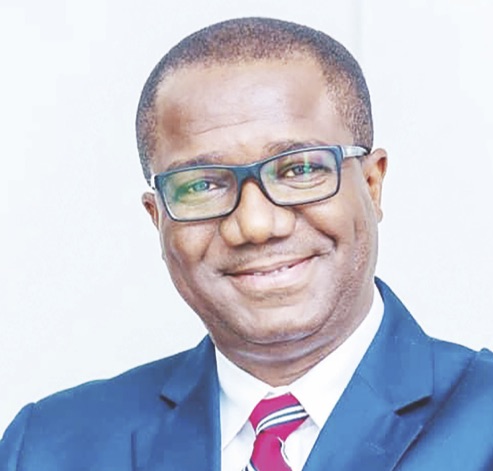
Victor Onyechi is a chemical engineer, project manager and business leader who has executed onshore and offshore projects across sub-Saharan Africa. In a career spanning over 20 years, he has garnered rare insights in and diverse experience in oil and gas operations, from oil fields to boardrooms and training institutions, such that he has been able to turn around seemingly hopeless, loss-making ventures to profitable opportunities, with a view that technical excellence and business acumen must work hand in hand.
He talked about his career, oil and gas developments, opportunities and threats in the industry, among other things.
Can you explain your background in petroleum engineering, drilling operations, and oil & gas business development?
As a chemical engineer, I have over two decades of experience transforming oil and gas operations across Africa. Currently serving as a member of the board of directors & Managing Director of MI Nigeria Limited (an SLB company), and as Special Projects Manager overseeing operations in eight West African nations, I’ve built my career on the principle that technical excellence and business acumen must work hand in hand. I’ve worked in different oil field environments from land to shallow offshore, deep water, and ultradeep offshore operations as a field engineer, fluid design engineer, and in project management roles. Working in the oil field has taken me to very challenging markets across sub-Saharan Africa: high-volume markets for mature oil fields and very remote operations for exploration & appraisal wells. Over the course of my career, I have also managed various parts of the business, including new ventures, project start-ups, joint ventures, and the local integration of acquired companies.
My journey began as a field engineer in 2001, working on drilling rigs in challenging environments, and has evolved to leading multimillion-dollar operations across Nigeria, Ghana, Senegal, Tanzania, Kenya, and 13 other African countries. I hold a B.Sc. in Biochemistry and PGD in Chemical Engineering from the University of Benin, complemented by extensive technical training from Houston to Dubai. My expertise spans drilling & completions fluids engineering, fluid design & optimization, Production chemicals, solids control & waste management, HPHT fluid well management, and the strategic transformation of underperforming business units into market leaders.
Your experience spans drilling technology, project management, and regional business transformation. What inspired your transition from field engineering to strategic leadership and business development roles?
My transition was driven by witnessing firsthand the gap between technical potential and business execution in African markets. Early in my career, I observed that many technically sound projects failed due to poor stakeholder management, inadequate local capacity, or misaligned commercial models. This realisation occurred during a particularly challenging deepwater project, where we had a technical solution but couldn’t implement it effectively due to organizational silos. I understood that to truly transform African energy operations, one needed to bridge technical expertise with strategic business thinking. The turning point came when I turned the Nigerian drilling fluids business from a loss-making unit into a profitable operation. This experience demonstrated that by combining engineering excellence with innovative business strategies, we can create sustainable value for all stakeholders – from international operators to local communities.
You have a strong foundation in sustainable operations and local capacity building. What does responsible and inclusive energy development mean to you professionally and personally?
Responsible energy development means creating value that extends beyond drilling metrics and profit margins. Professionally, it’s about ensuring that every project we execute builds lasting capabilities in local communities. I’ve personally mentored over 200 African engineers, with 85 per cent remaining in the industry and 60 per cent now holding senior positions. This isn’t just training – it’s building a sustainable ecosystem where African talent can lead African energy development. Personally, it reflects my belief that “wisdom is simply living life, having experiences along the way, and learning from them.” Every well we drill should leave behind not just hydrocarbons extracted, but knowledge transferred, skills developed, and communities empowered. This philosophy has guided my implementation of local supplier development programmes, educational partnerships, and the transformation of compliance requirements into competitive advantages.
During your roles for major international oil companies, how did you ensure operational integrity and compliance with safety and environmental standards?
My approach to operational integrity is built on three pillars: proactive design, real-time monitoring, and continuous improvement. For HPHT wells, I implemented the Adaptive Response Protocol (ARP), which monitors fluid properties every 15 minutes and triggers automated alerts for deviations. This reduced drilling fluids NPT significantly while maintaining zero HSE incidents. Environmental compliance extends beyond meeting regulations – I managed the use of water-based mud systems in deepwater operations that previously relied on oil-based systems, achieving comparable performance while eliminating discharge risks. Every operation undergoes a rigorous job risk analysis, with input from local teams that understand the unique regional challenges. My teams have maintained zero significant environmental incidents across all operations for three consecutive years and counting.
You’ve managed drilling operations across 18 African countries with diverse geological and regulatory environments. What challenges did you face in standardising operations while respecting local contexts, and how did you address them?
The challenge of operating across Africa is that each country presents unique geological formations, regulatory frameworks, and business cultures. In Nigeria, we face a complex working environment with changing government policies; in Tanzania, infrastructure limitations; in Ghana, stringent local content mandates. My solution was the “Core Standards, Local Adaptation” framework. We established non-negotiable safety and quality standards applicable everywhere, then developed country-specific modifications. For example, in remote Uganda operations, we created mobile-first digital solutions that work on basic smartphones with intermittent connectivity. In Mozambique, we developed frugal innovations, such as locally fabricated solids control ancillary equipment, which performs at 30 per cent of the cost of imported equipment. The key was building regional hubs in Nigeria, Ghana, and Tanzania that could rapidly deploy resources while maintaining local relationships. This approach reduced cross-border response time significantly while improving local stakeholder satisfaction.
Your technical innovations, such as HPHT drilling solutions and intelligent optimization systems, aim to transform industry practices. What broader impact do you envision from your work?
My vision extends beyond individual well success to fundamentally changing how the industry operates in emerging markets. Our HPHT innovations have already opened multi billion barrels of previously inaccessible reserves in West Africa alone. However, the real impact lies in the multiplier effect – the 200+ engineers I’ve trained are now training others, resulting in exponential growth in African technical capability. My work on sustainable drilling fluids practices demonstrates that environmental protection and operational efficiency are complementary, not competing goals. In the long term, I envision African operations setting global best practices in sustainable and efficient drilling, with our frugal innovations being adopted in other emerging markets facing similar challenges.
How do you see the integration of digital technologies with traditional drilling operations improving efficiency, especially in remote African locations?
Digital transformation in African drilling operations isn’t about importing Silicon Valley solutions – it’s about developing fit-for-purpose technologies that work within our constraints. We have predictive analytics process that forecast fluid properties changes real time, allowing proactive adjustments even with limited real-time communication. Our mobile-first approach means field engineers in remote Mauritania can access technical databases and receive expert support using basic smartphones. More importantly, digital tools have enabled knowledge transfer at scale – a junior engineer in Gabon can learn from a complex operation in Nigeria through digital learning platforms. The key is to ensure that these technologies enhance rather than replace human expertise, particularly in Africa, where we’re building local technical capacity.
Operational efficiency remains critical in volatile oil markets. Based on your business transformation experience, what innovative strategies do you recommend for companies during market downturns?
Market downturns require counter-intuitive thinking – it’s when you should invest in capability, not retreat. During the COVID-19 pandemic, while competitors were laying off staff, we retained our workforce through creative scheduling, redeployment into training activities, and, for most employees, activation of vacation models with reduced salary structure. This meant that when markets recovered, we had trained personnel available to capture opportunities. I recommend three strategies: First, develop frugal innovations that deliver 80 per cent of the performance at 40 per cent of the cost. Second, use downturns for capability building – train your workforce, upgrade systems, strengthen partnerships, and review operating models. Third, develop flexible commercial models that accommodate client constraints while maintaining adequate margins. During the last downturn, these strategies enabled us to significantly increase market share.
How do you ensure your approach in both technical operations and business management remains evidence-based and focused on stakeholder value?
Every decision I make is backed by data and validated through stakeholder feedback. For technical operations, we maintain detailed databases of every well drilled, enabling us to create predictive models for future operations. Our business decisions undergo rigorous ROI analysis, but importantly, we measure return beyond financial metrics – including local employment created, skills transferred, and environmental impact reduced. We hold quarterly stakeholder forums where operators, partners, regulators, and community representatives provide direct feedback. This input directly shapes our strategies. The key is creating feedback loops that quickly identify what’s working and what isn’t, allowing rapid course correction while maintaining strategic direction.
You’ve worked in petroleum operations in remote east & southern Africa, and across Africa in general. How has this international experience shaped your leadership philosophy and operational approach?
My international experience has taught me that technical excellence is universal, but implementation must be culturally relevant. Training in Houston exposed me to world-class technical standards; working with an international team around the globe demonstrated the importance of systematic processes, but it was in Africa where I learned the essence of authentic leadership. In Uganda, I observed the power of long-term thinking and collective achievement. In Namibia, I experienced the drive for innovation and individual excellence. In Africa, I discovered that sustainable success requires the philosophy that we succeed “together” or not at all. This shaped my leadership approach: setting international technical standards while achieving them through local wisdom. I learned to listen before directing, to understand before implementing. In Tanzania, this meant learning Swahili phrases to better connect with rig crews. In Senegal, it meant personally understanding French regulatory documents. This multicultural approach has been essential in managing operations across eight countries with diverse teams.
What advice would you offer to students or emerging petroleum engineers who want to create impact through technical excellence and business innovation?
First, master the fundamentals – you can’t innovate without understanding basics. Spend time on rigs, get your hands dirty, and understand how things actually work versus how they should work theoretically. Second, think beyond your discipline. My biochemistry background gave me unique insights into drilling fluid chemistry with great ideas to minimize its impact on human & environment. Read broadly, learn continuously. Third, develop business acumen alongside technical skills. Understanding project economics, stakeholder management, and commercial models will set you apart. Fourth, seek challenging assignments in emerging markets where you’ll learn to innovate with constraints. My best innovations came from having to solve problems with limited resources. Fifth, find mentors who challenge you, not just support you. Finally, remember that lasting impact comes from developing others. Every engineer you train, every local supplier you develop, and every community you empower multiplies your impact. Don’t just drill wells; build capabilities. The industry needs engineers who can think strategically, act ethically, and lead inclusively.
What is your long-term vision for how petroleum engineers can shape national energy security, particularly through technological innovation and sustainable practice?
Petroleum engineers must evolve from resource extractors to energy architects. My vision is that we lead the integration of traditional and renewable energy systems, ensuring a reliable energy supply during the transition. We possess unique subsurface expertise that is valuable for geothermal energy, carbon sequestration, and hydrogen storage. Engineers should influence policy by providing evidence-based insights on practical transition pathways. In Africa, this means developing domestic energy resources while building renewable energy capacity, ensuring energy security without compromising sustainability. We must pioneer technologies that make smaller fields economically viable, reducing import dependence from developing nations. Our role in national energy security extends to developing local supply chains to reduce vulnerability to global disruptions. I’m working on establishing African technical standards for drilling fluids operations that ensure operational excellence while promoting local content. In the long term, petroleum engineers should be at the forefront of the circular economy, developing technologies for waste-to-energy conversion and carbon utilization. The goal isn’t just energy security but energy sovereignty – nations controlling their energy destiny
Outside of your petroleum engineering work, how do you maintain balance and practice self-care?
Balance for me comes from staying connected to what grounds me – family and continuous learning. Despite managing operations across eight countries, I make a point to prioritise family time. Weekend football matches aren’t just recreation; they’re opportunities to disconnect from spreadsheets and reconnect with the simple joys of life. I’m an avid reader, not just of technical journals, but also of philosophy and African literature, which provide perspectives beyond quarterly targets. Music is my therapy – from contemporary Jazz to classical compositions, different moods require different soundtracks. I maintain my physical fitness through morning runs, which serve as a form of meditation before chaotic days. Travel, although often for work, becomes an exploration when I take the time to understand local cultures, try local cuisines, and learn local phrases. I believe in the African concept of “work-life integration” rather than balance – bringing joy into work and purpose into leisure. Self-care also means knowing when to delegate, trusting the teams I’ve built, and recognising that sustainable leadership requires sustainable pace. I am still learning.
Was there a mentor, formative experience, or cultural influence that inspired you to pursue leadership in petroleum engineering and regional business transformation?
My inspiration comes from three sources. First, my father, a civil engineer, taught me that “there’s no problem without a solution – you just need patience for the answers to materialise.” This philosophy carried me through countless technical challenges. Second, my experience during Nigeria’s multiple fuel crises, when fuel queues stretched for kilometres despite having abundant reserves. I realised the problem wasn’t resources but systems, inspiring my focus on operational excellence and business transformation. Third, my first international training experience in Houston in 2006, where I experienced what world-class operations looked like through Mud school, and I resolved to bring that standard to Africa. However, the most profound influence is the African philosophy – the understanding that individual success means nothing without collective progress. My Igbo heritage teaches that “it takes a village to raise a child” – similarly, it takes an ecosystem to build sustainable energy operations. These influences shaped my belief that technical excellence must serve a broader purpose.
Finally, what’s your personal guilty pleasure—whether it’s a favourite pastime, a travel destination, or a personal tradition you cherish?
My guilty pleasure is collecting and studying traditional African proverbs from every country I work in. What started as a connection with local teams became an obsession. I have notebooks filled with wisdom, such as the Senegalese saying, “Wood may remain ten years in water, but it will never become a crocodile.” This reminds us that superficial presence doesn’t equal deep understanding. When I visit a new operation, I always ask local staff for their favourite proverb and its meaning. It breaks the ice, builds connections, and often provides surprising insights into local business culture. My dream is to publish “Engineering Wisdom: African Proverbs for Modern Business,” combining traditional wisdom with contemporary applications. My other indulgence is finding the best local ‘jollof rice’ in every West African country – a delicious but controversial pursuit that sparks passionate debates about whose version reigns supreme. These pleasures remind me that beyond the complexity of HPHT wells and multimillion-dollar operations, human connection and cultural appreciation remain at the heart of successful leadership.