Follow Us on Google
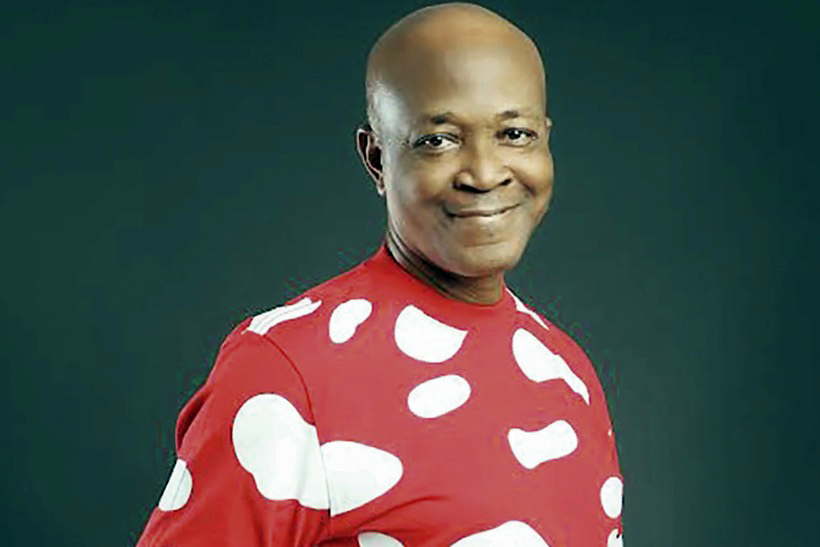
He had a difficult childhood while growing up in Eket, Akwa Ibom State. In spite of that, however, he had an uncommon determination never to allow those occurrences alter his dreams and aspirations. With God’s grace and a loving mother, he weathered those discomforts. Today, Sam-loco Smith, PhD, is a highly respected, household name in the print & broadcast media sector. He is a Senior lecturer in Mass Communication at the Mountain Top University. He’s a political advertising specialist, media/PR consultant, and branding and marketing strategist, Last year, he handled the media and publicity aspect of the 80th birthday celebration of Bishop Mike Okonkwo, which was adjudged to be hugely successful with widespread visibility and exposure. Before then, he had also handled media and publicity for the 80th birthday celebration of the late Dr Uma Ukpai, using his extensive reach within the mass media.
In this encounter with Saturday Sun, Loco-Smith speaks about his difficult childhood, his family, his training and experience as a journalist, political advertising specialist, media/PR consultant, and branding and marketing strategist, among others.
In 2019, you published the first ever book on political advertising in Nigeria. As the clock ticks towards 2027, what are your thoughts towards the general elections and the political advertising campaigns?
The political advertising campaigns ahead of the 2027 general elections, particularly the presidential and governorships will make the previous elections like the 1958/59; 1979; 1993 and 2015, a child’s play. The 2027 political advertising campaign will be issue-based and very fiercely contested. It will be dog-eat-dog and probably a fight to finish. The unfolding occurrences point to the fact that it will be laced with issues of integrity, credibility, reputation deficiencies, performance appraisal records. The ruling party’s focus will revolve around their successes and challenges. For the opposition, the focus will revolve around the state of the nation, the public perception, precision and statistics-based political advertising campaigns strategies. The 2027 political advertising campaigns will also be laced with caricature propagandism, manipulative and AI deployed campaign applications.
The media visibility and exposure of Bishop Mike Okonkwo’s 80th birthday celebration, which you handled, was massive. How was that achieved?
It was God Almighty that did it. It was a great opportunity to demonstrate what God can do. I simply took ownership. I personalised it, and I am empathetically minded in what I am asked to do. No stories and no excuses. It is about cultivating good human relationship with people generally, particularly media operators and stakeholders. It is about having a good understanding of what public relations and its strategies can do. It is about understanding the in- house styles of the media houses, respect and media appreciation principles.
Can these strategies be adopted for governmental policies?
Yes, it can be done. The missing rib in governmental policies and political communications are ignorance and lack of understanding of the impact of political public relations elements and strategies. We have 109 senators, 360 House of Representative members, 36 Governor’s/wives. We have over 45 ministers with over 350 governmental departments and agencies. How many of the governors, senators, House of Representatives members, ministers and their agencies are visibly exposed? It will shock you to know that most of these officials have never had any form of interaction with the media. What do you say about the National Assembly members and the constituency projects? Another name for constituency projects is corporate social responsibility programmes (CSR). These programmes, if executed, would give them good visibility and exposure but do they know how to go about it? In 2025, Nigeria budgeted a total of 11,122, projects which were inserted for constituency projects valued at N6.93trillion, according to the Budget Foundation. Good political advertising campaigns will make a lot of difference ahead of the 2027 political advertising campaigns. If you have not performed, what will you be telling the electorate? The public perception pendulum is not favourably swinging towards a particular direction.
How was your childhood? Could you tell us about your experience growing up?
I had a wonderful childhood as the only surviving child at that time. But going to Eket, in the early 1970s, exposed me to a completely different narrative. Today, I wonder if my mother was not alive and financially capable, what would have happened to me when my father was conditioned to stop paying my school fees of N23.50k?
I was born in Port-Harcourt, Rivers State, but I am from NnugUsoekong, Usung Inyang, Eket LGA, Akwa Ibom State. You can call me a mummy’s boy. This was sequel to a frightening scenario when my mum’s twin children, a boy and a girl, were mysteriously killed on the same day. The boy died in the morning and the girl died before 4pm. Same day. That was certainly a disturbing and frightening occurrence for a young beautiful lady. As God would have it, God gave me to her and she named me, Ebenghe (Samuel). This was in Port-Harcourt, shortly after we left for Lagos before the war.
After the war, my father visited us one Sunday evening and informed my mum that he wanted me to follow him to Eket, so that everybody would be under one roof, an idea my mum vehemently objected to. But she later changed her mind.
My first shock was that there was no electricity at the place. We arrived Eket around 4.35pm and by 6pm my father’s cook and house help brought out six lanterns and placed them at different locations in the house. I couldn’t believe what I was seeing. At that time, Eket was just a village, with no electricity, no public water system, and even the road network was a single lane. Our home at No Hospital Road had just a pit latrine. I was completely speechless. I couldn’t sleep for days but my father appealed to me that I would adjust with time. But I never did. Apart from my father’s cook, I also met his nieces and nephews from his elder brothers. His immediate elder brother had a room in the left wing of the property.
For various reasons, my father’s brothers and his nieces and nephews as well as the cook left the house. Following their sudden departure, I now became the official house help, doing everything you can think of. Because of these responsibilities, going to school at Government Primary School Hospital Road Eket became difficult. At times, I got to school by 10 or 11 am instead of 7 am. My class teachers and some classmates helped in copying notes for me and surprisingly, I always performed well in the exam.
When we now moved into my father property at 17, Barracks Road Eket, the situation got worse. I was asked to join the labourers working at the construction site without pay. I even sustained injury in my left hand on one occasion. Sometimes, I was asked to sell water leaf before going to school. The situation continued even when I was in high school, at St Francis Secondary School. Later, I insisted that I must be a boarding student. I became aware that my going to school was a target when my dad wanted me to become an apprentice under his mechanic to learn how to fix Peugeot vehicles. When I informed my dad that I was planning to go to the university, he suggested that Ikot Akata Technical School was equally a good idea. When these moves failed, my father didn’t want to pay my school fees again. So, a few days to Christmas in December 1976, I took my box and moved out of my father’s house by myself with everybody watching. Nobody asked me where I was going. Few days after I got to my mum’s village, my mum arrived from Lagos and was surprised to see me. However, I briefed her on what had happened.
Later, my dad came, apologised for all that happened, but said I should be staying with my mum so that she could take proper care of me and pay my school fees.
However, I promised him that with God on my side, I would go to school and read up to PhD level. That promise was fulfilled in 2014 by the special grace of God and the support from my mum, my wife, Chief Bryson and the prayers of well-wishers.
What inspired your interest in the media?
My professional pathway was influenced by the problem that the Nigerian Chronicle had many years back while growing up in Eket. For about one week, the Nigerian Chronicle had a problem that affected production of the newspaper and they could not publish. In fact, the whole state was shut down in terms of information. The shutdown affected communication because the newspaper was like a bible that people must read every morning. Not seeing the newspaper for two to three days, made me to know the importance of the print media at a very tender age. From then on, I decided mass communication, here I come.
What course did you study in the higher institution, and how did that prepare you for what you do now?
Due to the challenges with my father and how he eventually stopped paying my school fees of N23.50 kobo, I asked God to help me and He did.
Since I was not sure of going higher educationally, I immediately started to look for ways to educate myself. So, I registered and sat for the London Chambers of Commerce and Industry, professional exam higher certificates in Marketing and Public Relations in 1984. In 1986, I registered for and passed the Business Education Examination Council (BEEC) Public Relations professional certificate exams. In 1997, I registered for and passed the Nigerian Institute of Public Relations Chartered Diploma (NIPR) Exam. At the same time while doing these professional certificate exams, I was already in higher institution reading mass communication. I got my OND in Mass Communication in 1986, HND in Mass Communication in 1989, Postgraduate Diploma in Public Relations and Advertising in 1997, MBA in Public Relations & Advertising from Enugu State University of Science and Technology (ESUT) in 2001, MSc in Mass Communications from ESUT in 2007, and in 2014, God Almighty crowned my efforts academically with a Doctor of Philosophy in Mass Communications from ESUT.
In 2019, I had to go back for a BSc Mass Communication conversion programme because I missed a job offer because I had HND in Mass Communication. That was another challenging situation even after my PhD in Mass Communication.
These academic trajectories are the foundation for the knowledge in journalism, public relations, advertising, branding and marketing.
Can you tell us about your journey from journalism to public relations, branding and marketing?
With God on my side, the turning point in my life occurred when I went to Newswatch Magazine for a three-month internship programme.
At Newswatch, I was very personal, determined to learn, study and watch what was going on. I worked like a full-time staff but I was just an intern. I understudied and worked closely with great names like Dare Babarinsa, Ben Edokpayi, Chuks Iloeagbunam, Ronke Omonubi, Anietie Usen, Sola Lufadeju and Nosa Igiebor. I was exposed to what investigative journalism was all about. I travelled to virtually all the 21 states then, interviewed most of the military governors and featured them in the dialogue page of Newswatch Magazine.
I will forever be grateful to God Almighty for directing my path to Newswatch owners; Dele Giwa, Ray Ekpu, Dan Agbese and Yakubu Mohammed.
As a result of the opportunity and the grace of God that directed everything I was doing, I also did my one-year Industrial Training and my National Youth Service Corps (NYSC) programme at Newswatch.
My venturing into public relations, advertising, branding & marketing was when I joined the Public Relations Department of the Nigeria Telecommunication Limited (NITEL) in 1992. I rose to the position of Manager in charge of Corporate Communications, Branding, Advertising & Integrated Marketing Communication Strategy (IMCS).
The inspiration came from God and my determination to learn. This gives me joy and makes me feel proud.
In what ways have your journalism roots influenced your approach to PR, branding, and marketing today?
The fulcrum of effective communication revolves around the branches of mass communication which are – journalism, public relations, advertising, marketing, communication theory, video & TV production, mass communication laws, digital media, photography, social media, political communication, psychology, audio media, integrated marketing communication (IMC) and corporate communication.
Other News
Therefore, you can see that all the branches of Mass Communications are all related directly or indirectly to each other, but with distinct fields that all aim to shape how visibility, exposures, campaign goals are actualised, thereby, shaping perceptions and opinions about a subject matter. For example, a journalist provides objective news, while public relations manage an organisation’s public perception, build relationships via media relations strategies. Marketing focuses on sales by managing demand and creating promotional campaign, while branding is the overall efforts to build a brand’s reputation, identity and rooted accepted connection with the public.
One key issue is the fact that for you to be successful and effective, you must have a good personalised understanding of the workings and operations of these branches of Mass Communication and its stakeholders, how to joggle and navigate them appropriately when the need arises.
You have collaborated with prominent figures like late Rev. Uma Ukpai, and Bishop Mike Okonkwo of The Redeemed Evangelical Mission (TREM). How did you build their trust and what insights did you gain from those experiences?
Well, it is the Grace of God. I have been collaborating with the two great men of God for over 20 years, assisting, suggesting and contributing in creating informative and educative visibility and exposure and good publicity for them. This was evidenced in their 80th birthday events. Like I said earlier, to achieve such monumental and phenomenal media visibility and exposures, one must have a good knowledge and understanding of the branches of Mass Communications, its function, operations and the stakeholders of those branches. You must also be very knowledgeable about house styles of each mass media outfit, programmes schedules of the media platform, so that you can adjust appropriately to them when the need arises.
You must be very premeditated with your strategies and communicate proactively every step of the way.
To work with certain people like these great men of God, you must systematically gain their trust. Don’t let your interest or focus be for profit or money. They are very watchful and sensitive. I am a TREMITE and a member of the Corporate Affairs Department (CAD) of TREM Headquarters. I see it as a great opportunity to be called upon to do certain things.
How do you tailor your PR and branding strategies to meet the unique needs of each client?
It is dependent on lots of factors such as, being able to define their unique goals and target audience through in-depth research, data analysis and audience segmentation.
One can now develop a customisation plan using and deploying general specific prescription strategies like imagination, public/media relation tools and strategies, firing from all available media platform cylinders.
As you are doing that, you must continuously monitor results and make adjustment to remain effective until the very end.
These also involve having clear goals, developing a well fitted action plan, choosing the most appropriate strategies, digital marketing, performance etc.
What have been some of the challenges you faced in your career and how did you overcome them?
Basically, the major challenges come when clients want to shift the goal post midway when the campaign is on-going. For example, working with someone who knows practically nothing about what public relations or media relations is all about but argues with every suggested strategy can be a problem. Another challenge is when all discussions have been concluded, payment agreed, money advanced, job completed, well acknowledged, but the client refuses to give the balance.
How does one stay up to date with the latest trends and development in PR, branding, etc?
I never stop reading, researching, seeking latest trends and developments, checking up on case studies on PR, advertising, integrated marketing communication and continuously monitoring news report on social media. In addition to this, I subscribe to professional newsletters and blogs, attend professional related events, attend seminars, workshop, watch podcast/videos, set up Google Alert, analyse, do a performance appraisal of my own performance. Finally, collaborate with media experts, stakeholders, editors, and so on.
Above all, seek the face of God and direction in everything and anything you want to do and commit your ways into His hand and He will make it happen.
What do you think sets your approach apart from others in the industry?
Well, I take ownership of whatever I am asked to do. I have a name. It took me years to build that name and reputation. I am a child of God. No excuses, no stories and also, we are all equal in fellowship, but we are not equal in anointing. That is the difference.
How has your faith or personal value influenced your professional journey?
I do what I do with the fear of God. Psalm 37 vs 5, says commit your ways or everything you do to the Lord. Trust Him and he will act on it. And he shall bring it to pass. These are the elements that influence my faith.
What advice would you give to young professionals looking to break out in PR, branding etc?
You must seek after knowledge. You must be hungry for knowledge. You must be interested in reading, studying and exposing yourself, buy books, watch TV, build a skill, watch professional, related programmes, build a strong portfolio, network with industry professionals and continuously develop the skill in communication and creativity. Stay curious and informed and never give up.
Your wife, Stella, is a professor. How did you meet her?
We are members of The Redeemed Evangelical Mission (TREM). I first saw Stella at the closing of TREM’s Kingdom Life World Conference, 1991, and by the Grace of God Almighty, September 19, 1992, we became husband and wife. We’ve been married for about 34 years.
How would you describe her?
At the most critical moments, you can count on Stella. She is unbelievably kind-hearted. She’s a good wife, a good friend, a good mother. A child of God Almighty that loves the Lord. She’s a wife like no other.
What are your most memorable moments?
When Stella became pregnant and got delivered of a baby boy, after close to 13 years of marriage. That was the first. The second memorable moment was after defending my PhD thesis, and I was pronounced and announced as a doctorate degree holder in Mass Communication. Indeed, God is faithful.
How about your most embarrassing moments?
When my half brother cowardly stopped one of our uncles from going out to testify about my mother’s programme before the whole world. The second most embarrassing moment was when a job appointment was cancelled because I had an HND. So I had to go back to do a BSc conversion programme in Mass communication.
What lessons would you say life has taught you?
God Almighty will never fail. But the best of men will fail.
How would you describe your sense of fashion?
My complexion dictates what I wear. I love perfumes, wristwatches and T-shirts.