Follow Us on Google

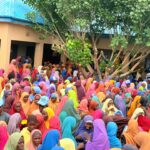
The renewed conversation about the menace of destitute and roaming out-of-school children in numbers estimated at 14 million in the predominantly Muslim North has once again thrown up the unresolved question of the traditional Almajiri institution in modern times. This growing army of homeless, hungry, barely clothed and uneducated socio-economically dislocated children is already an exploding time bomb that cannot be rationalised on the basis of the religion of Islam. Having pondered on the human disaster that is the menace of out-of-school children, which has unfortunately been bestowed the traditional religious bona fides as an “Almajiri institution,” I have decided to share some aspects of my childhood experience growing as a Muslim, in a Muslim family and in a predominantly Muslim community. 
I was born in Okene, the homestead of Nigeria’s ethnic Ebira people of Kogi State in North-Central Nigeria to a five-generation Muslim family of prominent Islamic scholars. Looking at the numerous mosques adorned with minarets and capped with domes that dotted the entire landscape, from which, five times a day, the voice of the muezzin was heard intermittently blaring out calls to the Muslim faithful to obligatory prayers, one would not realise that Islam arrived there less than two centuries ago. Islam had earlier berthed in the old Kanem Borno Empire in the northeastern corner of Nigeria in the 11th Century and in the ancient Hausa city states in the present North-West by the 15th Century. The successful repelling and crushing of invading Muslim Fulani jihadi forces from the Emirate of Bida around 1885 by an alliance of Ebira tribal warrior chieftains in an encounter that was recorded in oral history as “ireku ajinonoh (Ajinomoh wars)” delayed the arrival of Islam in Ebiraland from the 19th Century to early 20th Century. By the time of the Ajinomoh wars, the Ebira people of Okene had evolved an advanced iron working civilisation, which enamoured its warriors that were famous for their mastery of archery with superior fighting weapons. And with a rugged mountainous terrain, which proved treacherous for the invading cavalry of mounted horsemen from the Emirate of Bida, the Ebira warriors who were fighting from mountain tops secured a decisive victory, routing the enemy under a hail of burning spears and arrows.
Following the failed military expedition of what would have amounted to compulsory conscription into the religion of Islam of my ancestors by jihadi forces through conquest, annexation and forcefully incorporation of their lands into the Muslim Fulani Sokoto Empire, Islam, a religion of peace, eventually arrived Ebiraland through the peaceful Da’wah mission of Islamic scholars from the nearby Ilorin Emirate. Within a few years of the arrival in Okene town of the peaceful Da’wah mission from the Emirate of Ilorin in the early years of the 20th Century, the religion of Islam spread fast, with majority of the people willingly and without compulsion converting from being animists to Muslims.The history of the peaceful origins of Islam in Ebiraland is a shared similarity with that of Kanem Borno and Hausaland. Just as Islam was introduced into Ebiraland by a peaceful Da’wah mission from Ilorin Emirate, so was it in Kanem Borno Empire and Hausaland by North African Muslim missionaries.
Over a century and a half later, Okene is today a predominantly Muslim town, with most families having an Islamic heritage spanning five generations, which has seen a near absolute substitution of ancestral traditions, customs and norms with puritan Islamic Prophetic traditions as evidenced in the deeply religious way of life of the people. In addition to the general Islamic way of life, Okene emerged a leading centre of learning and dissemination of Islamic knowledge in Nigeria, with hundreds of mosques and madrasahs located in every nook and cranny of Ebiraand that, over the years, have groomed individuals from childhood to adulthood in literacy in Arabic for Islamic studies. Thence begins my Almajiri story.
The term ‘Almajiri’ is a Hausa corrupted version of the Arabic root word, Al-muhajirun, which connotes a migrant (student, scholar, worker, etc. And because the Quran, the hadiths and other ancillary sources of the tenets and practices of Islam are written in Arabic, a minimum level of literacy in this important language to our faith is required of us Muslims. However, unlike in the days of old, I didn’t have to migrate from my place of birth to fulfil this basic requirement of minimum literacy in Arabic language for Islamic studies and religious practices.
Desiring a good life for me, like every other responsible parent, my father simultaneously enrolled me at the age of four in a Catholic mission primary school (one of two private schools in the whole of my community) and a madrasah located right inside my family compound, under the supervision of my great-uncle, Mall Sadiku. Every morning on week days, after my morning meal at 7am, I would leave for school and by 1pm closing, I would head back home. After my afternoon meal, I would usually follow my father to the mosque for Zuhr congregational prayers, after which I would walk into the adjoining building that served as our madrasah to commence the day’s business.
Like me, other children in the community were simultaneously enrolled in the formal school system as well as in the nearest madrasah by their parents or guardians, who similarly fed, clothed and sheltered them with care and love. Interestingly, my great-uncle and teacher, Mall Sadiku, did not have to send us to the street to beg for alms for his sustenance because, as a certified Arabic and Islamic scholar, he was a gainfully employed public school teacher whose dedication to impacting knowledge on us was an act of Ibadah (worship). Again, that was the general trend across the Muslim community in Okene, as most madrasah teachers were either gainfully employed in the public service of were skilled, self-employed artisans.
With eternal gratitude to my parents who fed, clothed and sheltered my young self, by the age of six, I could read and write in both English and Arabic languages as well as perform ritual prayers in the language of my Muslim religion; a feat I attained without having to roam the streets as a destitute, homeless and uneducated out-of-school child who constituted a social menace to society.
Therefore, the menace of 14 million out-of-school children, otherwise given the honorific “Almajiri institution,” is a uniquely northern Nigerian Muslim culture, which holds education in contempt, has no parallel anywhere else in the larger Muslim world. The danger of 14 million out-of-school children does not qualify as the Almajiri institution but, rather, an oppressive system that can best be described as a crime against the humanity of these children by their parents and a society that condones such evil of irresponsible parenting. A societal re-orientation through a concerted effort by agents of the state and the religious establishment towards responsible parenting is fundamental to the reversal of the menace of 14 million out-of-school children that are destitute and roaming about scavenging for a living.
The ability to read and write in basic Arabic language, like I was able to do at age six, does not qualify me or anyone else as educated, and it is this rigid insistence on equating rudimentary Arabic and Islamic knowledge to being educated that has slowed down the educational progress of the Muslim North of Nigeria. The consequence of the educational backwardness of the North, which is retarding the progress of the other sections of the country, has been mass poverty, disease and insecurity. And the rest of Nigeria may no longer be willing to continue to share the burden of this religious and cultural self-immolation by the Muslim North, which has potential to incinerate the entire Nigerian state, going forward.