Follow Us on Google
By Rita Okoye
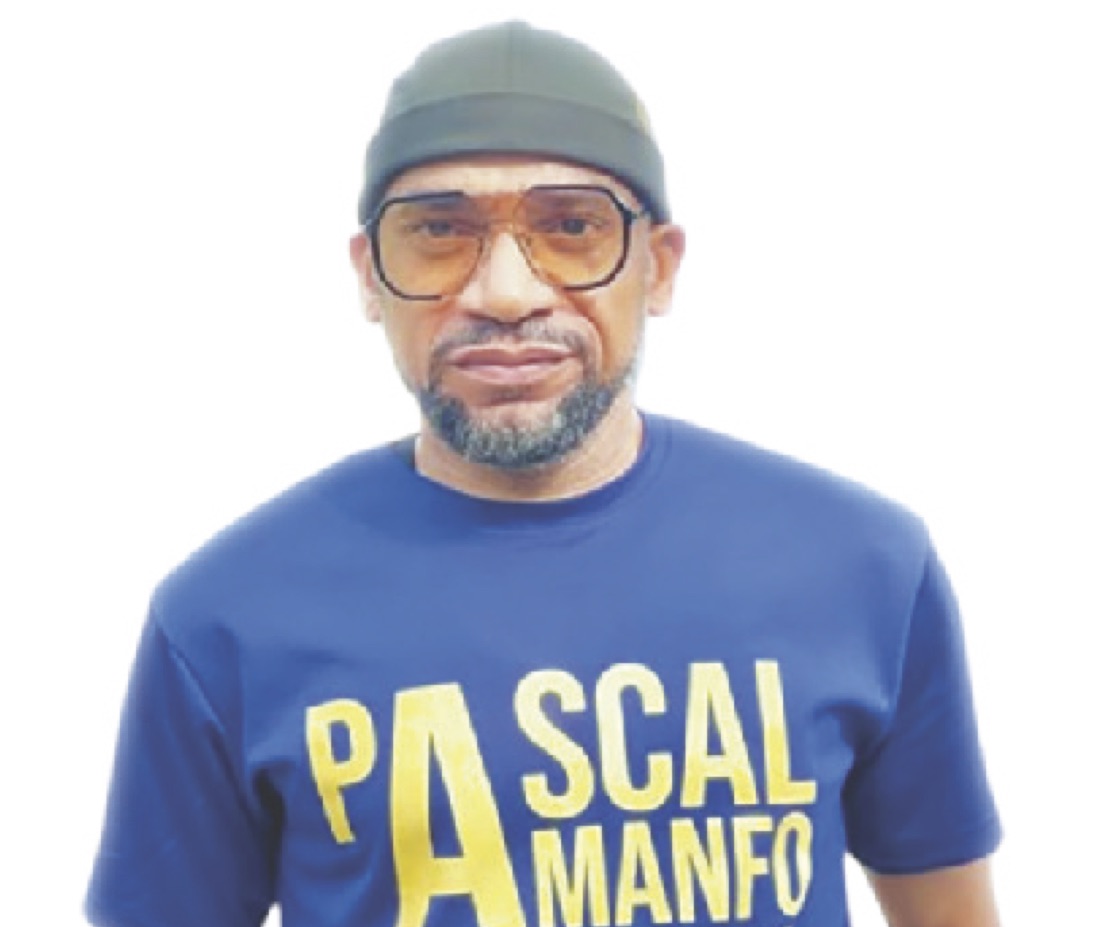
Pascal Amanfo is an award-winning Nigerian filmmaker and actor currently based in Ghana. In this interview with Saturday Sun, he reflects on his 25-year journey in the film industry, explains his decision to establish a base in Ghana, and shares his perspective on the challenges affecting celebrity marriages.
Enjoy!
You have spent 25 years in the Nollywood industry. Looking back, what would you describe as the defining moments of your journey?
I would say the most defining moment of my journey was having the very rare opportunity as a budding writer to do screenplays for Nollywood legends like Charles Inojie, Ikechukwu Onyeka, Lancelot Oduwa Imasuen, Paul Obazele, Emeka Rollas. Those formative years shaped me and greatly impacted my ideology of film and storytelling. Another would be daring to step out and take on the burden of my directorial debut in 2008 with the movie My Last Wedding starring Emeka Ike and Jackie Appiah produced by Uche Mbunabo. It was a make-or-break season of my career. Some felt I wasn’t ready but I knew I was!
How has Nollywood evolved from when you started to where it is today, particularly in terms of storytelling and distribution?
A lot has changed! But….It’s been largely a “forced” evolution in many regards. Most of it has come about as a result of trying to keep the industry afloat in the midst of biting economic problems. From hastily put together productions in choky service apartments to movies now shot in two or three days, it’s all a rat race to try and break even. We have found ourselves wrestling with a host of very fundamental and age-long structural problems that leave the producer trying to make the most with the least. No blame! He or she must either beat them, join them, or possibly japa as many have done. On the flip side, the resurgence of cinema has given the industry something to clap about but even that has its nail-biting intricacies! We see figures being tossed about in catchy “sold-out” headlines, but the reality is the question that many won’t want to answer! How much really does the producer take home?
In all, Nollywood has greatly changed. It’s now a more open industry with a more competitive edge and a bit more flair for technical quality. Perhaps, it can only get better from here.
As a Nigerian filmmaker operating from Ghana, how would you describe the synergy between Nollywood and the Ghanaian film industry?
Nigeria and Ghana share a lot in common across all facets of life. And when it comes to the arts and filmmaking there has always been that “marriage” between both industries. Actors have sojourned across the border on both ends and to a large extent the relationship remains cordial. It is no news, however, that Nigeria takes a massive lead in the size and structure of our film industry and a lot more can be achieved by a deliberate and well-thought-out collaboration especially when it comes to distribution. Ghana is serene and offers a host of very beautiful film locations with a steady power supply as a major incentive. Nigeria on the other hand boasts of a robust manpower and a depth of filmmaking expertise forged over the years by our very dynamic and self-formulated approach to filmmaking. The fusion of both could be sheer gold.
What inspired your decision to establish your base in Ghana, and how has that shaped your creative direction?
Living in Ghana wasn’t really deliberate. I was making periodic trips to Ghana to do screenplays for a few Ghanaian producers back in 2007 and it just played out that there was such a demand for my scripts that they started urging me to stay back. My stays became extended on each occasion and before I knew it, I was spending more time in Ghana than in Nigeria. At some point and in conversation with myself, there was no logical reason why I shouldn’t become a legal resident.
You have also spent 10 years as a minister of God. How has your faith influenced your approach to filmmaking?
My faith and rededication to God changed everything. I soon realised that the career was only a pedestal for the calling. I now see everything through the lens and filter of Faith. When a filmmaker says this, many often think he suddenly wants to be making what they oddly term “church movies”. But the goal for me, like I always say, is not to have Jesus mentioned in every line in a movie, but to tell constructive stories that impact life, inspire hope, and give a God-breathed perspective on humanity.
How do you respond to critics who believe faith-based themes may limit audience appeal?
Every story well told has or finds its audience. But here’s what I believe, the average Nigerian has an unbreakable leaning towards God. He may not be in church every Sunday but he or she either by upbringing or choice has that God seed planted in them. As much as our so-called GenZ folks might want to argue, it is part of who we are as a people. Seven or eight out of 10 of us heard our mothers’ reeling voices at dawn praying. We cannot take faith out of the Nigerian context. It now borders on the filmmaker to find innovative ways to tell what might be a simple faith story and trigger that already existing appeal.
Your latest film, My Name Is Faith, has just premiered on YouTube, what inspired the story?
Other News
My Name Is Faith was first of all divinely-inspired. The elements of the story came together after deep meditation and evaluation of my walk with God all these years. We always think of faith as a rub on a Genie’s lamp but it is far from it. I like to say it this way….faith is not faith until faith is tested.
What central message does My Name Is Faith seek to communicate to audiences?
The central message of My Name is Faith is that faith is a journey from promise to manifestation. Many often tire along the way and they may never see what they believed in.
Why did you choose YouTube as the premiere platform instead of a traditional cinema release?
I chose YouTube because I wanted it to have a reach far beyond the four walls of a cinema. I wanted its message to seep into mechanic workshops, roadside salons, food kiosks, and shops. It is a film made for the common man believing God for the next meal and its message must reach its audience.
What was the most challenging aspect of producing this movie?
The biggest challenge was probably filming on a tight budget and at the same time trying to maximise production quality.
What advice would you give to young actors and filmmakers who want longevity in the industry?
Be patient… trust the process… invest in yourself and your craft and leave nothing behind in taking the opportunities when they present themselves.
A lot of celebrity marriages are crashing, what’s the secret to a better, long-lasting union?
Hmmmh! The marriage subject is a hard one. There is never a formula to it. It differs from person to person and all I can say is marriage needs a great deal of patience, selflessness, and tolerance. Sadly and in a world where we are all delving more into our self-driven ideologies, many of us fail at it.
What do you think the actors are not doing right in terms of relationships?
It takes wisdom and a great deal of discernment to be able to know when a person comes into your life, whether who they are in love with is the image on screen or the human who wears those characters! That line is thin and sometimes red flags come in pink.
Looking back, is there any decision you regret making?
I learnt very early that regret is a weight too heavy to bear, so I regret nothing. If it happened to me, good or bad I believe it was a part of my process to make me the Man I am. Decisions can always have two sides but I lean on the faith that it all worked for my good.
After 25 years in Nollywood and a decade in ministry, what legacy do you hope to leave behind?
A good name; films that impacted lives; purpose fulfilled and a testimony of a life well spent to God’s glory.