Follow Us on Google
From Ismail Omipidan, Abuja
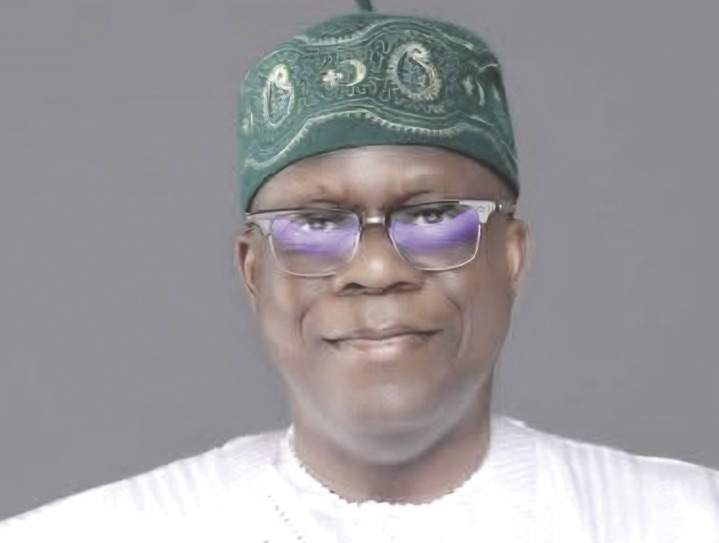
Prince Mosediq Adeniji Kazeem, SAN, former Attorney-General and Commissioner for Justice in Lagos State, is the incumbent president of Ansar-Ud-Deen Society, Nigeria, and Worldwide. He emerged the leader of the Islamic body in April 2025 after the society’s national conference held in Abeokuta, the Ogun State capital. In this interview, he speaks about his plan for the 102-year-old association and calls on religious leaders in Nigeria to promote peace in the country at all times.
Excerpts:
We hear you set out to become a diplomat. What altered that ambition?
Well, I’m a grandson of the former Oba of Lagos, Oba Musediku Adeniji Adele II, who was Oba of Lagos between 1949 and 1964. My father was the late Honourable Justice B.O. Kazeem (Boonyamin Oladiran Kazeem), a distinguished former Solicitor General of the Federation and Supreme Court Judge, while my mother is Princess Jemilat Adetoun Kazeem, daughter of the late Oba Adeniji Adele II of Lagos. I attended Saint Saviour’s Primary School in Ebuta Meta. I then proceeded to Government College, Warri, for my O’ levels and Federal Government College, Lagos, for my ‘A’ levels. I had my first degree in political science at the University of Lagos (UNILAG) and another degree in law, also at UNILAG. I had master’s in Information Technology and Telecoms Law at the University of Strathclyde in Glasgow, Scotland. Interestingly, my National Youth Service Corps was at the Nigerian Institute of International Affairs. My first ambition after graduation was to become a diplomat. But, of course, my decision to go back to study Law and eventually become a lawyer altered the plan.
But I still didn’t go into legal practice immediately. I went to work in an international consulting firm, a tax and consulting firm, Arthur Anderson, now KPMG, where I worked for five years. I worked there at the Tax and Business Regulatory Service unit. I left the firm in 1996 and started my own practice at Kasim & Co. and I have run the law firm for 29 years.
So, how did you become the Attorney-General and Commissioner for Justice in Lagos State?
Yes, in between, precisely in 2014, I joined the campaign train of my friend who was vying for the governorship of Lagos State, Mr. Akinwumi Ambode, who incidentally was my senior at the FGC Warri. I was appointed the Deputy Director -General of his campaign organisation and legal advisor, too. I ran that and played that role until he won and was sworn in 2015 as governor. I went back to my practice until October of the same year when I was called up to serve as Attorney -General and Commissioner for justice for the State and I served in that role from 2015 to 2019 when our tenure ended and I went back to practice effectively in 2020.
How did you find yourself in the leadership of an Islamic body like the famous Ansar-Ud-Deen Society?
In the course of my trajectory, I was elected chairman of the Sadequo Descendants Union. I’ve also had roles in Lekki Muslim Umah and chairman of the board of governors of their schools. I’m also a member of their board of governors. As you may also know, I had Served as national legal adviser of Ansar-Ud-Deen Society when our father, Alhaji Femi Okunnu was president but I had to cut short that service when I was appointed Lagos AG but when I finished my tenure in 2019 I came back and served for another three years which ended in 2022. I had to drop the position because of work pressures, but I didn’t leave the society. I’ve been very close to the society and involved, and I continue to do a lot of legal work for them pro-bono. Incidentally, as far back as 2007, when some of AUD schools in Lagos were being returned to the society, Alhaji Okunnu set up a committee to try and midwife and I was a joint secretary with another prominent leader who eventually became the national secretary of the Society and that committee metamorphosize into what you call Ansarudeen Education Trust (ADET). The body currently runs AUD schools.
Besides, my own parents were also strong members of Ansar-Ud-deen and the combination of both noble parentage and religious backgrounds have played a constant role in my life. It’s however interesting that one of the people that rekindled my interest in the society even though I’m still a member was Alhaji Femi Okunnu through the singular decision to appoint me a member of that committee in 2007. I can say that since then, it has been one thing or the other by virtue of Pa Okunnu’s influence. I must say that the society has become home to me because I play roles at different times and am involved in many activities.
At 102 years, you will agree with me that Ansar-Ud-Deen has come of age as a foremost Islamic society in Nigeria. What are your plans to sustain the tempo and consolidate on the achievement of its founding fathers?
If you look at the constitution of Ansar-u-deen, one of the most important things or the two most important things are the objectives to promote Islam and education. The focus of the society has always been the education of the Muslim child. So, education has been a fundamental objective that cannot be compromised. Again, if you look around, you will discover that a a lot of people, who attended our school across the country, have one or two beautiful stories to tell about this society that has moulded leaders and produced brilliant men and women. These people have graduated to become leaders in different fields. One thing is also clear, the Islamic religion is also quoted and unquote, competing with other religions in many areas, and Ansar-Ud-Deen as a society is also competing with other Muslim societies. All these factors drive growth and development. To this end, in terms of education, Ansar-ud-deen has played a critical role as a feed-stock for human resources that can fill and play different roles in our society. Therefore, we don’t have any option but to sustain the legacy of the founding fathers and keep the tempo going. In the last few months, we have engaged well with stakeholders, including the leadership of the local branches. We have also took a stock of our assets to know where the shoe pinches. In a simple language, my team has spent the last few months on familiarisation and engagement with stakeholders.
Of course, over the years, we have had our low and high moments, but our eyes are focused on the goal, and with Allah’s support and guidance, we will continue to maintain the standard. One of the things I hope to do is to make sure that at different levels of our society, both the national and council branches, we will be pushing to follow global trends in every area, especially in the area of education by pushing for expansion and establishment of new schools with modern facilities. To achieve this, we will be engaging stakeholders, especially the government, to strengthen the existing schools. We’re not saying the government should come and take them, but we’ll collaborate with them to achieve excellence because we play a critical role. As a result of that, we can be sure of nurturing the Islamic values and ethos that are critical to our children’s upbringing. I’m not saying that it’s only Muslims that would be in our schools, but principally one of our own focus too at the end of the day is to make sure that the Muslim child is properly educated, without necessarily abusing the freedom of religious right of non Muslim students.
Under me as president, we will also factor in the place of technology because we’re in the modern age where technology is driving everything. So it’s not only education. With this, we will be improving upon the quality of education. Today, school establishment goes beyond putting chairs and tables inside the class. Learning tools, effective administration, and quality of teachers are key to helping those institutions.
If we put Islamic history side by side with that of Christianity in Nigeria, we can group your society in the same class with the old generation churches. How is Ansar-Ud-Deen faring in the midst of new generation societies like NASFAT, Qareeb, and others that appear to appeal more to the youth population?
Well, I have one answer, and the answer is looking at you right in front of me, which is me. Interestingly, I got invited recently to a programme of Ansar-ud-Deen Youth Association of Nigeria (ADYAN), which is our society’s youth wing. At the programme, they called me grandfather, but for Allah’s sake, I just turned 60 then. The deputy president was quick to correct that and told them I was still young. So, if you look at it well, I am a bridge between the old and the young. Besides, most of our brothers and sisters who are running the affairs of those new breed Islamic societies are also within our age bracket. To me, we all have the vibe, and we can compete well to promote the religion of Allah. Ours is a healthy competition, not a guerrilla marketing we find in a business environment that is unconventional and can sometimes be antagonistic. We all have one mission; to propagate Islam in a peaceful manner.
And I think that I am fairly aware of what cutting edge is required to ensure that the youths are interested. You know, there are different things that you need to trigger in order to get people interested in the fold. When Alhaji Okunnu pulled me in, in 2007, I was probably 42, a relatively young age. I asked myself then, what was this man bothering me about? All I wanted then was how I was going to find my way. But in the end, it became the foundation that I rode on in the organisation to date . A few weeks after my emergence, I had a meeting with an inner team of my people, and the oldest person there was one of our leaders. All the other people there were relatively younger, probably under 40. The ideas that came out from that meeting were fresh, and those ideas were about how we can remain relevant and attractive to both the young and the old. In fact, in various congratulatory messages I received when I assumed office, including the one from President Bola Tinubu and even NASFAT, made reference to the fact that my youthfulness would be an advantage for the society.
Just recently, Ansar-Ud-Deen Society officially launched a new healthcare initiative, AnsarCare, aimed at formalising and expanding the society’s medical services across its network of branches, targeting both members and the general public.
As a Society, we have a long history of medical outreaches and established hospitals, so, the AnsarCare initiative will consolidate these efforts into a more coordinated and impactful healthcare programme. We envision that this initiative could grow into a Health Maintenance Organisation (HMO) and become as prominent and impactful as international organisations like the Red Cross or Red Crescent. The programme will begin with a pilot phase in Osun State, where the Society already operates functional medical facilities.
We will coordinate with existing Ansar-Ud-Deen healthcare centres in Osun and set up a temporary medical outreach team to deliver services to members and the surrounding communities. Volunteers will also be engaged to support the initiative. We hope to gradually replicate the outreach across the Society’s seven councils and 187 branches nationwide, promoting accessible and affordable healthcare as part of the Society’s contribution to national development. From drug prices to diagnostic services, medical care has become too expensive. Our members and the communities we serve need help, and that is we have embarked on this initiative.
What is the place of politics in Islam, and what advice will you give an average young Muslim professional, as far as politics is concerned?
Well, I have been a reluctant person who was thrust into politics. As far as I was concerned, I wanted to just be a lawyer and get on with my own business and do my own things. I wasn’t interested, but getting involved in politics opened my eyes. To answer your question; in as much as politics remain the vehicle for governance, allocation of resources, and formulation of policies in our country, we must all be patriotic enough to be counted. How can you have a say in how resources are allocated if you are not involved? So my clear advice to the Muslims, whether old or young, is that you must be involved in that process of leadership recruitment in your environment.
It may be passive or active, and we must all be involved. You can not divorce yourself from the politics of the day because it also means decision making and allocation of resources. However, a Muslim who is going into politics must be just and be able to allow Islamic culture of fairness, contentment, and honesty to guide his or her activities in office. Muslims should not shy away from politics. Insofar, they do not lose their Islamic morals, ethos, and values. One more thing, I hate this idea of describing politics as a dirty game. Those who use the adjective to describe politics have bad intentions ab-initio.
How can we promote peaceful co-existence among adherents of various religious bodies in Nigeria?
One, we must be sincere and stop using religion as a tool for unnecessary campaigns. I keep telling people, Allah’s wrath awaits any religious leader who promotes a crisis in Nigeria. Finally, political leaders should stop using religion as a platform to divide Nigerians.