Follow Us on Google

By Merit Ibe [email protected]
The challenging business environment in the country has forced many businesses to shut down, exit, or operate in a weakened state. In response, business owners are being compelled to adopt innovative and creative strategies, embrace technological advancements, and explore new market opportunities to stay afloat.
To remain competitive amidst these trials, entrepreneurs are calling for a state of emergency to address the ongoing challenges in the micro, small, and medium enterprise (MSME) ecosystem. They are urging the government to review policies and create an enabling environment that fosters growth and sustainability.
Running a business in Nigeria remains an arduous task. SMEs continue to grapple with issues such as multiple taxations, limited access to credit, inadequate public infrastructure, and low capacity, among other obstacles.
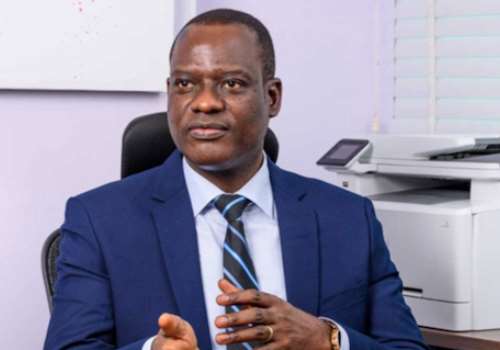
Femi Egbesola, Chairperson of the Association of Small Business Organisation of Nigeria (ASBON), shared insights on how small businesses are adapting to the economic downturn. He highlighted that many companies have been downsizing, cutting overheads, and reducing workforce to the bare minimum. While this has led to job losses and diminished production capacity due to decreased market demand, it has been a necessary step to reduce costs.
He further revealed that small businesses are becoming more resourceful, using local inputs and raw materials as substitutes for expensive imported goods. In an effort to cut energy costs, Egbesola noted, “We are investing in alternative energy sources, such as solar, rather than continuing to rely on fuel to power our processes. We’re also packaging products in smaller, lighter packages at more affordable prices, encouraging smaller purchases.”
On simplifying business processes, he emphasized that many SMEs are turning to technology to streamline operations. For example, businesses are using tools like Google Maps to identify the best travel routes for deliveries, minimizing road traffic delays, and conserving fuel and time.
“We are expanding our market reach through exports and social media, becoming more innovative and creative by using local input and raw materials to alternate for the very expensive imported ones, forming joint partnerships with other like businesses rather than run businesses alone and bear all costs:”
On funding, ASBON boss said small businesses now look for funding and finance through cooperative societies and foreign investors that offer lower rates and friendly terms and conditions rather than go to commercial banks with their very high interest rates, adding that the SMEs unfortunately sometimes reduce the quality and quantity of products just to remain in business.
Egbesola lamented that it has been a challenging time but was hopeful of better tomorrow.
Emphasising that SMEs remain the engine of growth and highest employer of labour which in itself, is a driver to fight and reduce poverty, he pleaded with government at all levels to pay more than usual attention to this sector and be more strategic about it.
“Most times, we see action only at the federal level of government. In fact, a state of emergency needs be declared to address the challenges of the MSME ecosystem.
“To get workable and practicable results, government must have a strong handshake with the critical key stakeholders in the MSMEs sector, to the point of co-creating, co-owning, co-implementing, co-monitoring and co-evaluating all manners of policies, reforms, interventions and support system towards the sector.
“Government must be intentional about improving ease of doing business particularly for the most vulnerable – the SMEs. This can be achievable if more work is done to truly understand the real challenges and pain points of this yet-to-be-understood critical sector. The many gaps in the sector and its stunted growth over the years is an indicator that so much are yet to be understood about the sector and her actors.
“Quite a number of policies related to the sector are due for overhaul, reform or outright replacement.
He pointed out that having the round peg in the round hole regarding policy makers is key in incentivising and reactivating the sector, noting that understanding local realities and working with local experts, particularly at the local government levels, will go a long way to rebound the sector.
For Daniel Dickson-Okezie, an SMEs expert, most small businesses are finding it difficult to cope with economic reality of today, decrying that most of them are just hanging on.
He pointed out that some of the survival strategies adopted by businesses include network platforms with other SMEs, which comprise potential customers , suppliers distributors and other stakeholders, “so as to make it easier for them to have access to the market and survive.
“Some have adopted strategies of adopting cooperative societies particularly those that are in the same value chain, with the goal of assessing cheap funds considering the high interest rate.
“Some have diversified, adding products to what they have already to their goods and services.
“Some are keeping more informed, monitoring and keeping track of government’s policies.
Some are resorted to cost effective energy sources.
Others have learnt to be cautious of the high inflationary rate taking cognisance in their plans.
Dickson-Okezie advised that for businesses to get back and working again, government needs to tackle insecurity which affects all and sundry including buyers, sellers, businesses and SMEs, adding that the earlier government takes the issue serious and wipe out all form of instability, the better of businesses and the economy. .
He emphasised the need for better infrastructure . “If there are good roads, water, power supply, logistics, a lot of the problems will reduce drastically.
“I think government needs to deal with the issue of multiple taxation in Nigeria. Raise the bar on the issue of ease of doing business like on issues on regulations, permits, registration of businesses licenses, among others.
He noted that government needs to remove the various bottlenecks and reduce the difficulties encountered in business, noting that Nigeria has one of the costliest rates.
He advised that government agencies like SMEDAN, BOI and many more needed to be on their feet and make the environment conducive.