Follow Us on Google

Uche Usim, Abuja
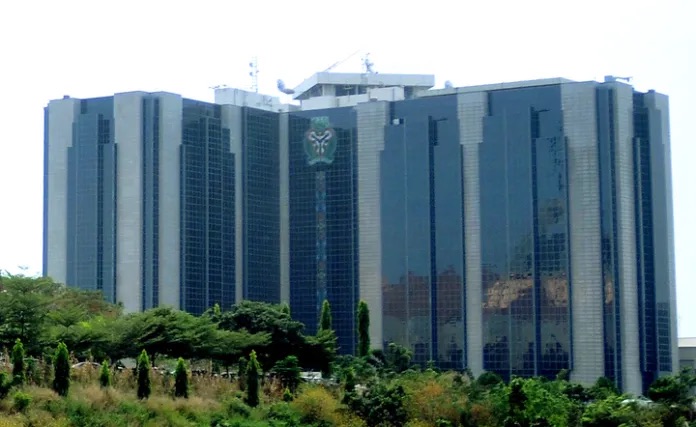
As the Central Bank of Nigeria’s (CBN)’s Monetary Policy Committee (MPC), concludes its first meeting in 2018, in Abuja today, economic experts have continued to give their opinions on what to expect from the policy meeting. For instance an economic analyst and Head of Banking and Finance Department of Nassarawa State University, Dr. Uche Uwaleke, has predicted the retention of existing economic parameters by the committee.
In a telephone chat with Daily Sun, Uwaleke foreclosed the possibility of the MPC increasing the Monetary Policy Rate (MPR) currently pegged at 14 per cent as advised by the International Monetary Fund (IMF).
According to him, the MPC, which recently had new members injected into its fold, will likely not want to upset the stability achieved by the apex bank in various segments of the economy, especially in foreign exchange market.
“They will likely retain all existing parameters. If at all they will alter things, it will be in subsequent meetings by which time inflationary pressures on the economy would have reduced.
“So, the MPC will either hold the MPR or reduce it but increasing it as suggested by IMF is out of it. They will hold it until inflation comes to around 12 per cent,” he said.
Similarly, majority of analysts who participated in a Reuters poll said they expected rates to stay on hold for now, with the likelihood of a cut later in the year as the need arises. The pace of inflation has steadily slowed since the start of 2017, with the core reading hovering close to the 12 per cent mark. And with exchange rates fairly stable and demand-related pressures abating, inflation rates could be sinking further, making Nigeria ripe for easier monetary policy.
“After a year of lethargic disinflation, the drop in headline inflation to 14.3 per cent in February 2018 ignites hope that inflation is still on a steady course towards the targeted 9 per cent ceiling and that conditions could continue improving to favour unwinding the present hawkish monetary stance,” StratLink wrote in a note to clients.
Nigeria returned to growth in 2017 with the economy expanding 0.83 per cent after shrinking by 1.58 per cent in 2016, which was its first annual contraction in 25 years. However, latest growth figures are still well below its potential, the recovery has been fragile, and private sector credit lending lacklustre.
“The main focus will be to try and do something positive to the economy, to try to kickstart bank lending to the economy against a very weak backdrop where the budget has not been passed and money supply is weak,” said Razia Khan, Chief Economist for Africa at Standard Chartered.
Meanwhile, a recovery in oil prices, successful debt sales including rolling local into external debt, and a significant amount of portfolio investment have helped replenish the central bank’s coffers. In March, foreign exchange reserves stood at $46.2 billion – a near 9 per cent jump month-on-month.
Nigeria’s foreign exchange buffer has climbed 53 per cent since March 2017 when it stood at $30.30 billion – though reserves remain far from the peak of $64 billion in August 2008.