Follow Us on Google
• Says Benin Republic, Cameroon get loans at 8%
From Faheem Lawal
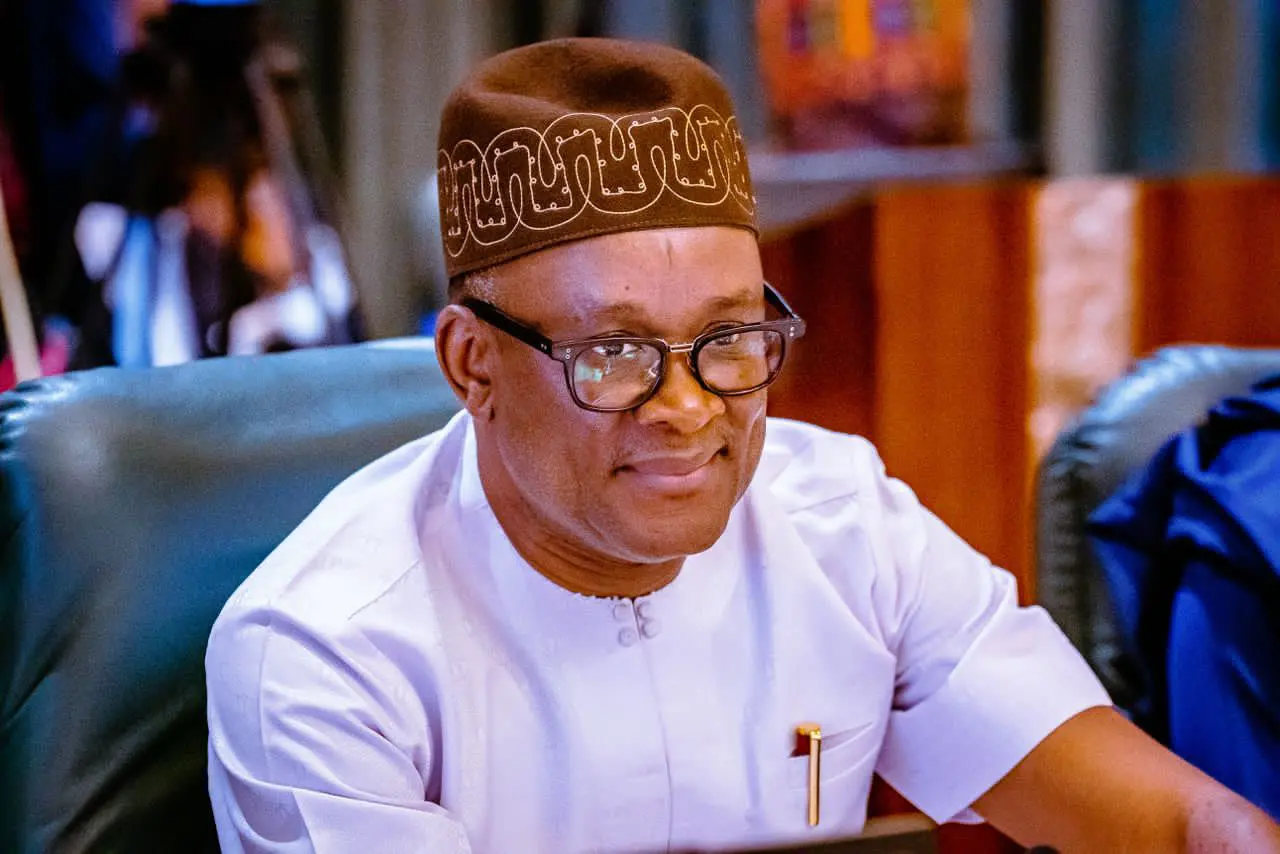
Minister of State for Industry, Senator John Enoh, has said that Nigeria cannot achieve meaningful industrialisation when manufacturers borrow at interest rates above 30 per cent while competitors in Benin Republic and Cameroon access credit at about eight per cent. Enoh, who is also Chairman, Industrial Revolution Work Group (IRWG), said the high cost of credit remained one of the biggest obstacles to industrial growth, urging the Federal Government to move beyond policy statements and provide financing instruments that would give manufacturers access to affordable, long-term capital.
He spoke yesterday in Lagos at the second technical session of the IRWG.
The minister said the recent rebasing of Nigeria’s economy had made the country statistically bigger but had not translated into a more industrial economy, with manufacturing still contributing less than 10 per cent of total output.
According to him, the rebased economy is now valued at N372.8 trillion, with the services sector accounting for more than half of total output and real estate overtaking oil.
He, however, said manufacturing remained a single-digit contributor, despite its importance to economic development.
Enoh said: “So I will say plainly what the rebasing conversation has danced around for a year: the rebasing made Nigeria statistically larger. It did not make Nigeria more industrial.
“We got a bigger mirror; we did not yet get a stronger body. The mirror is not the achievement. And the body is built in factories.”
He said the success of Nigeria’s industrial policy over the next decade should be measured by the volume of goods produced locally rather than how large the economy appeared statistically.
“The execution decade begins in this room,” he declared.
Enoh identified access to affordable finance, energy, infrastructure, regulation, local production, skills and innovation as key areas requiring urgent intervention.
On energy, he said Nigeria could not industrialise by relying on generators, calling for the expansion of the Idu pilot model, where gas is delivered to industrial clusters and electricity supplied to factories at predictable prices.
He also called for the removal of regulatory bottlenecks, including overlapping licences and unnecessary levies.
“Where two agencies perform one function, recommend which one stands down. Name the licences to be merged, the levies to be abolished, and the dates,” he said.
The minister further called for stronger enforcement of product standards, prosecution of counterfeiters and proper measurement of the Federal Government’s procurement under the Nigeria First policy.
Other News
Supporting the call for urgent action, Director-General of the Manufacturers Association of Nigeria (MAN), Dr Segun Ajayi-Kadir, said the manufacturing sector had remained resilient but lacked the depth required to drive inclusive economic growth.
Presenting MAN’s State of Industry Report, titled, “The Real Numbers of the Real Sector: Nigerian Manufacturing and the Rebased Economy,” Ajayi-Kadir said manufacturing’s contribution to GDP had declined despite an increase in output.
He said manufacturing grew in the second quarter of 2026 but remained below the overall GDP growth rate of 4.43 per cent.
According to him, much of the industrial expansion came from capital-intensive activities, particularly oil refining and cement, while sectors that employ more Nigerians, such as food, beverage and tobacco, recorded weaker growth.
He said oil refining grew by 43 per cent and cement by 12.75 per cent, compared with about three per cent for food, beverage and tobacco.
“The economy is real, but unable and concentrated,” Ajayi-Kadir said, stressing that Nigeria needed broader manufacturing growth to create jobs, increase tax revenue and spread economic opportunities.
He also pointed to the pressure created by the exchange rate and rising diesel costs.
The MAN chief said the exchange rate had moved from about N400 to the dollar in June 2023 to around N1,450, while diesel prices had increased six to seven times.
He added that high interest rates and logistics costs were further weakening manufacturers’ competitiveness and capacity utilisation.
Ajayi-Kadir urged the government to pursue broad-based manufacturing growth rather than a selective recovery, with priority given to cheaper credit, reliable energy and stronger demand for employment-intensive products.
“Resilience should not be a permanent state. And so, when you are resilient, it doesn’t mean that you are growing,” he said.
He argued that the real test of Nigeria’s industrial policy would be sustained manufacturing growth above the wider economy, saying this was necessary for economic gains to translate into jobs and wider prosperity.
Permanent Secretary, Federal Ministry of Industry, Trade and Investment (FMITI), Dr Chris Osa Isokpunwu, said the session was designed to translate government policies into investment, production, jobs and national prosperity.
Represented by the Director of the Industrial Development Department, Mohammed Bala, he said the IRWG had created a platform for government, financial institutions, development partners and other stakeholders to tackle practical barriers to industrial development.
He urged participants to improve access to finance and infrastructure, strengthen coordination among stakeholders and agree on clear and realistic timelines for implementation.